
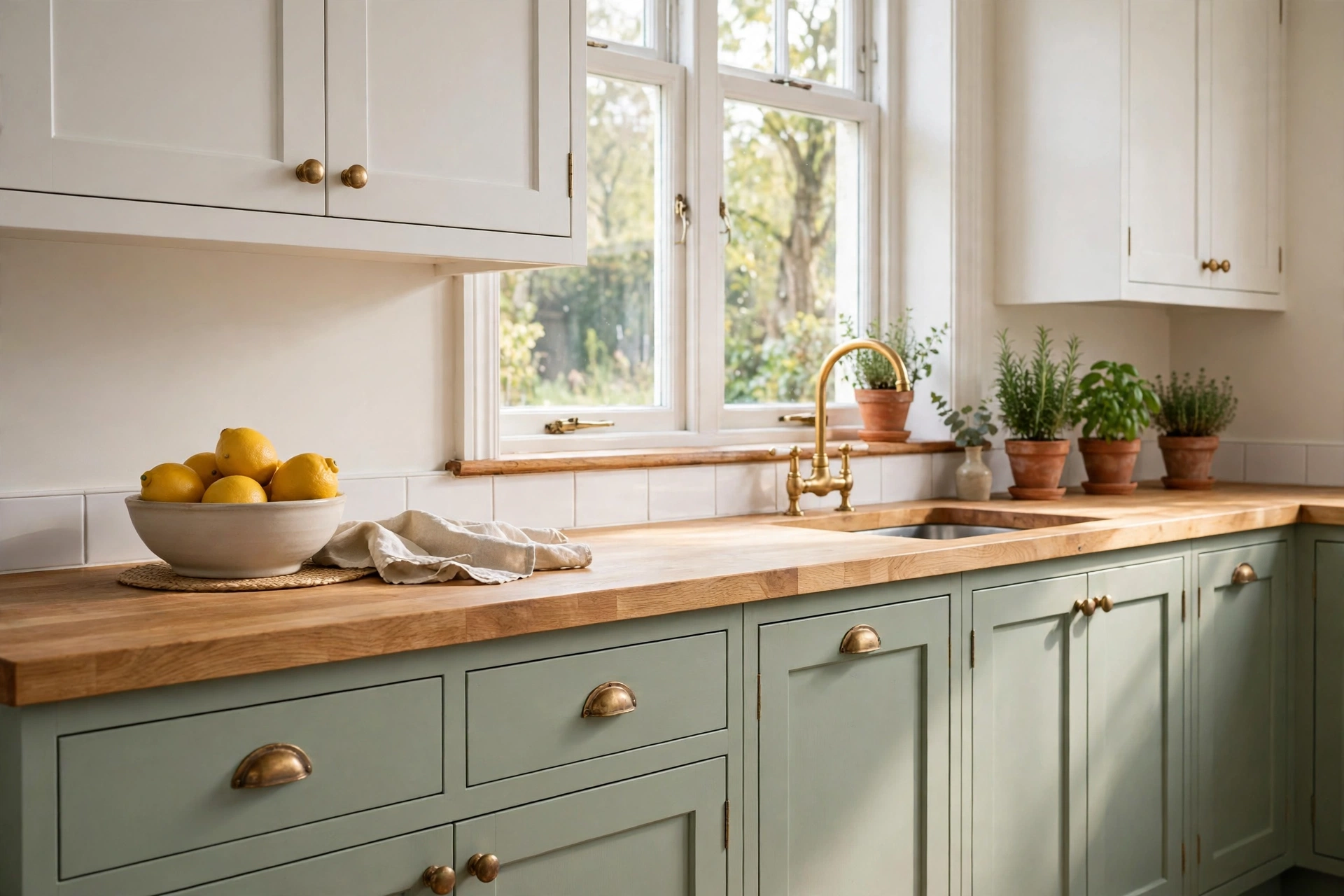
27 Sage Green Kitchen Decor Ideas That Make Your Kitchen Feel Calm, Fresh, and Beautiful
I did not set out to paint my kitchen sage green. I set out to fix a kitchen that felt loud. The old cabinets were a shiny cherry red from the early 2000s, the walls were a yellow that looked cheerful in the store and tired in real life, and every morning I walked in, made coffee, and felt like the room was shouting at me before I had even woken up. I wanted a kitchen that felt like a deep breath. A friend who paints houses for a living came over, looked around, and said one sentence that changed everything: try sage. Not mint, not olive, not gray pretending to be green. Sage. The color of a herb garden after rain.
I was skeptical. Green in a kitchen sounded like a risk, the kind of choice you regret by the second winter. But I bought one quart, painted the inside of a single cabinet door, and lived with it for a week. Every morning that little sage square looked calmer than the rest of the room. By Sunday I had the brush in my hand and the radio on, and by the next weekend the whole lower run of cabinets was done. The room did not feel trendy. It felt settled, like it had always been that color and I had just finally noticed. Neighbors started asking what I had done, and the honest answer was nothing expensive. Just the right green in the right places.
So here are 27 sage green kitchen decor ideas, organized the way I actually built the look in my own home, from the big cabinet moves to the walls and light, the counters and everyday styling, the hardware and finishing details, and the small kitchen and renter tricks that let anyone try sage without a full renovation. Everything here works in a normal house with normal stuff, and most of it costs less than a new appliance if you shop your own home first.
Before You Paint Anything: Two Rules That Keep Sage From Going Wrong
Before we get to the ideas, you need two rules. They take a minute to learn and they will save you from the two biggest sage green mistakes, which are a kitchen that looks gray and murky, and a kitchen that looks like a mint ice cream parlor.
The Sage Rule: 60-30-10. Think of your kitchen in three parts. Sixty percent is your calm base, sage and soft whites. Thirty percent is warm wood, butcher block, oak shelves, a wooden stool, the cutting boards leaning by the stove. Ten percent is your accent metal, brass or matte black, the hardware, the faucet, the pendant lights. If sage takes over more than sixty percent, the room goes flat and muddy. If the wood disappears, the sage looks cold. And if the metal is missing, nothing in the room sparkles. IMO, this is the rule that makes the difference between a kitchen that looks designed and a kitchen that looks like someone painted everything green and hoped for the best.
The Morning Light Test. Sage changes color more than almost any other paint, because it sits right between green and gray. So before you commit, paint a big swatch, at least the size of a dinner plate, on the wall or cabinet you plan to paint, and look at it three times: at 7 in the morning with your coffee, at noon in full daylight, and at 7 in the evening with the lights on. If it still looks like sage at all three times, calm and green and a little earthy, you have the right shade. If it goes gray at dusk or minty at noon, try one shade warmer. FYI, this test saved me from a color that looked perfect in the store and went full hospital mint in my north facing kitchen. The swatch is free. The repaint is not.
Start With the Big Sage Moves
1. Paint the Lower Cabinets Sage and Keep the Uppers White
This is the single best way to try sage green kitchen decor without betting the whole room on it. Paint the lower cabinets a soft sage, keep the uppers white or cream, and the kitchen instantly feels grounded and light at the same time. The sage sits low, where the eye expects weight, and the white up top keeps the room airy. I did this first, and it is still my favorite thing in the whole kitchen. Use a satin or semi gloss cabinet paint so grease and fingerprints wipe off with a damp cloth, and take the doors off to paint them flat. Two thin coats beat one thick coat every time, and a good primer keeps the old color from bleeding through.
2. Go All In With Floor to Ceiling Sage Cabinets
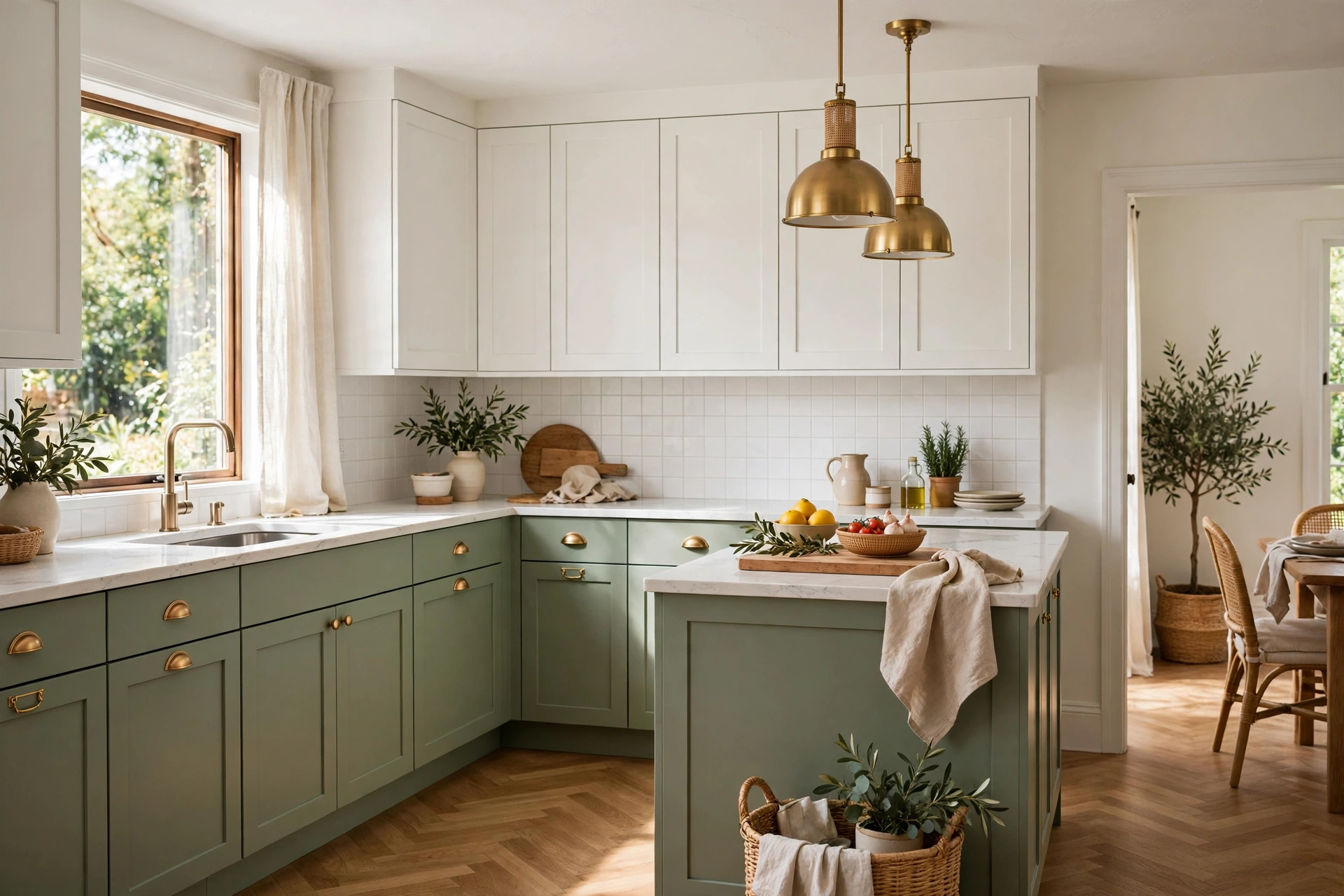
If your kitchen gets good light, go all in. Sage on every cabinet, uppers and lowers, turns the kitchen into one calm, cohesive room instead of a collection of boxes. The trick is contrast everywhere else: white counters, a pale backsplash, warm wood floors, brass hardware. Without those lighter moments, wall to wall sage can feel heavy, like a forest with no sky. Our dark cottagecore kitchen decor ideas use the same all in color courage with moody greens and wood if you want to see how deep color behaves in a real kitchen. Keep one wall white, or leave the ceiling bright, and the sage reads as a choice, not a cave.
3. Make a Sage Green Island the Anchor of the Room
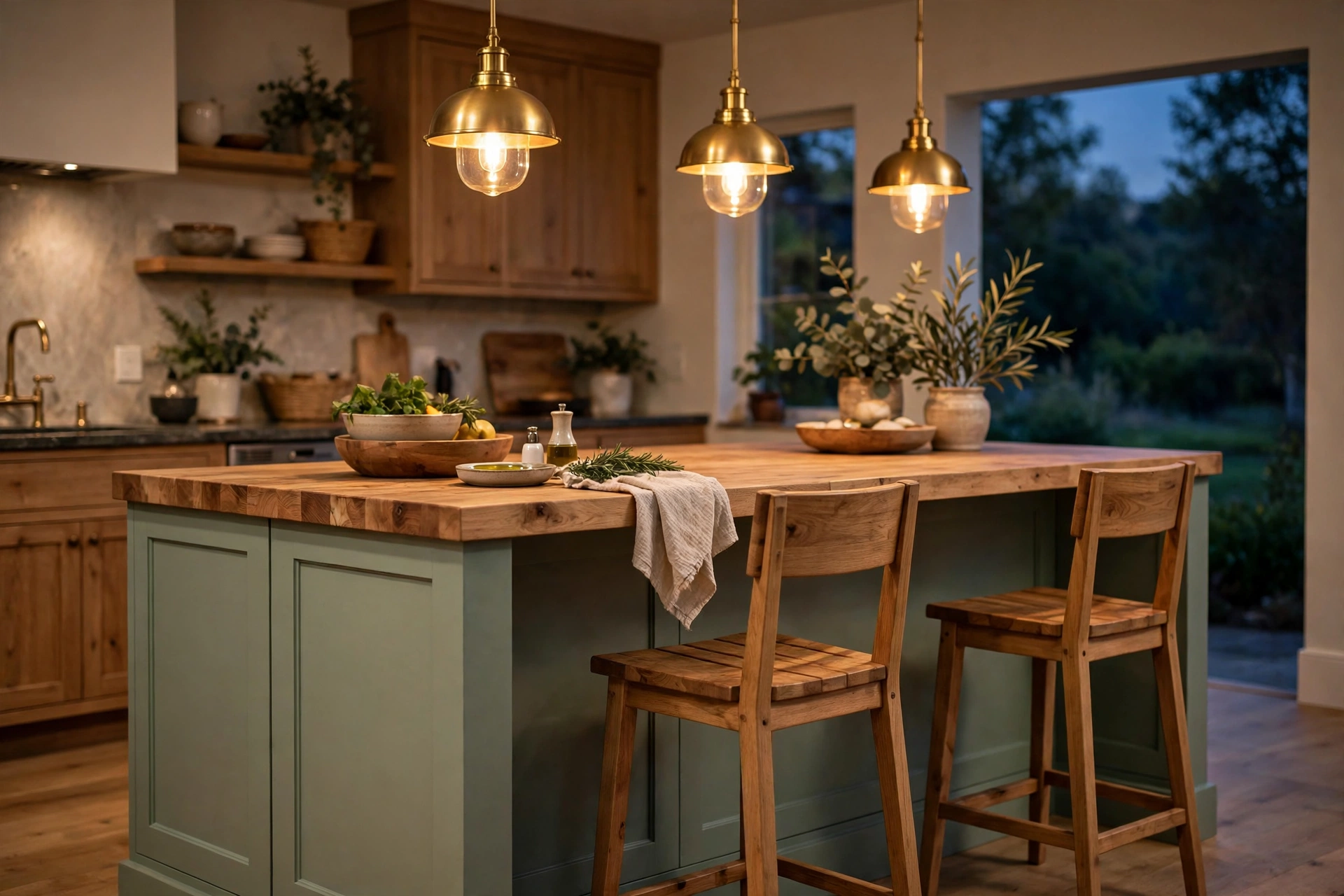
An island is the one piece of furniture every kitchen revolves around, so painting it sage makes the whole room feel intentional, even if the rest of the cabinets stay white. A sage island with a butcher block top and brass cup pulls looks custom, like it was built for the house, and it costs a fraction of a full cabinet repaint. I painted mine on a Saturday and by Sunday dinner it was the place everyone leaned against. If you want more ideas for styling the island itself, our kitchen island decor ideas cover centerpieces, seating, and pendant pairings that work beautifully with a sage base. Add two stools in natural wood and the island becomes the warmest seat in the house.
4. Lay a Sage Backsplash Tile, Subway, Zellige, or Handmade Look
Sage tile is the commitment free version of sage cabinets. A backsplash in soft sage subway tile, or glossy zellige tiles with their handmade variation, gives you the color right where your eyes rest while you cook, and it wipes clean in seconds. Zellige is my pick if the budget allows, because no two tiles are the same shade, and that variation is what keeps sage from looking flat. If the budget is tight, a classic subway tile in a soft sage glaze does the same job for a third of the price. Either way, use a warm white grout, not bright white, so the tiles read soft instead of stark.
5. Paint the Pantry Door Sage for a Surprise Pop
The pantry door is the most overlooked surface in the kitchen, and a coat of sage turns it into a little moment of joy every time you reach for the pasta. It is one door, one quart of paint, one afternoon, and it ties the whole room together if your cabinets are white. I painted mine the same sage as the lowers, added a small brass knob, and now it is the detail guests notice and ask about. If your pantry is open shelving instead of a door, paint the back wall of the pantry sage instead. Same surprise, same tiny budget, and it makes the shelves of jars look like a little shop display.
Walls, Windows, and the Light Sage Loves
6. Paint the Walls Sage and Let the Trim Stay Bright White
Sage walls with crisp white trim are the classic version of this look for a reason. The green wraps the room in calm, the white trim draws clean lines around the windows and doors, and the whole kitchen feels like a cottage that happens to have great taste. This works best in kitchens with big windows, because natural light keeps the sage green and lively. In a darker kitchen, pick the lightest sage you can find and keep the ceiling bright white. One coat of a good eggshell finish is enough for walls, and it touches up easily when life happens near the stove.
7. Hang Sage Roman Shades or Linen Cafe Curtains
Windows are where sage can be soft instead of painted. A sage linen roman shade, or a pair of cafe curtains that cover just the bottom half of the window, adds the color at eye level and lets the light in over the top. Linen is the fabric to pick, because it wrinkles a little and looks lived in, not stiff. I sewed mine from two yards of sage linen in an evening, and they are still the first thing I notice when I walk in. If sewing is not your thing, ready made linen shades in sage are easy to find, and they cost less than a new faucet.
8. Paint the Backs of Open Shelves Sage
Open shelves are lovely and also a little risky, because everything on them is on display. Painting just the wall behind the shelves sage solves both problems. The green becomes a backdrop that makes white dishes, wood bowls, and glass jars look intentional, and the shelves themselves stay simple. It is a weekend project with a quart of paint, and it works even better if the rest of the kitchen is white. Stack white plates, add a row of sage bowls, and the shelf looks styled without you trying at all.
9. Add Under Cabinet Lighting So the Sage Glows
Sage needs light to look its best, and under cabinet lighting is the cheapest way to give it some. A warm white LED strip under the uppers washes the backsplash and the counters in a soft glow, and suddenly the sage looks rich instead of flat. Pick warm white, around 2700K, not cool daylight, because cool light turns sage gray and a little sickly. The strips stick on with adhesive, plug into one outlet, and take about twenty minutes to install. At night, with the overheads off and just the under cabinet lights on, the kitchen feels like a restaurant. That is not an exaggeration. Try it once and you will never cook in the dark again.
Countertops, Sinks, and Everyday Styling
10. Pair Sage Cabinets With Butcher Block Counters
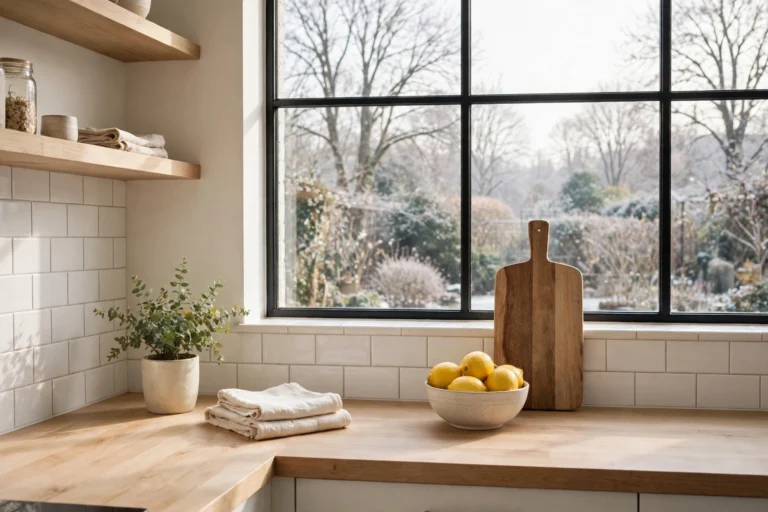
Butcher block is the warm wood that the Sage Rule asks for, and it belongs on the counter. The honey tones of maple or oak against soft sage is the combination that makes the whole look feel like a farmhouse that grew up and got good taste. Oil the block once a month and it stays beautiful for years, and small knife marks just add character. I keep a wooden bowl of lemons on mine, because the yellow against the green and the wood is the prettiest accident in the kitchen. If full butcher block feels like too much maintenance, use it on the island only and keep stone on the perimeter.
11. Choose White Quartz or Marble With Soft Gray Veining
If butcher block is too much upkeep, white quartz with soft gray veining is the cleanest partner for sage. The white brightens the room, the gray veining echoes the gray inside the sage, and the whole counter looks calm and intentional. Avoid counters with strong gold or brown veining, because they fight with the green instead of supporting it. A honed or matte finish looks softer than a high polish, and it hides fingerprints better, which matters in a kitchen that actually gets used. Seal natural marble once a year and it will age gracefully instead of staining at the first splash of tomato sauce.
12. Grow a Sage Herb Garden on the Windowsill
A row of herbs in small pots on the windowsill is the most honest version of sage green kitchen decor, because the color is alive. Basil, mint, rosemary, and thyme in matching terracotta or cream pots bring green into the kitchen without a single paintbrush, and you get to cook with them. Keep the pots small and the row tidy, three to five pots at most, or the windowsill starts to look like a greenhouse. Snip what you need while you cook and the kitchen smells like dinner before the stove is even on.
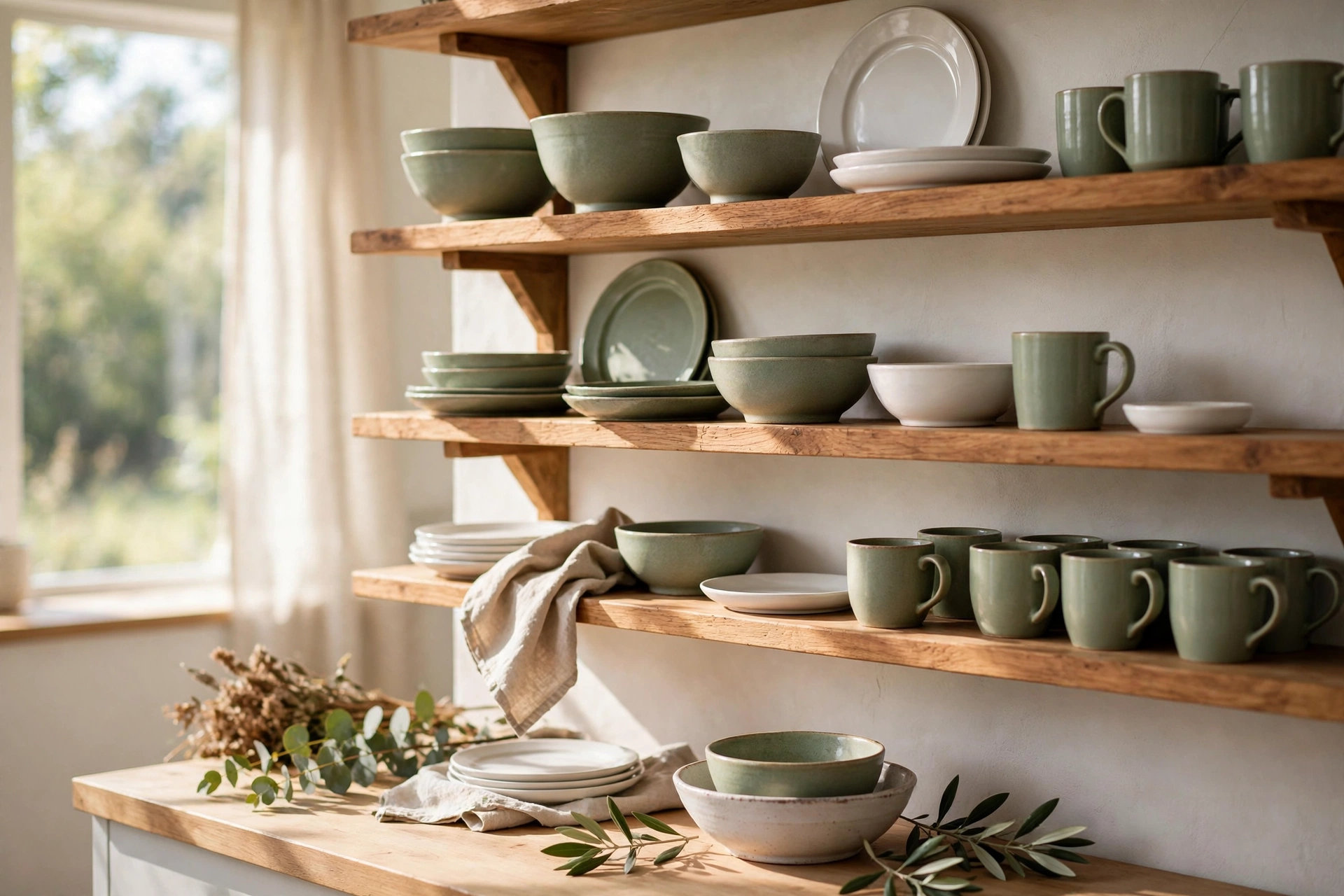
13. Display Sage Dishware and Bowls on Open Shelves
You do not need to buy new dishes to get the sage look on your shelves. A set of sage bowls, a few sage mugs, and one sage serving platter, mixed in with your everyday white plates, gives the open shelves a color story without a full replacement. The trick is grouping: all the sage pieces together on one shelf, not scattered one by one. Thrift stores are full of sage stoneware for a dollar or two, and mismatched pieces in the same color family look collected, not chaotic.
14. Lean Cutting Boards and Wooden Utensils by the Stove
The simplest styling move in a sage kitchen costs nothing, because you already own the pieces. Lean two or three wooden cutting boards against the backsplash by the stove, stand wooden spoons in a crock, and the warm wood does exactly what the Sage Rule wants it to do. Vary the heights, tallest board in the back, and keep the group tight so it reads as one vignette instead of clutter. A round board, a rectangular board, and a small paddle board make a good trio. Wipe them with mineral oil once in a while and they will look better every year.
Hardware, Fixtures, and the Details That Finish It
15. Swap in Brass Hardware: Knobs, Pulls, and Cup Pulls
Brass is the ten percent that makes sage sing. Swap the old hardware for unlacquered brass knobs on the doors and cup pulls on the drawers, and the whole kitchen looks like it cost three times what it did. Unlacquered brass develops a soft patina over time, which suits sage perfectly, because both get better with age. If new hardware for every door feels pricey, do the drawers first, since those are the pulls your hands actually touch, and add the knobs next month. Keep the finish consistent, all brass or all black, because mixed metals in a small kitchen read as indecision.
16. Install a Matte Black Faucet Against the Sage
A matte black faucet is the modern counterpoint to soft sage, and the contrast is what keeps the room from feeling too sweet. The black grounds the sink area, matches black hardware if you went that route, and hides water spots better than chrome. Pick a simple gooseneck shape with a single lever, and the faucet becomes a little sculpture over the sink. If your whole kitchen is brass, a black faucet still works, because the ten percent rule has room for one strong dark note. Just keep it to the faucet and maybe the cabinet pulls, and let the brass live on the lights.
17. Pull Up Sage Bar Stools at the Island
Sage bar stools at a sage island would be too much, but sage stools at a white island, or sage stools against a wood island, are exactly right. The stools carry the color up to seating height, so the green is not stuck at the bottom of the room. Pick a wipeable seat, leather, vinyl, or painted wood, because bar stools take abuse from kids, bags, and homework. A low back is best for a small kitchen, since tall backs block the view across the room. Two stools for a small island, three for a long one, and leave a little breathing room between them so nobody feels crowded.
18. Lay a Vintage Style Rug or Runner in Sage and Cream
A runner in sage and cream, faded and soft, is the fastest way to warm up a cold kitchen floor. Vintage style rugs in muted sage, cream, and a touch of rust look like they have been there for decades, and they hide crumbs better than any solid color. Pick a low pile rug you can shake out and wash, or a washable rug made for kitchens, because a rug near the stove will meet its share of spills. The runner should sit in front of the sink and stove, where your feet actually stand, not floating in the middle of the room where it trips everyone.
19. Hang Brass or Rattan Pendant Lights Over the Island
Pendant lights are the jewelry of a sage kitchen, and brass or rattan are the two finishes that work best. Brass pendants pick up the hardware and make the whole room glow at night. Rattan pendants add texture and a relaxed, coastal feeling that keeps sage from getting too formal. Either way, hang them low enough to feel intentional, about 30 inches above the counter, and use warm bulbs. One large pendant suits a small island, two or three small ones suit a long island. Dim them on a switch and dinner feels like an occasion, even on a Tuesday.
Small Kitchens and Renter-Friendly Sage
20. Try a Peel and Stick Sage Backsplash in a Rental
Renters can have a sage kitchen too, and peel and stick tile is how. The tiles go up in an afternoon, come down without damaging the wall, and look surprisingly real from three feet away. Pick a subway or square pattern in a soft sage, not a loud one, and press each tile firmly so the edges do not curl in the steam. The area behind the stove gets the most heat, so leave a small gap there or use a heat resistant panel behind the burners. When you move out, peel them off, wipe the wall, and take your sage with you to the next kitchen.
21. Dress the Kitchen in Sage Textiles: Towels, Mitts, and a Runner
If paint is off the table, textiles are the next best thing. Sage hand towels, a sage oven mitt, a sage table runner, and a sage apron hanging on a hook give the kitchen its color story for the price of a takeout dinner. The trick is keeping the textiles the same family of sage, not five different greens from five different stores. Wash them together so they fade together, and fold the towels so the sage shows on the oven handle. It is a small move, but a kitchen with matching sage textiles looks put together in a way a kitchen with random towels never does.
22. Paint One Accent Wall Sage in a Galley Kitchen
A galley kitchen is long, narrow, and usually a little dark, and one sage accent wall fixes all three problems at once. Paint the far short wall, the one you face when you walk in, and the room suddenly has a destination. The green pulls the eye down the length of the kitchen and makes it feel intentional instead of cramped. Keep the other walls white, keep the cabinets light, and let that one wall do the work. In a galley, less sage is more sage, and one wall is exactly enough.
23. Paint the Cabinet Interiors Sage for a Surprise Pop
This is my favorite secret in the whole list. Paint the inside of your cabinets, or just the inside of the glass front ones, a soft sage, and every time you open a door you get a little flash of color. Nobody sees it from the doorway, so the kitchen still reads white and calm, but the people who actually cook in it get the surprise every day. It is also the cheapest way to test a sage shade, because if you hate it, only you will ever know. Use the same satin cabinet paint as the exterior, and let it cure a full day before you load the dishes back in.
Keep It Fresh: Care, Budget, and Seasonal Swaps
24. Add a Sage Painted Hutch or Freestanding Cabinet
A freestanding hutch or a secondhand cabinet painted sage is the furniture version of this whole look, and it works even in a kitchen with white cabinets. The hutch gives you display space for dishes and storage for the things that never fit anywhere, and the sage paint makes a thrift store find look like a deliberate choice. Look for solid wood pieces with good bones and ugly finishes, because the paint hides everything. Style the top shelf with white dishes and the bottom with baskets, and the hutch becomes the prettiest storage in the room.
25. Swap the Seasons Without Repainting Anything
Sage is the rare color that works with every season, and the swaps are easy. In fall, add mini pumpkins and amber glass on the counters. In winter, bring in pine sprigs and a plaid runner. In spring, set out lemons and white tulips. The sage stays put and the accessories do the seasonal work, which means you never have to repaint to feel current. Our winter kitchen decor ideas have a whole section on seasonal swaps if you want a year round plan. The rule is simple: sage is the constant, and everything else is a guest.
26. Pair Sage With Copper for the Warmest Metal Match
Brass is the classic partner for sage, but copper is the warmer, friendlier one. A copper kettle on the stove, copper pots hanging from a rail, a copper tray on the counter, and the whole kitchen glows in a way brass never quite manages. Copper and sage sit next to each other in nature, green leaves and autumn metal, and the combination feels organic instead of decorated. Our terracotta kitchen decor ideas lean on the same warm earthy palette if you love this direction. Keep copper pieces small and let them patina, because shiny copper fights the softness of sage and aged copper supports it.
27. Paint the Ceiling Sage for the Brave Fifth Wall
This one is for the brave, and it is worth it. A soft sage ceiling in a white kitchen makes the whole room feel wrapped and cozy, like a garden room, and nobody expects it, which is exactly why it works. The trick is picking the lightest sage you can find, almost a whisper of green, because a dark ceiling in a small kitchen feels like a lid. Paint the ceiling, keep the walls white, and watch how the light bounces green around the room at golden hour. It is the idea guests remember, and it costs one gallon of paint and one afternoon on a ladder.
The Durability Check: Will Sage Survive a Real Kitchen?
Sage paint in a kitchen has to survive steam, grease, splashes, and the occasional tomato sauce explosion, so the finish matters more than the color. On cabinets, use a satin or semi gloss acrylic enamel, and let it cure for a full week before you scrub it. On walls, an eggshell finish wipes clean without shining. On the backsplash, tile beats paint every time, because grout and glaze do not care about spaghetti night. The most common failure is cheap flat paint on cabinet doors, which absorbs grease and never looks clean again. Spend the extra money on good cabinet paint and a good primer, and the sage will look the same in year three as it did on day one. Check the high touch spots, the doors by the stove and the drawer under the sink, once a month, and touch up early before a chip becomes a peel.
Buy Once vs Refresh Each Season
The buy once pieces in a sage kitchen are the painted cabinets, the tile, the hardware, the faucet, and the lights. Those are the bones, and they should be good quality, because you will live with them for a decade. The refresh pieces are the textiles, the rug, the dishware, the plants, and the seasonal accessories. Those are the clothes, and they should be cheap enough to swap without guilt. My rule is simple: spend on anything you touch every day, and save on anything you look at once a week. A forty dollar faucet will annoy you daily. A twelve dollar runner you replace every spring will never bother you at all. And the best refresh of all is free: move the plants, swap the towels, and rearrange the open shelves, and the kitchen feels new without a single purchase.
Troubleshooting: When Sage Goes Wrong
If your sage looks gray and muddy, the shade is too desaturated or the light is too cool. Warm up the bulbs, add wood, and try a shade with more green in it. If your sage looks minty and sweet, the shade is too light and too blue. Go one step deeper and warmer, and add black or brass to ground it. If the sage clashes with your oak cabinets, the problem is usually orange undertones in the wood fighting the cool green. A sage with warm yellow undertones bridges the gap, or paint the oak and let the sage be the star. If the room feels dark after painting, you painted too much. Leave one wall white, add under cabinet lighting, and swap in a lighter rug. And if you painted the whole kitchen and hate it after a week, do not repaint everything. Paint one wall white, change the textiles, and live with it for a month. Most sage regret is really just shock, and shock fades faster than paint dries.
The Morning Light Test: One Last Walk-Through
Before you call the kitchen done, do the Morning Light Test one more time, but this time for the whole room, not just a swatch. Stand in the doorway at 7 in the morning with your coffee and look at the kitchen the way a guest would. Does it feel calm? Does the sage read green, not gray? Is there enough wood to warm it and enough metal to sparkle it? Then walk through at noon, when the light is honest, and again at dusk, when the lamps are on. If the room passes all three, you are done. If something feels off, it is almost always one of three things: not enough light, not enough wood, or too much sage. Fix the one that is missing, and the room will settle. My kitchen passed its test on a rainy Tuesday morning, and I have not wanted to change it since.
FAQs
Does sage green go with oak cabinets?
Yes, with the right shade. Pick a sage with warm yellow undertones, which bridges the orange in the oak, and keep the counters light. If the oak is very orange, painting the cabinets or adding a sage backsplash works better than sage walls alone.
What white pairs best with sage green in a kitchen?
A warm white with a hint of cream, not a stark bright white. Stark white makes sage look gray by comparison, while a soft warm white lets the green stay green. Test the white next to the sage swatch in morning light before you commit.
Is sage green kitchen decor still in style?
Yes. Sage has moved from trend to classic, because it reads as a natural color rather than a fashion color. It works with farmhouse, modern, cottage, and transitional kitchens, and it pairs with wood, brass, black, and stone without dating itself.
Can I do sage green in a rental kitchen?
Yes. Peel and stick sage backsplash tiles, sage textiles, a sage rug, and sage dishware give you the full look with no paint and no landlord approval. A freestanding sage hutch works too, and you take it with you when you move.
What hardware color goes best with sage green cabinets?
Unlacquered brass is the classic choice, because it warms the green and ages beautifully. Matte black is the modern choice, and it adds contrast that keeps the room from feeling too soft. Either one works, just keep the finish consistent across the whole kitchen.

2 Comments