27 New Year Kitchen Decor Ideas That Make January Cooking Feel Fresh and Calm
27 New Year Kitchen Decor Ideas That Make January Cooking Feel Fresh and Calm
Intro: The Kitchen I Finally Saw Clearly on January 2
On January 2, after the last guests had gone home and the last tin of cookies had been eaten, I stood in my kitchen with a mug of tea and really looked at it for the first time in weeks. The counters were crowded with things that had earned their place in December and then never left. A tray of ornaments waiting to be packed away. A stack of serving plates I had washed twice and still not put back. A candle that had burned down to nothing, sitting next to a bottle of dish soap and a pile of mail that had somehow migrated to the counter by the toaster. The room still worked, but it did not feel calm, and cooking dinner felt like one more chore on a long list instead of the quiet reset it used to be.
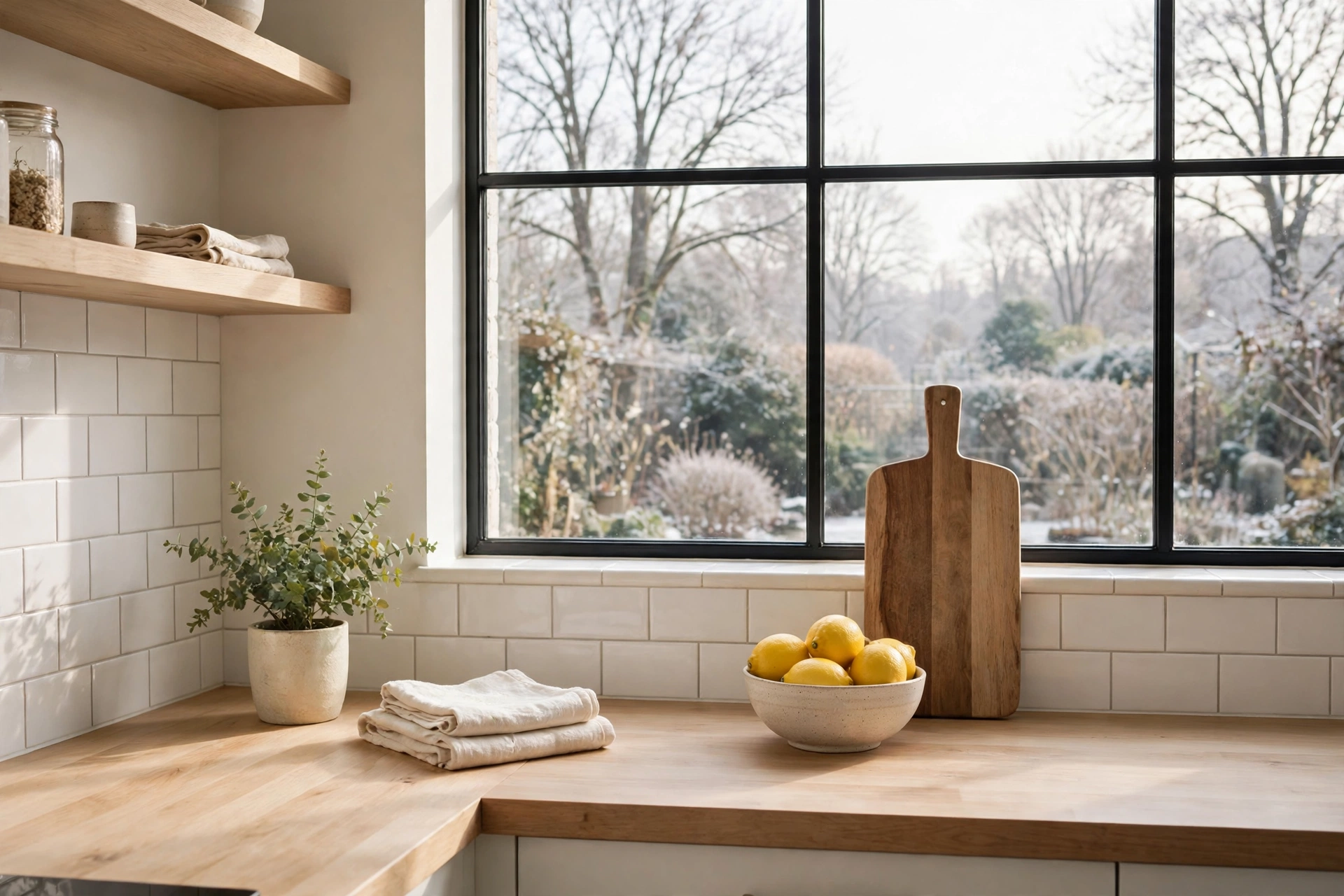
So I did something small, and a little bit stubborn. I cleared one counter, just the one by the stove, and I wiped it down until it shone. I put a wooden board on it, a small plant in a plain pot, and nothing else. Then I made soup, standing at that one clear stretch of counter, and I swear the whole evening felt different. IMO, that is the whole secret of new year kitchen decor: January does not need a full renovation or a shopping trip. It needs breathing room, one calm color story, and a few honest touches in the exact places your hands and eyes land while you cook, pour coffee, and wipe down the counters at the end of the day.
This list has 27 ideas, and every one of them survives the real life of a kitchen. Steam from a boiling pot, grease from a pan, splashes by the sink, a child reaching for a snack, a dog waiting hopefully by the fridge. I have grouped them by where you actually work in the room, so you can do one zone in an evening and stop, or work through the whole list across a long weekend. Start with the counters, because that is what you see first every morning, and end with the small kitchen and rental fixes that make a tight space feel fresh instead of squeezed.
Clear, Calm, Ready: My New Year Kitchen Decor Ideas Formula
Before you buy anything, run every idea through three words: clear, calm, ready. Clear means you can see the counter and reach what you use every day without moving three things first. If an object has not been used since last January, it does not earn counter space in this January. Calm means one color story, repeated in a few places, instead of five bright ideas competing for attention. Ready means the kitchen is set up for the cooking you actually do on a Tuesday night, not for a photo of a kitchen nobody cooks in. A knife block, a cutting board, and a jar of wooden spoons are ready. A tower of decorative cookbooks you never open is not.
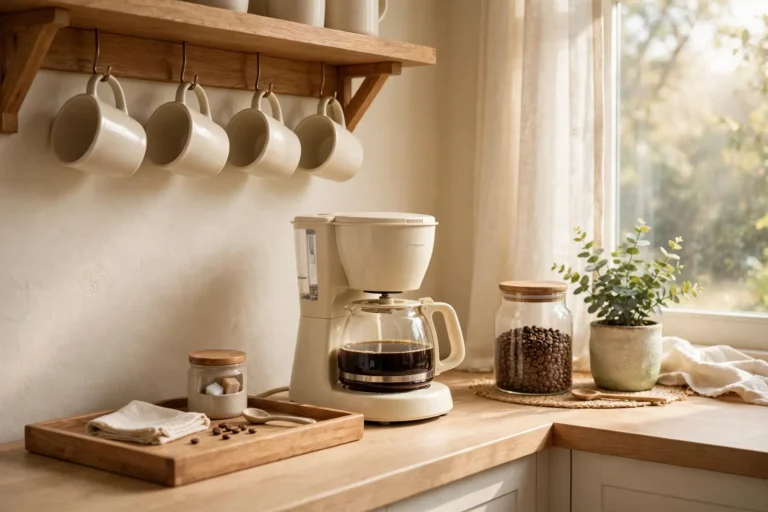
My second check is the First Coffee Test, and I use it on everything now. Walk into the kitchen first thing in the morning, before you have fixed anything, and make coffee exactly the way you always do. Ask three questions while the kettle heats. Can you reach the mugs, the coffee, and the spoon without opening a second cabinet? Can you set the mug down on a clear spot without moving a decoration? Does the first thing you see make you breathe a little easier, or a little tighter? FYI, I moved my coffee station three times before it passed this test, and the version that finally worked was the simplest one: mugs on hooks, coffee in one jar, one small tray, and nothing else on that stretch of counter.
Keep one more rule in your pocket while you shop, or while you shop your own cabinets. Three surfaces, one story. Pick your counters, your shelves or cabinet fronts, and your table or breakfast nook, and tell the same small story on all three. If the story is warm wood and cream, the cutting board, the shelf liners, and the placemats all speak warm wood and cream. If the story is fresh green and white, the plant, the towels, and the fruit bowl match. One story makes a busy room feel designed. Three stories make it feel like a clearance aisle in January.
Zone 1: The Counters and the First Thing You See
1. Clear One Counter Completely and Keep It Clear for a Week
Pick the counter you use most, usually the one by the stove or the sink, and take everything off it. Wipe it down, look at the empty surface for a full minute, and then put back only what you used yesterday. For most of us that is a cutting board, a knife block or strip, and one jar of everyday utensils. Everything else goes in a box in the next room for a week. If you reach for something in that box, it earns its place back. If you do not, it stays in a cabinet or finds a new home. This one move does more for new year kitchen decor than any single purchase, because it shows you how much room you actually have.
When the week is over, style the clear counter with restraint. One wooden board leaning against the backsplash, one small plant, and one beautiful everyday object, like a ceramic olive oil bottle or a stoneware salt cellar. Leave the rest of the surface empty on purpose. Empty counter space is not wasted space. It is working space, and in January, when you are cooking lighter meals and trying new routines, working space is the prettiest thing a kitchen can have.
2. Give Every Counter a Job and Label It in Your Head
A kitchen feels messy when every counter tries to do every job. Give each stretch of counter one job and stick to it for a month. The counter by the stove is the cooking counter, and it holds only cooking tools. The counter by the sink is the washing and drying counter, and it holds only soap, a dish brush, and a drying mat. The far counter is the landing counter, where bags, keys, and mail are allowed to land, and it gets one tray to catch them all. When a counter has a job, you know instantly when something is out of place, and tidying takes two minutes instead of twenty.
To make the jobs stick, style each counter for its job only. The cooking counter gets a board, a jar of spoons, and a small dish for salt. The washing counter gets a pretty soap dispenser and a folded linen towel. The landing counter gets a shallow tray and a small bowl for keys. IMO, the landing tray is the most underrated kitchen object I own. It does not stop the mail from arriving, but it stops the mail from taking over the whole kitchen, and that is a January win worth celebrating.
3. Corral the Daily Clutter Onto One Tray
Every kitchen has a drift zone, the place where sunglasses, vitamins, a charging cable, and a half read recipe card slowly pile up. Instead of fighting the drift, give it a home. Choose a shallow tray, about the size of a baking sheet, in wood, stone, or woven rattan, and set it on the counter where the drift happens. Everything small and daily lives on that tray, and nothing else lives on that counter. When the tray is full, you know it is time to put things away. When it is tidy, the whole counter looks tidy, even if the tray itself is full of ordinary life.
Style the tray like you mean it. A small vase with one stem, a candle you actually light, and the two or three daily objects you reach for most. Keep the tray away from the stove and the sink, where steam and splashes will ruin paper and corrode metal. A tray by the coffee station or on the far end of the island is the sweet spot. It reads as decor, it works as storage, and it keeps the new year kitchen decor feeling calm instead of staged.
4. Swap the Dish Towels and Watch the Whole Room Change
Nothing refreshes a kitchen faster for less money than new dish towels, and I say that as someone who resisted this advice for years. Take down the faded holiday towels, the stained ones you keep meaning to replace, and the novelty towel someone gave you as a joke. Hang two matching linen or cotton towels in your January color story, one by the sink and one on the oven handle, and fold a third over the edge of the counter basket. The room will look cleaner before you have cleaned a single thing, because towels are the one textile you see from every angle of a kitchen.
Choose towels that can take real use. Thick cotton or linen blends, in cream, soft sage, warm white, or a quiet stripe, wash well and soften with every wash. Skip pure white if your kitchen gets heavy use and you hate bleach, and skip dark towels that show lint from the dryer. Hang them folded over a bar or a hook, never bunched on a handle, and keep a spare set in a drawer so a spill does not send you back to the old stained ones. FYI, I keep my good towels in the same drawer as the everyday ones now, because a towel saved for guests is a towel that never gets to do its job.
5. Style the Backsplash With One Row and Nothing Else
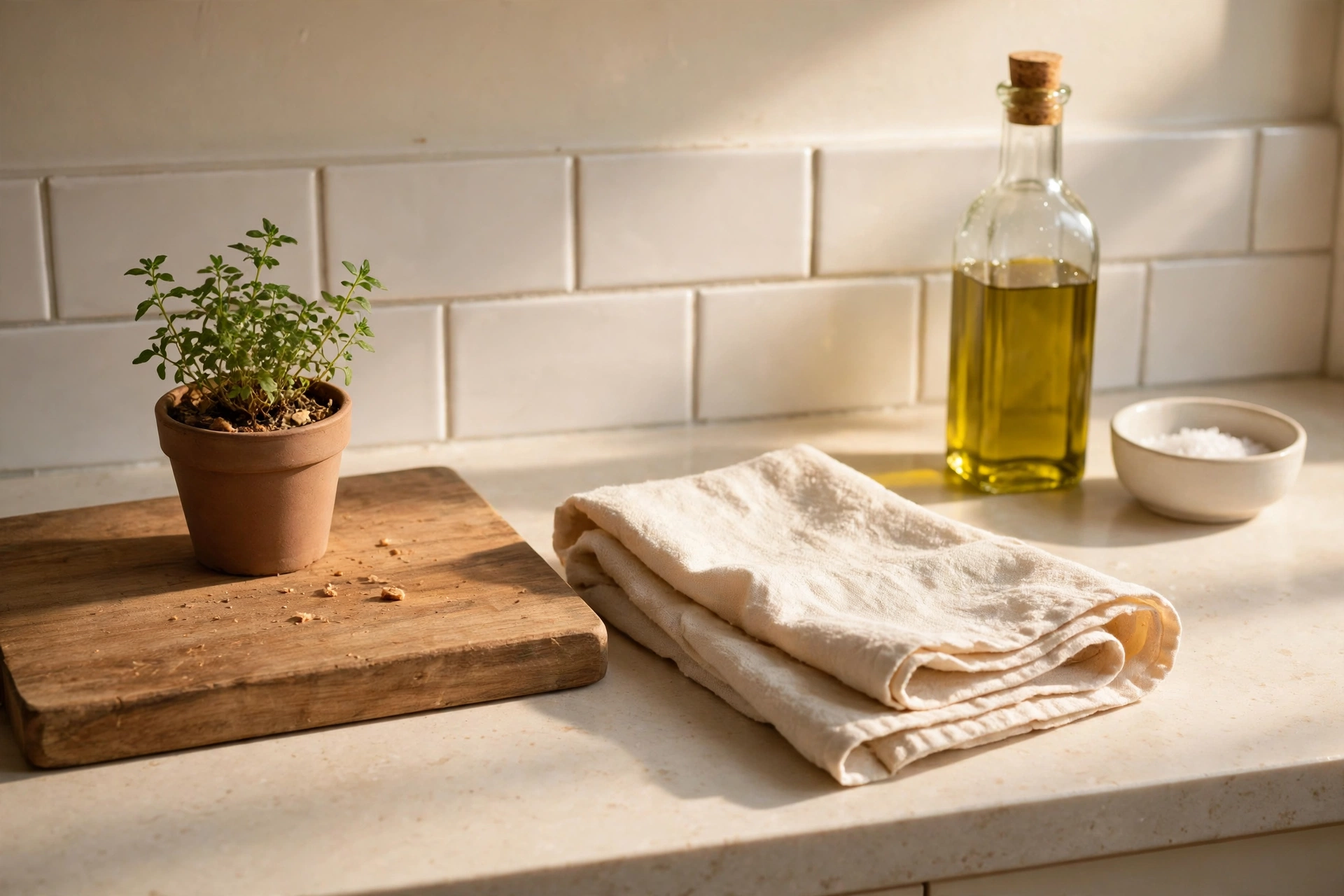
A backsplash tries to carry too much in January, especially after the holidays. Salt and pepper, oil and vinegar, a spice rack, a knife block, a utensil crock, and a soap dispenser all crowd the same eighteen inches, and the tile you chose so carefully disappears. Clear the backsplash line completely, then put back one row of essentials, spaced with breathing room between them. A bottle of olive oil, a salt cellar, and one small plant in a pot that can handle steam. That is the whole row. Everything else lives in a cabinet or on a shelf, close enough to grab and far enough to let the backsplash breathe.
If you love to cook and you need more within reach, use the wall instead of the counter. A single rail with three hooks for the tools you grab every day, hung above the backsplash line, keeps the counter clear and the tools visible. Mount it where splashes will not hit it constantly, and wipe it down once a week with the same cloth you use on the counters. The goal is a backsplash you can actually see, in a kitchen that feels open even when dinner is halfway done.
Zone 2: Cabinets, Shelves, and the Pantry Reset
6. Edit the Open Shelves Down to Three Things Per Shelf
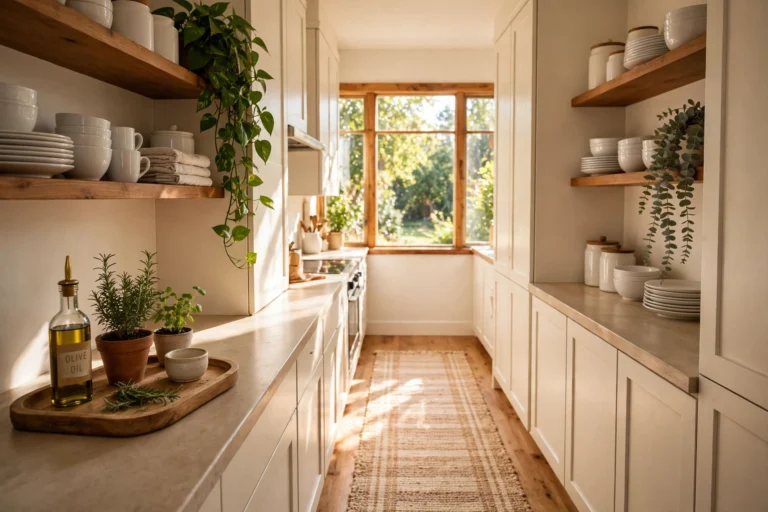
Open shelves look calm when they hold a few things with space around them, and chaotic when they hold everything you own. Take everything off one shelf at a time, and put back only three things per shelf: one stack, one vessel, and one living or natural touch. A stack of four white bowls, a stoneware pitcher, and a small potted herb. A stack of cookbooks you actually open, a cream canister, and a wooden spoon in a jar. Three things, with air between them, read as intentional. Seven things read as storage, even if every one of them is beautiful.
Keep the everyday dishes on the lowest shelf, where you can reach them without a step stool, and keep the pretty but rarely used pieces higher, where they can be admired without being in the way. If a shelf holds glasses, turn them all the same way and leave a finger width between each one. If it holds bowls, stack them in even piles of four or five, never a wobbling tower of nine. The January shelf is not a display case. It is a working shelf that happens to look good, and that is why it stays tidy past February.
7. Decant the Pantry Staples Into Matching Jars
A pantry reset is the most satisfying January project I know, because you see the result every time you open the door. Start by taking out anything expired, anything you bought for one recipe last spring, and anything you cannot identify anymore. Then decant the staples you use weekly, rice, oats, pasta, flour, sugar, lentils, into clear glass jars with simple labels. You do not need a full set of matching jars on day one. Start with six, for the six things you reach for most, and add more only when a bag runs out and the jar earns its place.
Style the pantry by zone, not by color alone. Breakfast on one shelf, cooking staples on the next, baking on the one above, and snacks in one basket at eye level for the kids or for you at four in the afternoon. Put a small basket on the door or on the top shelf for the half used bags and the packets that never fit in a jar. Label the jars on the front, in the same handwriting or the same printed labels, and keep the labels low enough to read without pulling the jar out. A pantry that reads clearly at a glance is a pantry that stays organized, because putting things back takes no thought at all.
8. Line the Cabinet Shelves and Let the Inside Feel New
Cabinet interiors take a beating all year, and January is the kindest time to give them attention. Pull out one cabinet at a time, wipe the shelves, and line them with a washable liner in a light, calm pattern. A simple cream liner, a soft check, or a wipe clean solid color will do. The liner protects the wood, it makes the inside look finished, and it gives you a clean surface to set glasses and plates on without the little rattle that tells you the shelf is bare. While the cabinet is empty, check for chipped mugs and cracked plates, and let the ones you never reach for go.
When you put things back, group by use, not by size alone. Everyday plates and bowls together, mugs together, glasses together, and the holiday serving pieces on the highest shelf, where they wait patiently for their season. Leave a little space at the front of each shelf, so you can slide a plate out without moving the whole stack. If your cabinets have glass fronts, treat the inside like an open shelf and use the three things per shelf rule. If they have solid fronts, the liner and the grouping still matter, because you are the one who sees them every morning.
9. Add One Small Plant Where You Actually Look
A kitchen plant earns its place when it sits where your eyes land while you wait. On the windowsill above the sink, on the shelf you face while the kettle boils, or on the corner of the counter by the coffee station. Choose a plant that likes kitchen life: a potted herb like basil or mint, a small pothos that trails from a high shelf, or a sturdy snake plant in a corner that gets indirect light. Herbs do double duty, because you can snip them into dinner, and a plant you use is a plant you will remember to water.
Keep the pot simple and the plant healthy, and skip the elaborate planter that needs constant attention. A plain terracotta pot, a cream ceramic pot, or a small wooden planter all work, as long as the pot has drainage and a saucer that catches water before it reaches the counter. Wipe the leaves once a week when you wipe the counters, and move the plant away from the stove, where heat and grease will coat the leaves. One healthy plant beats three struggling ones, every single time, and it makes the whole new year kitchen decor feel alive instead of arranged.
10. Turn the Fridge Front Into a Calm Command Center
The fridge front collects the year: school papers, takeout menus, coupons, photos held by magnets that no longer hold, and a calendar from two months ago. Take everything off it, wipe the surface, and put back only what you need this week. One calendar or one weekly meal list, one photo or one piece of art the kids made, and the two or three magnets that actually hold. Everything else goes in a folder, on a bulletin board in another room, or in the recycling. A calm fridge front changes the whole kitchen, because the fridge is usually the biggest surface in the room.
If you need a family command center, give it a proper home instead of the fridge door. A small framed board on the wall by the kitchen entrance, a clipboard hung on the inside of a pantry door, or a single tray on the landing counter for the papers that arrive daily. Keep the fridge front for the one list that matters this week, and change it on Sunday night when you plan the next week. IMO, the Sunday night fridge reset takes four minutes and saves forty minutes of searching during the week, and that is a trade I will take every January.
Zone 3: The Sink, the Stove, and the Everyday Work Spots
11. Upgrade the Soap and the Brush, and the Sink Feels New
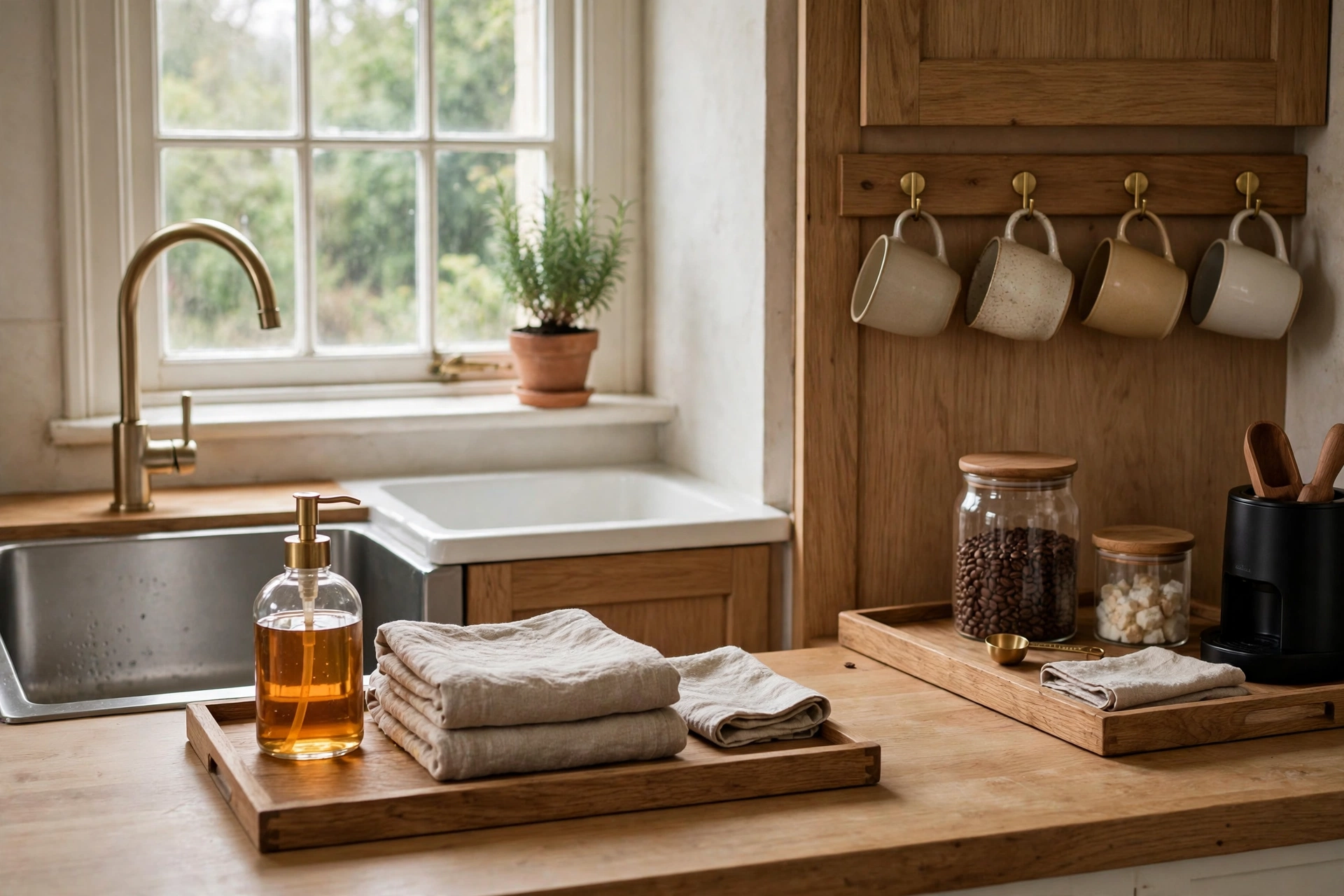
The sink is the hardest working spot in the kitchen, and it usually gets the least decor attention. Swap the plastic dish soap bottle for a refillable glass or ceramic dispenser in your color story, and set it on a small stone or wood tray that catches drips. Add a dish brush with a wooden handle, hung on a hook inside the cabinet door or standing in a small crock by the sink, and a folded linen towel on the bar. These three small swaps cost very little, and they make the sink feel like a designed spot instead of a utility corner.
Keep the sink area clear of everything that does not belong to washing. Sponges live in the tray or in the cabinet. The drying rack folds away or lives on one side only, not spread across both sides of the sink. A small vase with one stem on the windowsill above the sink is allowed, and encouraged, as long as it does not block the window or get splashed every time you rinse a pan. A sink that drains cleanly, dries quickly, and holds only its own tools is a sink that invites you to cook, because you know cleanup will be easy.
12. Style the Stove With a Board, a Pot, and Nothing Extra
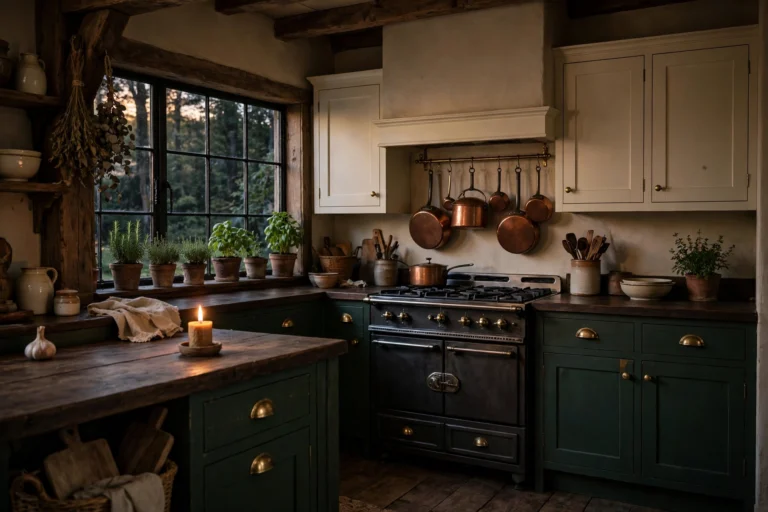
When the stove is not in use, it is a large flat surface in the middle of the kitchen, and it tempts you to pile things on it. Resist the pile. Style the stove with a wooden board laid across two burners, a good looking pot or kettle on one burner, and nothing else. The board protects the cooktop, it gives you a landing spot for a hot dish, and it reads as intentional. The pot or kettle tells the room that this stove cooks, even on a quiet morning. Everything else, the spice jars, the oil bottles, the utensil crock, lives on the counter beside the stove, not on top of it.
For safety, keep anything flammable well away from the burners, and never style the stove with paper, fabric, or dried greenery that could catch. If you have a gas stove, keep the board off the burners entirely when the stove is in use, and lean it against the backsplash instead. A stove that is clear, clean, and ready to cook is the most welcoming sight in a January kitchen, because it says dinner is about to happen, and dinner is the whole point.
13. Build a Coffee Station That Passes the First Coffee Test
A coffee station is a small kitchen in miniature, and it deserves the same clear, calm, ready thinking as the whole room. Choose one stretch of counter, near the mugs and near an outlet, and give it one job: coffee and tea, nothing else. A tray to hold it all, a jar for coffee, a small jar for tea, mugs on hooks above or stacked neatly beside, and a spoon in a tiny dish. If you use a machine, give it a home on the tray, with room around it for steam and for the mug you set down while it brews. Coffee station decor works best when it stays small, because a coffee station that spreads across the whole counter stops being a station and becomes clutter with a label.
Style the station with one warm touch and then stop. A small plant, a framed quote you love, or a pretty tin for sugar, but not all three. Keep the milk and the sweeteners in the fridge or in one small container, and wipe the tray down every morning when you wipe the counters. A coffee station that passes the First Coffee Test, mugs, coffee, spoon, clear mug space, calm first sight, is a station that will still be tidy in March, and that is the real test of any January idea.
14. Give the Trash and Recycling a Proper, Pretty Home
Nobody decorates around the trash can, and that is exactly why it ruins so many kitchens. A bag hanging from a cabinet handle, a recycling bin overflowing onto the floor, and a trash can wedged where the door cannot fully open will undo every other calm choice in the room. Give the trash and recycling a real home: a lidded bin that fits inside a cabinet, a slim bin tucked in the gap beside the fridge, or a pretty lidded can in a corner that does not block a path. Empty it on a schedule, not when it overflows, and line it every time so the inside stays clean.
If you recycle, use two matching bins or one bin with a divider, labeled simply, so sorting takes no thought. Keep a small bag for compost or food scraps if your town collects it, hung inside a cabinet door where it is easy to reach and easy to forget is there. A kitchen with a proper trash home smells fresher, looks calmer, and cooks better, because you are not stepping around the mess while you chop onions. It is not glamorous, and it is not in any photo, but it is the backbone of new year kitchen decor that actually lasts.
Zone 4: The Table, the Breakfast Nook, and the Gathering Corner
15. Set the Table for the Meals You Actually Eat
A kitchen table set for a formal dinner nobody eats will sit untouched, and a bare table will collect the same drift as the counters. Set the table for the meals you actually eat, and keep it that simple. A washable runner or a set of placemats in your January color story, a low centerpiece you can see over, and a small basket or bowl for the things that belong at the table. If you eat breakfast here every morning, the table holds a fruit bowl, a small vase, and the placemats. If you eat dinner here on weeknights, it holds the runner, the centerpiece, and nothing that has to be moved before every meal.
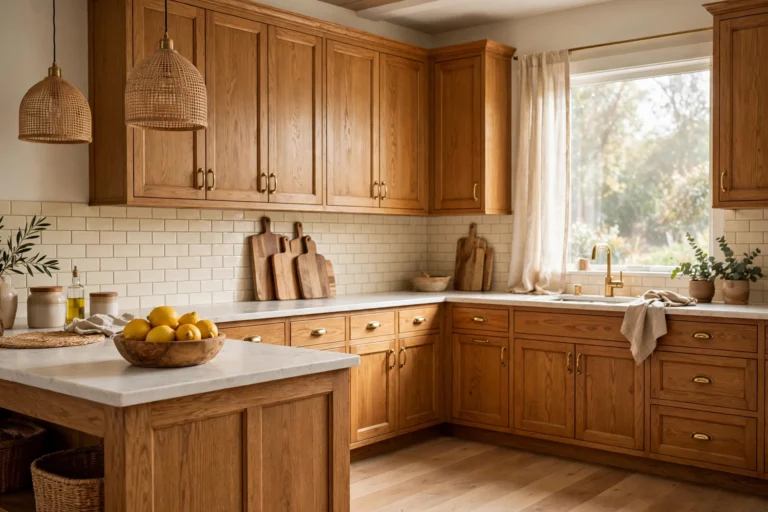
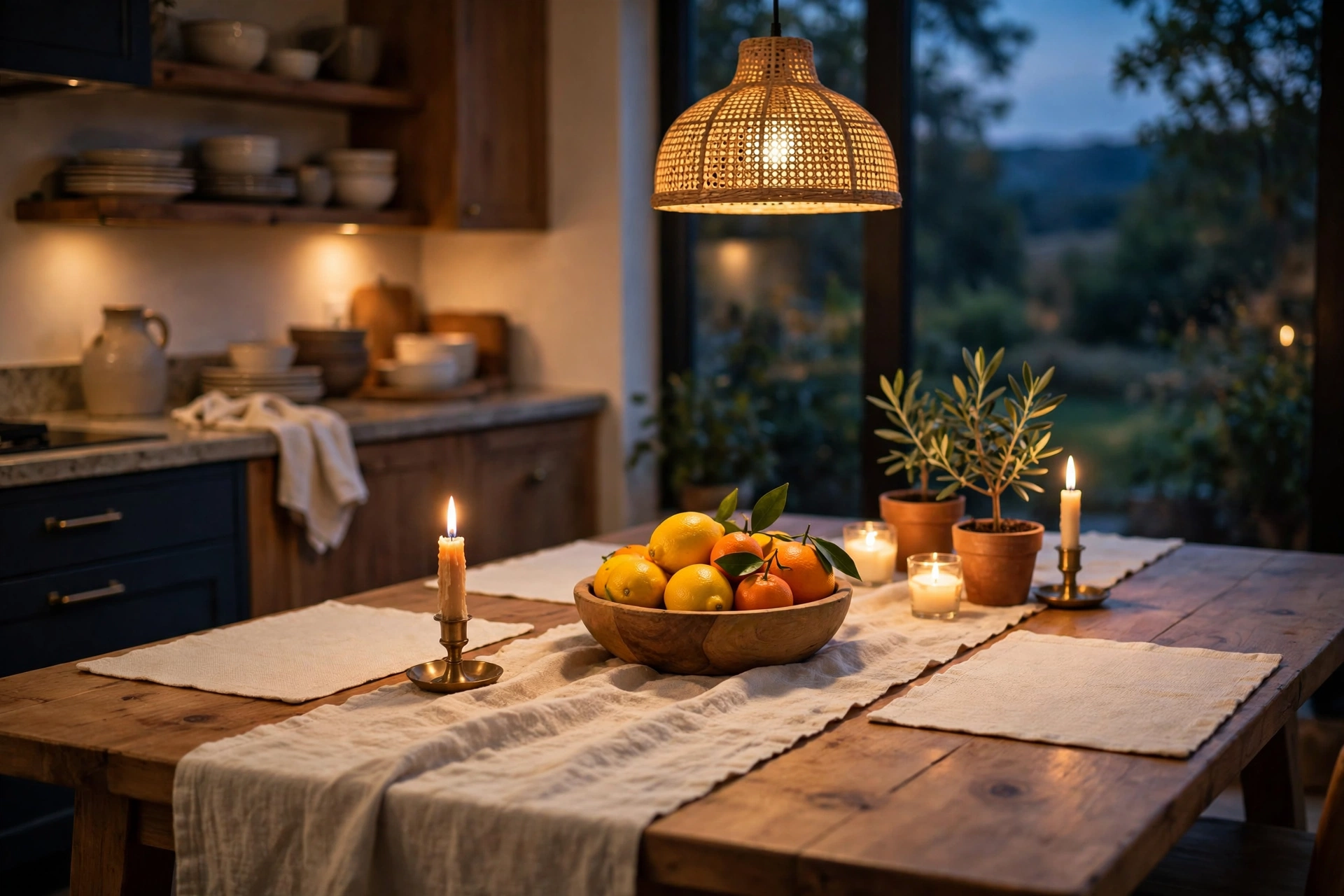
Change the centerpiece with the seasons, and keep it low and easy to move. In January, a wood bowl of citrus, a small plant in a cream pot, or a cluster of three candles on a tray all work, as long as you can lift the whole centerpiece in one move to make room for serving dishes. Kitchen counter decor and table decor should speak the same language, so repeat one material from the counters, wood, stone, or woven fiber, on the table, and the whole room will feel connected without matching sets.
16. Add a Breakfast Nook That Invites a Slow Morning
A breakfast nook does not need a built in bench or a bay window. It needs a corner, a chair that is comfortable enough to linger in, and a surface at the right height for a mug and a book. If you have a corner by a window, set a small round table there, add a cushion to the chair, and hang one piece of art or one small shelf with a plant at eye level. If your nook is just the end of the island, add two stools with backs, a small tray for the morning papers, and a pendant light that makes the corner feel separate from the cooking zone.
Style the nook for the slowest meal of the day. A soft throw over the chair back, a small basket for napkins, and a vase with one stem that you replace when it fades. Keep the nook clear of school bags, work papers, and the charging cable that migrates everywhere. A nook that is kept for breakfast and for quiet coffee will become the most used corner in the house in January, when the mornings are dark and the kitchen is the warmest room in the house.
17. Hang One Piece of Art at Eye Level, Not Five
Kitchen walls often end up as a gallery of everything at once: a clock, a calendar, a chalkboard, three small prints, and a shelf of cookbooks, all competing on the same wall. Choose one wall for art, and hang one piece at eye level, centered over the table or the nook. A framed food print, a simple landscape, a piece of pottery on a shelf below it, or a mirror that bounces light from the window. One strong piece, hung at the height you see it while sitting down, does more than five small pieces hung too high to really look at.
If you love a gallery wall, give it a whole wall and a plan, with even spacing and a shared frame color, and keep the other walls quiet. If you are not sure, start with one piece and live with it for a month. You can always add a second piece later, but you cannot unsee a crowded wall once it is up. Measure from the floor to the center of the piece, aim for about 57 inches, and step back to check it from the doorway. Art that is hung for the person sitting at the table, not for the person standing in the hall, is art that gets looked at every day.
18. Use a Rug That Can Be Washed, and Wash It
A kitchen rug softens a hard floor, warms cold feet on a January morning, and defines the gathering corner, but only if it can handle real kitchen life. Choose a flat weave rug, a washable rug, or an indoor outdoor rug in a calm pattern, sized to fit under the table or in front of the sink without curling at the edges. A rug that is too small will slide, bunch, and trip you. A rug that fits the zone, with all four chair legs on it when the chairs are pulled out, will stay put and look intentional.
Keep the rug clean on a schedule, not when it looks dirty. Shake it out weekly, wash it monthly if it is washable, and spot clean spills the day they happen, before tomato sauce and coffee set into the fibers. A rug pad underneath stops slipping and adds a little cushion for the cook who stands at the sink. Skip a high pile rug in a kitchen, no matter how soft it feels in the store, because it will trap crumbs, hold grease, and never fully dry after a mop. The right rug is the one you can actually live with, and live with happily, in March as well as in January.
19. Create a Landing Spot for Cookbooks You Actually Open
Cookbooks fall into two groups: the ones you open, stained and loved, and the ones you keep because they look good. The first group earns a home in the kitchen. The second group can live on a shelf in another room, where it can be admired without taking up cooking space. Choose a shelf, a basket, or one end of the counter for the five to eight cookbooks you actually open, stood upright or stacked in a neat pile of three, with a bookend or a small plant to hold them. Keep the recipes you use weekly in a folder or a clipboard on the inside of a cabinet door, where splashes cannot reach them.
Style the cookbook spot like a working library, not a display. Spines facing out, grouped by how you cook, weeknight dinners together, baking together, and the one book you turn to when guests are coming. Wipe the shelf monthly, because kitchen shelves collect a fine film of grease even when you cannot see it. A cookbook spot that is used, wiped, and kept to a reasonable size is a January idea that cooks with you all year, and it keeps the rest of the kitchen from becoming a library by accident.
Zone 5: Color, Light, and Texture for a Calmer Room
20. Pick One Calm Palette and Repeat It in Three Places
January color should feel like a deep breath, not like a new paint job you have to live with. Pick one calm palette, and repeat it in three places you already own. Cream and warm wood with soft sage. White and pale oak with dusty blue. Warm white and black with natural linen. Choose the palette that matches the light in your kitchen, cool light loves warm tones, warm light loves cool tones, and then repeat it in the towels, the plant pot, and the fruit bowl, or in the placemats, the soap dispenser, and the rug. Three repeats make a palette feel intentional. One repeat looks like an accident.
Keep the big surfaces calm and let the small things carry the color. Cabinets, counters, and floors stay in their existing tones, and the palette shows up in textiles, plants, and one or two vessels. If you want to go bolder, add one strong accent, a deep green vase, a burgundy runner, or a set of amber glasses, and keep everything else quiet. A calm palette is not a boring palette. It is a palette that lets the food, the light, and the people in the room be the interesting part, which is exactly what a kitchen should do in January.
21. Let Natural Light Do the Decorating First
Before you add a single new object, look at the light in your kitchen at three times of day: morning coffee time, midday cooking time, and evening cleanup time. Notice which window gives the best light, which corner stays dark, and which surface glows when the sun hits it. Then decorate for that light. Move the plant to the windowsill that gets morning sun. Put the fruit bowl where the afternoon light catches it. Hang the mirror or the art where it will bounce light into the dark corner, not where it will glare at the cook. Light is free, it changes all day, and it does more for a kitchen than any object you can buy.
Keep the windows clean and the treatments simple. Wash the inside of the windows in January, when the low sun shows every streak, and choose a treatment that lets light in during the day and gives privacy at night. A simple linen cafe curtain, a woven shade that rolls up fully, or bare windows with a plant on the sill all work, as long as you can open them wide in the morning. If a window is above the sink, keep the sill clear except for the plant and the soap, so the light can reach the work surface. A kitchen that is lit by its own windows feels fresh at 7 in the morning, and no lamp can quite replace that feeling.
22. Layer Light in Three Levels, Not One Bright Overhead
One bright overhead light makes a kitchen feel like a laboratory, especially on a dark January evening. Layer the light in three levels, and the room will feel warm at every hour. Overhead light for cooking, dimmed if you can, so it lights the work surfaces without glaring. Task light under the cabinets or over the stove, so you can see what you are chopping. And one warm glow at eye level, a pendant over the island, a small lamp on the counter, or candles on the table, so the room feels like a place to linger after dinner is done.
Choose warm bulbs, around 2700 Kelvin, for the eye level glow, and slightly brighter, neutral bulbs for the task lights, so you can see colors and textures while you cook. Put the lights on separate switches or on dimmers if you can, so you can turn the cooking lights up and the lingering lights down. Wipe the light fixtures and the undersides of the cabinets in January, when grease and dust dull the light more than you realize. Layered light is the difference between a kitchen you cook in and a kitchen you live in, and in January, you want both.
23. Mix Three Textures and Stop There
Texture is what makes a calm kitchen feel rich instead of flat. Mix three textures, and stop there. Wood, linen, and stone. Woven fiber, ceramic, and glass. Warm metal, wood, and cotton. Choose the three that already live in your kitchen, and repeat them in a few places: a wood board, linen towels, and a stone tray. A woven basket, ceramic canisters, and glass jars. When every surface is the same smooth finish, the room feels cold. When every surface is a different texture, the room feels busy. Three textures, repeated with intention, feel warm, layered, and calm.
Keep the textures honest and easy to clean. Wood boards get oiled, linen towels get washed, stone trays get wiped, and woven baskets get shaken out. Skip a texture that cannot handle kitchen life, no matter how beautiful it looks in a photo. A fluffy rug by the stove, a velvet cushion on a kitchen chair, or a paper lantern over the island will not survive January cooking, and they will make the room feel harder to live in, not softer. The right textures are the ones you can wipe, wash, and use, and still love looking at in July.
Zone 6: Small Kitchens, Rentals, and the Last Minute Refresh
24. Make a Small Kitchen Feel Bigger With Clear Counters and One Mirror
A small kitchen feels bigger when you can see the walls and the counters, not when you add more storage. Clear the counters first, using the one counter rule from idea 1, and keep only the daily essentials out. Then add one reflective surface where it will bounce light, not where it will show the mess. A mirror on the wall opposite the window, a glossy tile backsplash you already have, or a glass canister on the counter that catches the light. Light and reflection do more for a small kitchen than a new cabinet ever will, because they make the room feel open without taking up a single inch of floor.
Use the vertical space with intention, and keep it tidy. One rail for tools, one shelf for the daily dishes, and hooks on the inside of cabinet doors for measuring cups and lids. Keep the floor clear except for the rug, and keep the paths between the sink, the stove, and the fridge clear, even if that means one less piece of furniture. A small kitchen that is clear, lit, and easy to move in feels generous. A small kitchen that is packed with storage feels like a closet that happens to have a stove in it, and no amount of decor can fix that feeling.
25. Style a Rental Kitchen With Hooks, Trays, and No Holes
Rental kitchens come with rules, and the best January decor respects them. Use removable hooks for towels and tools, trays to define zones on the counter, and freestanding shelves or a cart for the storage you need, all without drilling a single hole. A rolling cart by the fridge can hold the coffee station, the spices, or the baking supplies, and it moves out of the way when you need the floor. A tension rod under the sink can hold spray bottles. A removable rail on the inside of a cabinet door can hold lids. Every one of these moves leaves the kitchen exactly as you found it, and every one of them makes it feel like yours.
Style the rental with the same calm palette and the same three textures as any kitchen, because the palette travels with you. Towels, trays, plants, and a rug are all yours, and they will move to the next kitchen when you do. Skip the peel and stick tile that will not peel off cleanly, and skip painting a cabinet you do not own. A rental kitchen that is styled with portable pieces feels personal and calm, and it saves you the deposit argument in December. IMO, the best rental decor is the decor you can pack in one box and love again in the next place.
26. Turn a Tired Kitchen Into a Fresh One in One Evening
Some Januaries do not allow a weekend project. They allow one evening, after work, with a tired cook and a messy kitchen. Do the one evening refresh, and do it in this order. Clear the counters and wipe them down. Swap the towels. Take everything off the fridge front except the one list that matters. Put a plant or a bowl of citrus where your eyes land first. Light one candle or turn on the warm eye level light. That is it. Five moves, about forty minutes, and the kitchen will feel like a different room when you stand in the doorway with your tea.
Do not try to do the pantry, the cabinets, and the shelves in the same evening. A one evening refresh that is finished beats a weekend project that is half done and abandoned by Sunday night. Write the pantry reset, the shelf edit, and the cabinet liners on a list for the next two weekends, one project per weekend, and enjoy the clear counters in the meantime. A kitchen that feels fresh tonight, even if the pantry is still a work in progress, is a kitchen that will motivate you to keep going, because you can already see what calm looks like.
27. Do the First Coffee Test Every Sunday in January
The last idea is not a purchase or a project. It is a habit. Every Sunday in January, walk into the kitchen before you fix anything, and do the First Coffee Test from the formula section. Can you reach the mugs, the coffee, and the spoon without opening a second cabinet? Can you set the mug down on a clear spot? Does the first thing you see make you breathe easier? If the answer is yes, the kitchen is working, and you can spend Sunday doing something else. If the answer is no, fix the one thing that failed, and only that one thing, before you start the week.
January is a long month, and a kitchen that needs a full reset every weekend is a kitchen that was styled for a photo, not for a life. A kitchen that passes the First Coffee Test most Sundays, with one small fix on the Sundays it does not, is a kitchen that will still feel calm in April, in July, and next January too. That is the real goal of new year kitchen decor. Not a perfect kitchen. A kitchen that works, that calms you, and that welcomes you back every morning, coffee in hand, ready to cook.
The New Year Kitchen Decor Check: Steam, Grease, Spills, Kids, and Pets
Every idea in this list has to survive the kitchen you actually have, so run this check before you commit to any of them. Steam: will a boiling pot soften it, warp it, or make it droop? Keep paper, unsealed wood, and delicate fabric away from the stove and the kettle. Grease: will frying coat it in a film you cannot wipe off? Keep open shelves of pretty dishes away from the direct splash zone, and wipe the rail and the backsplash weekly. Spills: will coffee, tomato sauce, or oil stain it for good? Choose washable rugs, wipe clean trays, and towels you can bleach or replace without regret.
Kids and pets add their own tests. Will a child pull it down, reach it, or spill it? Keep heavy canisters low, glass jars back from the counter edge, and the plant out of the path where a running child will brush past it. Will a dog nose it, chew it, or knock it over with a wagging tail? Keep the rug flat, the trash lidded, and the plant on a high shelf or in a heavy pot. And the durability test that matters most in January: can you clean it in under two minutes? If the answer is no, it belongs in another room, or it belongs in a simpler version. A kitchen that is easy to clean is a kitchen that stays calm, because cleaning it never becomes a project you put off.
Budget: Buy Once, Refresh Each Year
A January kitchen reset does not need a big budget, but it does need an honest one. The backbone, the pieces you buy once and use for years, usually costs 120 to 220 dollars: a good tray, a set of glass jars, two sets of linen towels, a washable rug, a soap dispenser, and a plant in a pot you love. The refresh, the pieces you replace or update each January, usually costs 25 to 45 dollars a year: fresh towels if the old ones are worn, a new plant if the old one struggled, labels for the jars, and one small seasonal touch, like a bowl of citrus or a new candle.
The 40 dollar version is real, and it works. Clear the counters for free, swap in towels you already own in a calm color, decant two staples into jars you already have, move a plant from another room to the kitchen, and set the table with a runner you already own. Winter kitchen decor ideas and Christmas kitchen decor ideas can both donate pieces to the January reset, because a wood board, a cream canister, and a woven basket do not know what month it is. Shop your own cabinets first, buy second, and keep a list of the one or two pieces that would truly earn their place. A list that waits a week before you buy is a list that saves you from the January clearance pile that becomes February clutter.
Troubleshooting: Six Kitchen Fixes I Learned the Hard Way
1. The counters keep filling up again. You probably have no landing tray, and no job for each counter. Add the tray, name the jobs, and give it one week. If a counter still fills up, the job is wrong, not you. Swap the jobs until the drift lands where it belongs.
2. The open shelves look messy no matter what you do. Take everything off, put back three things per shelf, and live with it for three days before you add anything. Most messy shelves are overfull shelves, and the fix is subtraction, not a new shelf.
3. The pantry jars look great and nothing fits in them. You decanted the wrong things. Jars earn their place for the six staples you use weekly. Everything else stays in its bag, in a basket, where you can see it and use it up. A jar that holds a cup of an ingredient you use twice a year is a jar that wastes a shelf.
4. The plant keeps dying. It is probably too close to the stove, too far from the light, or in a pot with no drainage. Move it to the windowsill above the sink, check the drainage, and choose a herb or a pothos that likes kitchen life. One healthy plant beats three struggling ones, and a plant you snip into dinner is a plant you will water.
5. The kitchen still feels dark, even with new decor. Wash the windows, wipe the light fixtures, and add one warm eye level glow. Dark kitchens are often dirty light kitchens, not small kitchens, and clean glass and warm light do more than a new paint color.
6. The January calm is gone by February. You probably tried to do everything in one weekend, and the system was too complicated to keep up. Go back to the First Coffee Test, fix the one thing that fails each Sunday, and let the calm rebuild one small fix at a time. A system you can keep is better than a system that looks perfect for one week.
FAQs: New Year Kitchen Decor
How do I decorate my kitchen for the new year without spending a lot?
Clear the counters, swap the towels, decant two staples into jars you already own, and move a plant or a bowl of citrus to the spot your eyes land on first. The 40 dollar version, using pieces you already own, refreshes the whole room, because breathing room and one calm color story do more than new purchases.
What colors work best for new year kitchen decor?
Calm, warm neutrals work best: cream and warm wood with soft sage, white and pale oak with dusty blue, or warm white and black with natural linen. Pick one palette, repeat it in three places, and let the food and the light be the interesting part of the room.
How do I keep my kitchen counters clear after January?
Give every counter one job, corral daily clutter onto one tray, and do the First Coffee Test every Sunday. Fix the one thing that fails each week, and the counters will stay clear, because tidying takes two minutes when everything has a job and a home.
How do I decorate a small kitchen for the new year?
Clear the counters, use one mirror or reflective surface to bounce light, and use the vertical space with one rail and one shelf. Keep the floor clear except for the rug, and keep the paths between the sink, stove, and fridge clear, so the small room feels open and easy to move in.
What should I put on my kitchen counters in January?
Put back only what you used yesterday: a cutting board, a knife block, one jar of utensils, and one beautiful everyday object, like a ceramic oil bottle or a salt cellar. Style the rest with one tray, one plant, and fresh towels, and leave the remaining surface empty on purpose, because empty counter space is working space.