
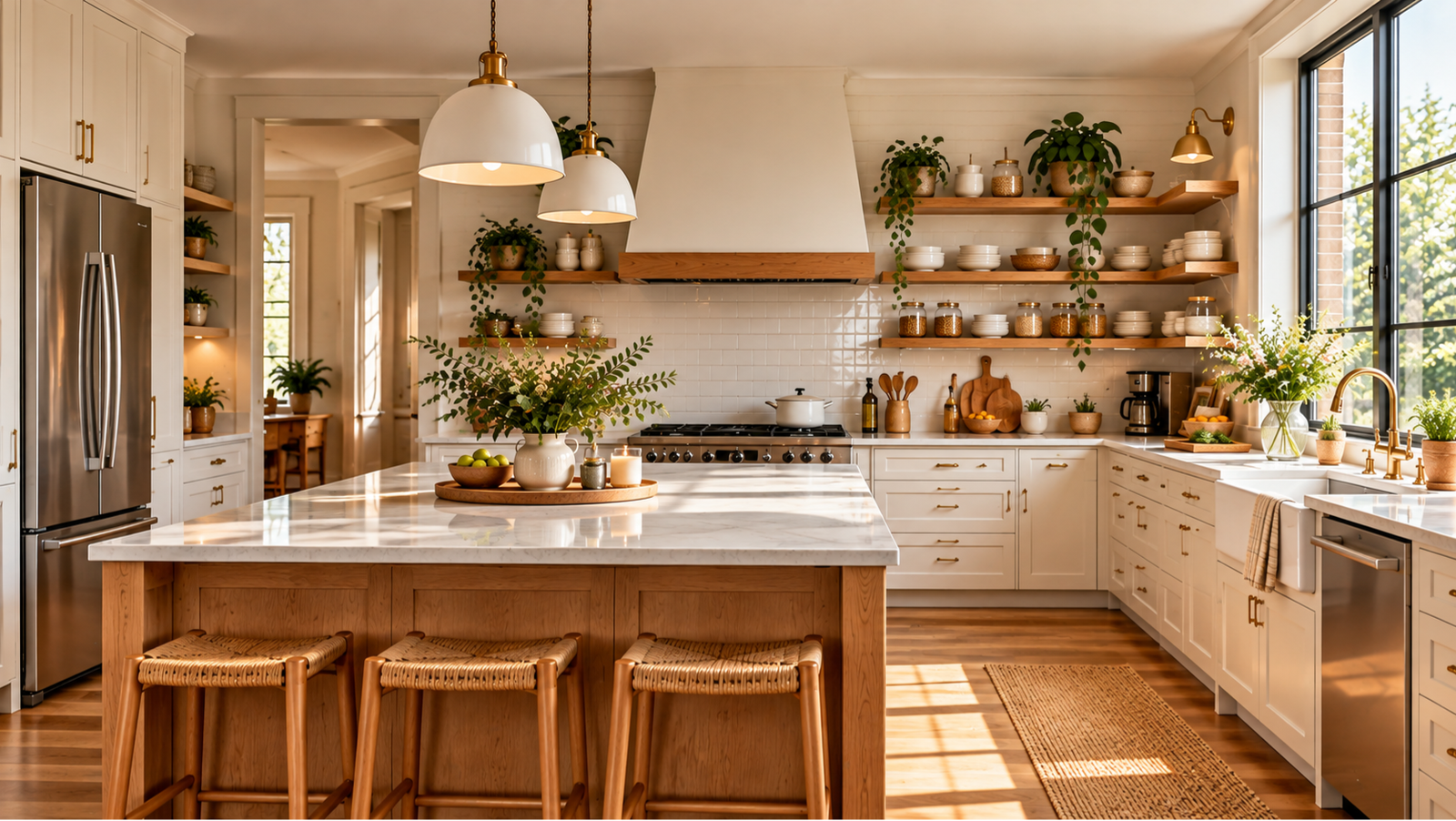
25 Kitchen Organization Ideas to Make Your Space Feel Bigger and More Functional
A kitchen can have plenty of cabinets and drawers and still feel completely disorganized.
The problem is often not the amount of storage you have. It is how that storage is being used.
When countertops become crowded, drawers turn into junk piles, and cabinets are packed so tightly that you have to move three things just to reach one pan, even a large kitchen can feel frustrating.
The good news is that you do not need a full kitchen renovation to make the space work better.
With the right kitchen organization ideas, you can create designated homes for everyday items, make better use of vertical space, reduce countertop clutter, and make your kitchen feel more open and functional.
Whether you have a spacious kitchen or a compact apartment kitchen, these practical ideas can help you organize the space around the way you actually use it.
Why Kitchen Organization Matters
Good kitchen organization is about more than making the room look nice.
It should make everyday tasks easier. When similar items are grouped together and stored close to where they are used, you spend less time searching for things and more time actually using your kitchen.
A well-organized kitchen can also make a space feel larger because fewer items are competing for your attention. The goal is not to hide everything. The goal is to create a system where everything has a logical place.
25 Kitchen Organization Ideas
1. Organize Cabinets by Function
One of the easiest ways to make your kitchen easier to use is to stop organizing cabinets randomly. Instead, group items according to how you use them.
Keep pots and pans near the stove. Store everyday dishes close to the dishwasher or dining area. Keep food-preparation tools near the main prep counter.
This creates functional zones and reduces unnecessary movement around the kitchen. You do not need to completely empty every cabinet at once. Start with one cabinet and ask yourself what you naturally reach for together.
Then reorganize that cabinet around those habits.
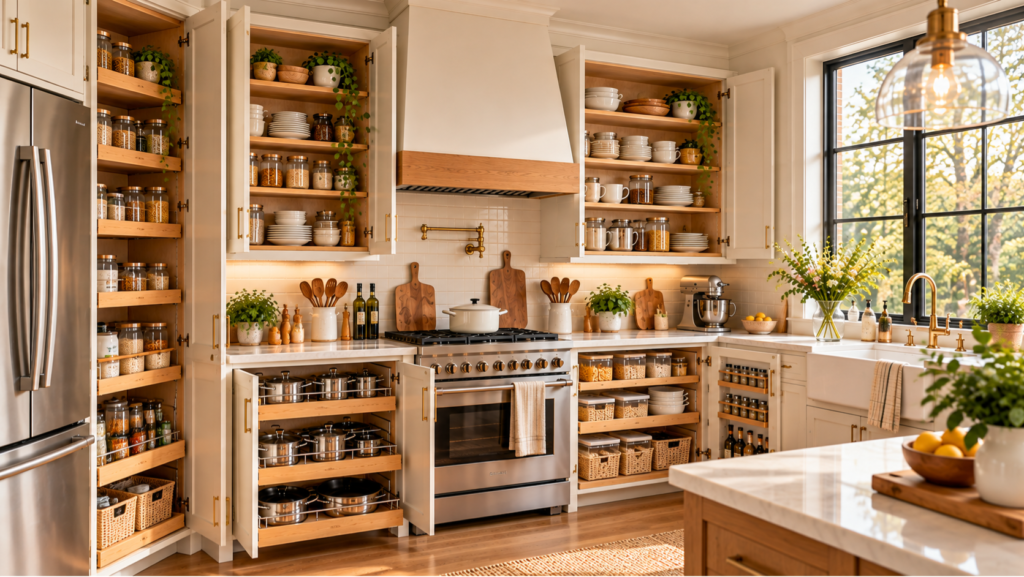
2. Use Shelf Risers to Create More Vertical Storage
Many kitchen cabinets have more vertical space than you actually use.
Shelf risers let you turn one shelf into two levels, making it easier to store plates, bowls, mugs, cans, or small pantry containers.
Instead of stacking everything into one unstable pile, you can create separate levels that make individual items easier to see and reach.
Shelf risers work especially well in cabinets where the distance between shelves is large.
Try this: Use risers for frequently used dishes so you can grab what you need without moving a stack of plates.
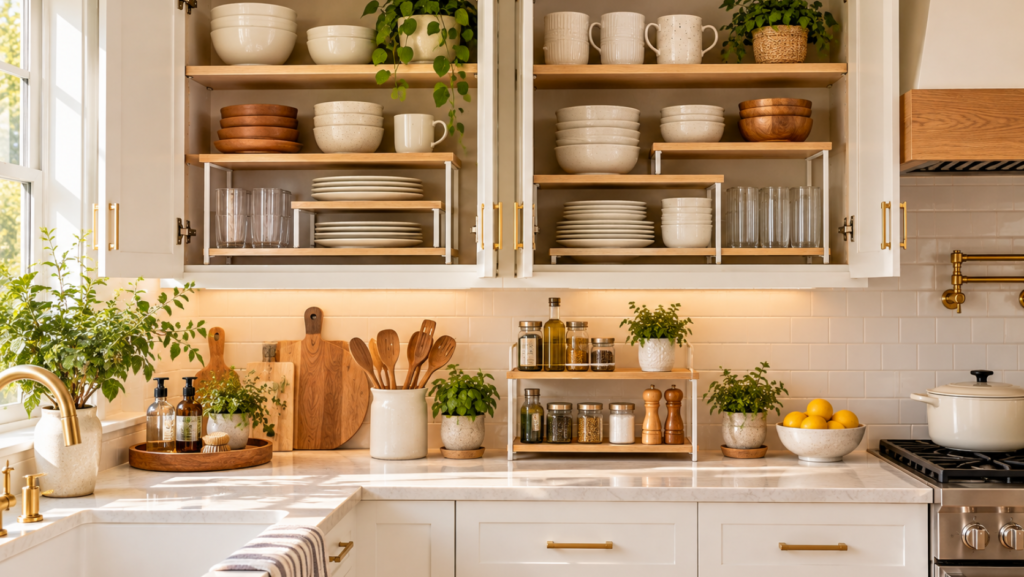
3. Divide Kitchen Drawers Into Sections
A deep drawer can quickly become a collection of random utensils.
Drawer dividers create simple boundaries between different categories and make everything easier to find.
You might create sections for cooking utensils, measuring tools, serving utensils, gadgets, or everyday flatware.
The best layout depends on what you actually own, so organize the drawer after removing duplicates and items you rarely use.
Try this: Keep your most frequently used utensils toward the front of the drawer.
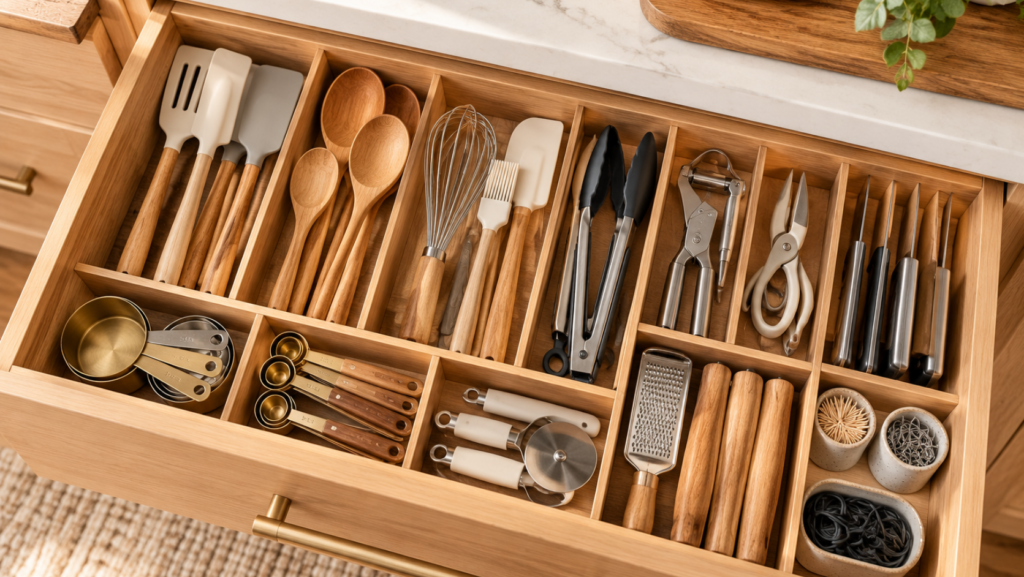
4. Create a Dedicated Cooking Zone
Your stove area should be one of the easiest parts of the kitchen to use.
Keep the tools you regularly need for cooking close to the stove, such as spatulas, wooden spoons, cooking oils, frequently used spices, and oven mitts.
This creates a simple cooking zone where everything needed for a meal is within easy reach.
Avoid storing every kitchen tool in this area. The idea is to keep only the things that support the cooking process.
Try this: Keep your most-used cooking utensils in one drawer, container, or rail close to the stove.
5. Keep Countertops Clear With Intentional Zones
A completely empty countertop may not be realistic for an active kitchen.
Instead, create intentional zones.
Your coffee maker can have a dedicated coffee area. A cutting board can stay near your main prep space. Frequently used cooking tools can remain near the stove.
The difference is that these items are grouped intentionally instead of being scattered across every available surface.
A few useful objects arranged together will usually look much more organized than the same number of objects spread around the kitchen.
6. Use a Tray to Group Countertop Items
A simple tray can make a collection of countertop items look intentional. Use one for coffee supplies, cooking oils, spices, or frequently used breakfast items.
The tray creates a visual boundary, which makes the countertop feel less cluttered. It also makes cleaning easier because you can move the entire group at once.
Choose a tray that fits the space rather than one that takes over the counter.
Try this: Keep only the items you use regularly inside the tray.
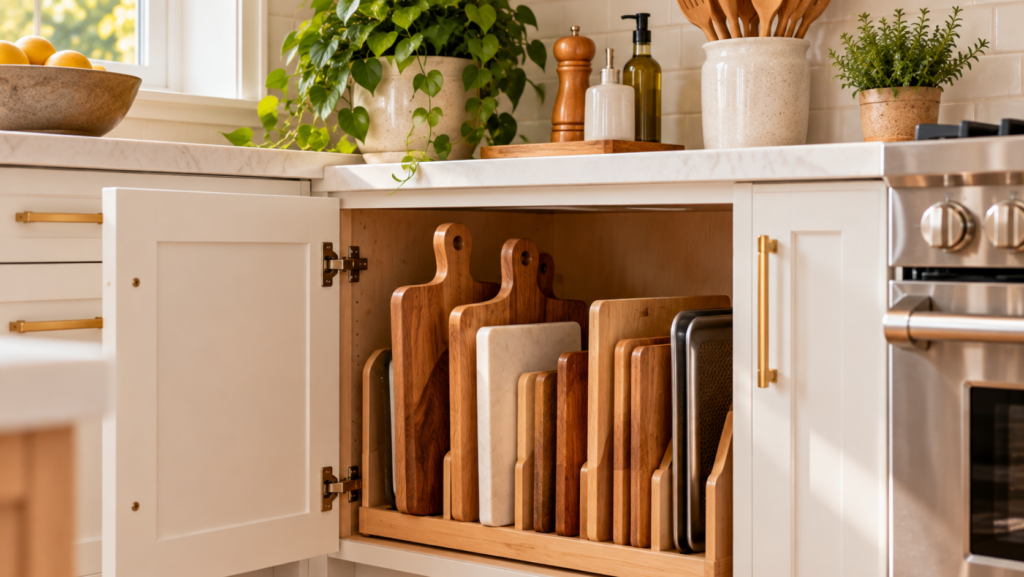
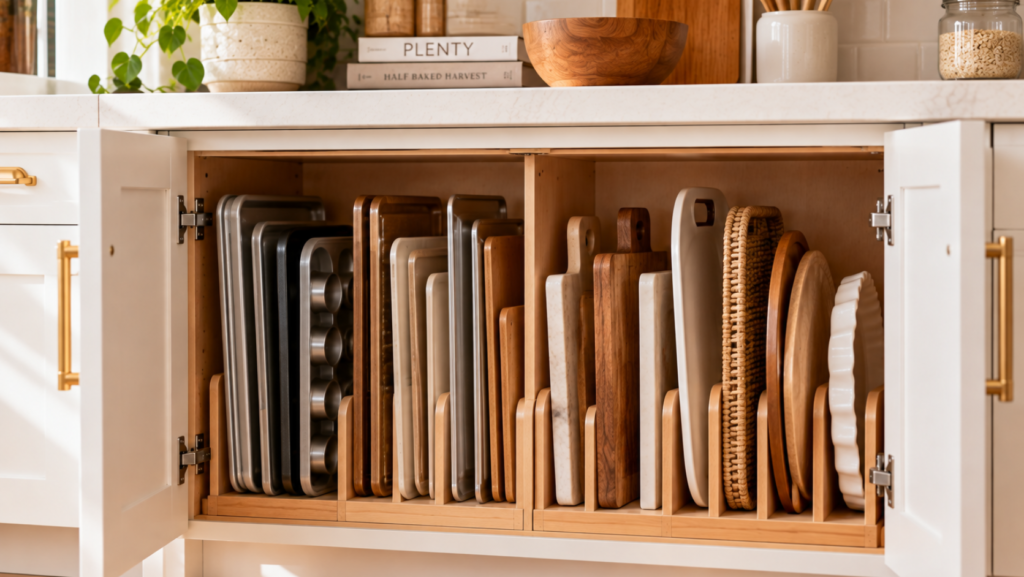
7. Give Your Cutting Boards a Dedicated Home
Cutting boards are awkward because they are large, flat, and difficult to stack neatly.
Instead of leaning them against the wall or leaving them on the counter, create a dedicated storage location.
A narrow cabinet organizer, divider, or vertical slot can keep boards upright and accessible.
If you use one every day, store it close to your main food-preparation area.
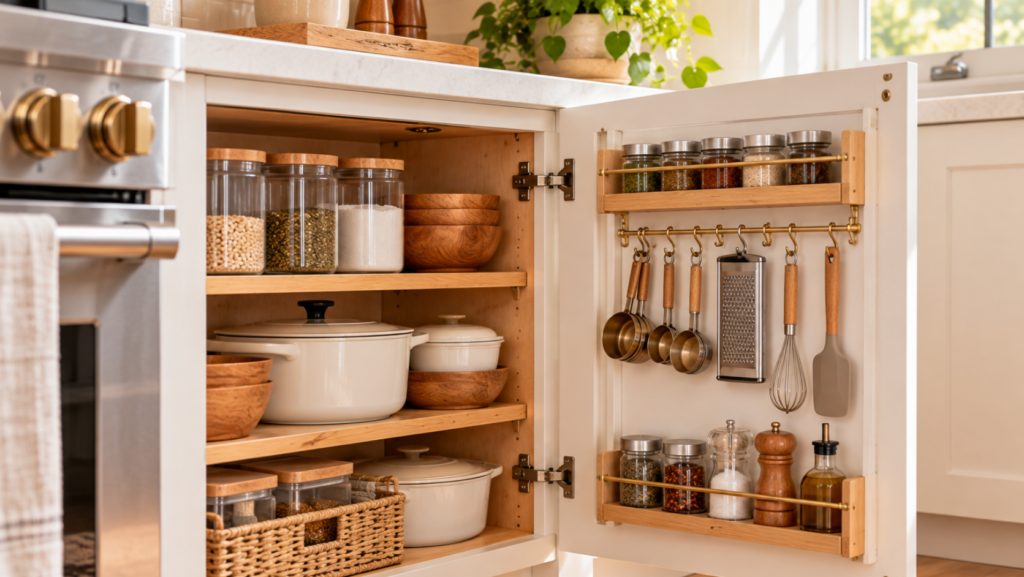
8. Make Better Use of Cabinet Doors
The inside of a cabinet door can provide useful storage without taking up additional floor space.
Depending on the cabinet, you can use slim racks, hooks, or adhesive organizers for lightweight items.
This can work well for measuring spoons, pot lids, cleaning supplies, wraps, or small kitchen tools.
Just make sure the organizer does not interfere with shelves or prevent the cabinet door from closing.
Try this: Reserve cabinet-door storage for small, flat items that are easy to lose inside deep cabinets.
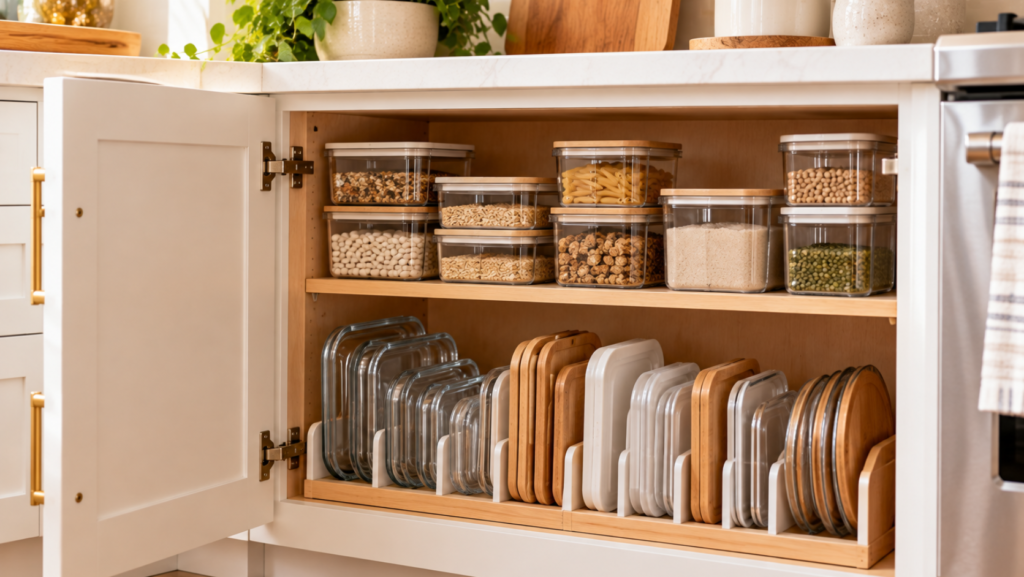
9. Store Food Storage Containers With Their Lids Together
Food storage containers are notorious for becoming messy.
Containers get separated from their lids, different sizes become mixed together, and suddenly an entire cabinet is difficult to use.
Store containers by size and keep their matching lids together.
If possible, stack containers inside one another and store lids vertically in a divider.
This makes it much easier to find the right container when you need it.
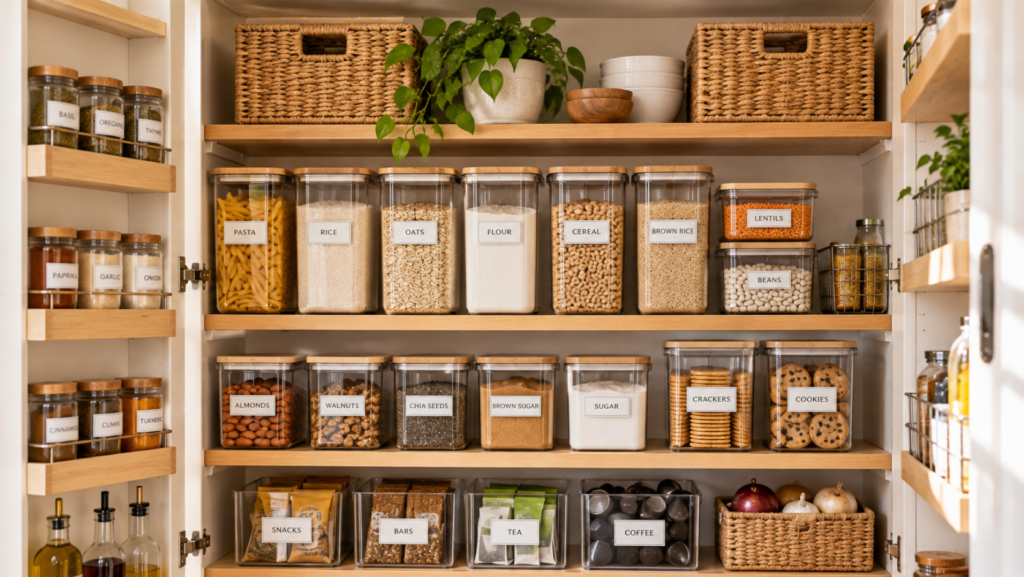
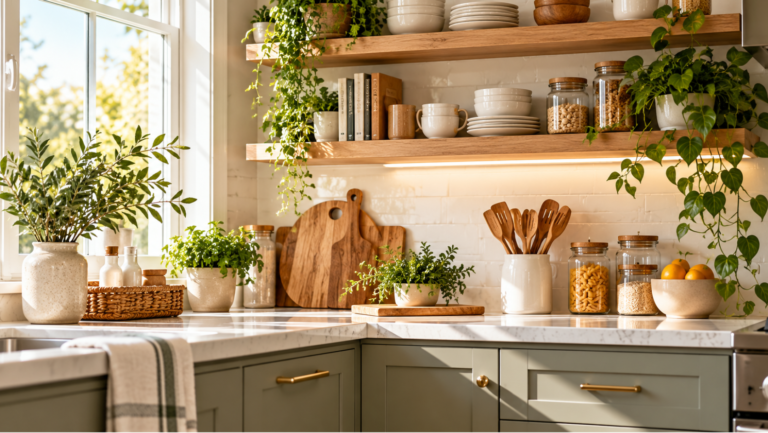
10. Use Clear Containers for Frequently Used Dry Goods
Clear containers can make frequently used pantry ingredients easier to see.
They work especially well for items such as rice, pasta, flour, sugar, cereal, oats, and snacks.
You do not need to transfer every ingredient into matching containers.
Focus on the foods you use often and the areas where visibility would genuinely improve organization.
Labels can also make it easier for everyone in the household to return items to the correct place.
Try this: Choose containers that stack efficiently instead of buying different sizes that create wasted space.
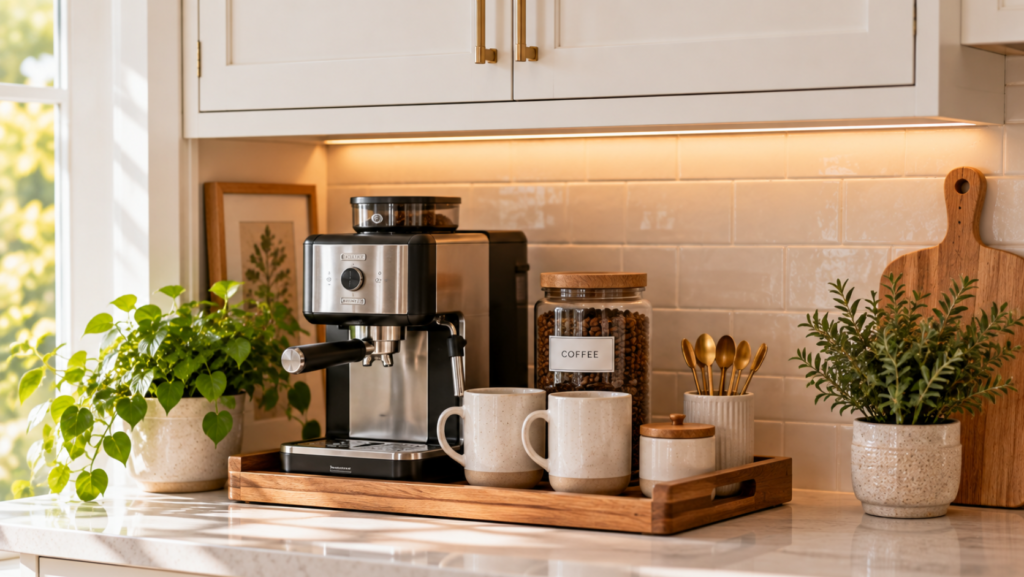
11. Add a Small Coffee Station
If coffee is part of your daily routine, give it a dedicated home.
A coffee station does not need an entire counter.
A small tray can hold your coffee maker, mugs, coffee beans, filters, and other essentials.
Keeping everything together prevents coffee supplies from spreading throughout the kitchen.
Try this: Store backup coffee supplies in a cabinet and keep only your everyday essentials at the station.
12. Organize Pots and Pans Vertically
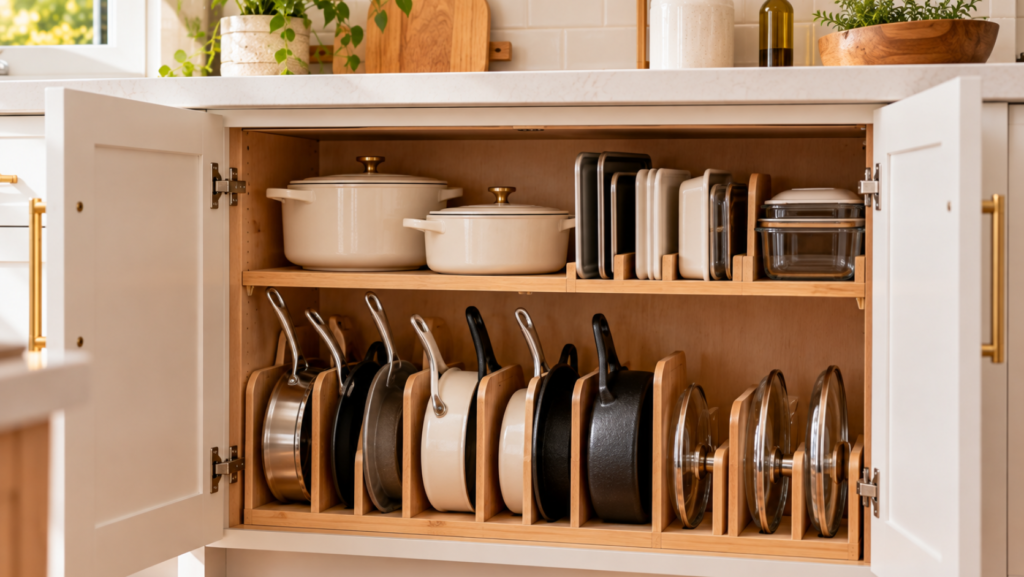
Pots and pans can take up an enormous amount of cabinet space when they are stacked randomly.
A vertical divider can help separate frying pans, baking pans, and other cookware so each piece can be removed without disturbing everything around it.
Another option is to use a properly installed rack to store frequently used pans vertically.
Try this: Keep your most-used cookware toward the front and occasional-use pieces farther back.
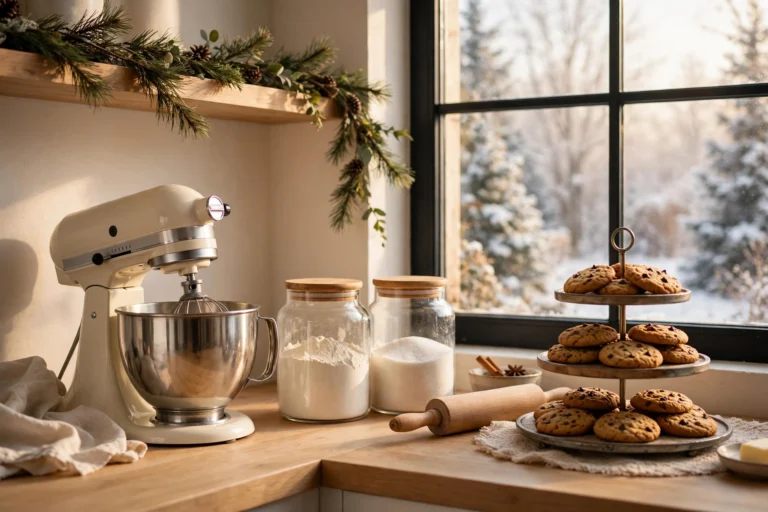
13. Create a Baking Zone
If you bake regularly, keeping baking supplies together can save time.
Create a baking zone for mixing bowls, measuring cups, flour, sugar, baking tools, and frequently used ingredients.
Ideally, place this zone near your main preparation area.
You can also use a dedicated cabinet or shelf for baking equipment so it does not spread across multiple storage areas.
Try this: Group baking ingredients separately from everyday cooking ingredients if you have enough storage.
14. Use Vertical Storage for Baking Sheets and Trays
Baking sheets, cutting boards, cooling racks, and serving trays are much easier to access when stored vertically.
Instead of stacking them in a tall pile, use a divider to create individual slots.
This makes it possible to pull out one tray without removing everything else.
It also makes use of the vertical height inside a cabinet that might otherwise be wasted.
15. Give Everyday Appliances a Logical Home
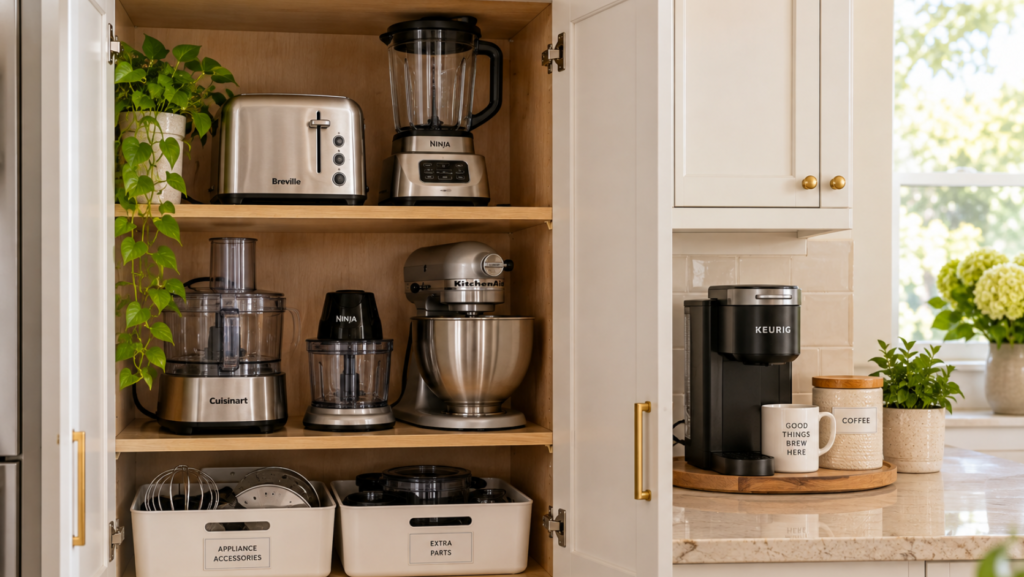
Small appliances can quickly take over a kitchen. Think about how often you use each appliance before deciding where it should live.
A coffee maker used every morning may deserve a permanent countertop position. A food processor used once a month probably does not.
Organize appliances according to frequency of use so the kitchen remains convenient without sacrificing valuable counter space.
Try this: Create three groups: daily use, weekly use, and occasional use.
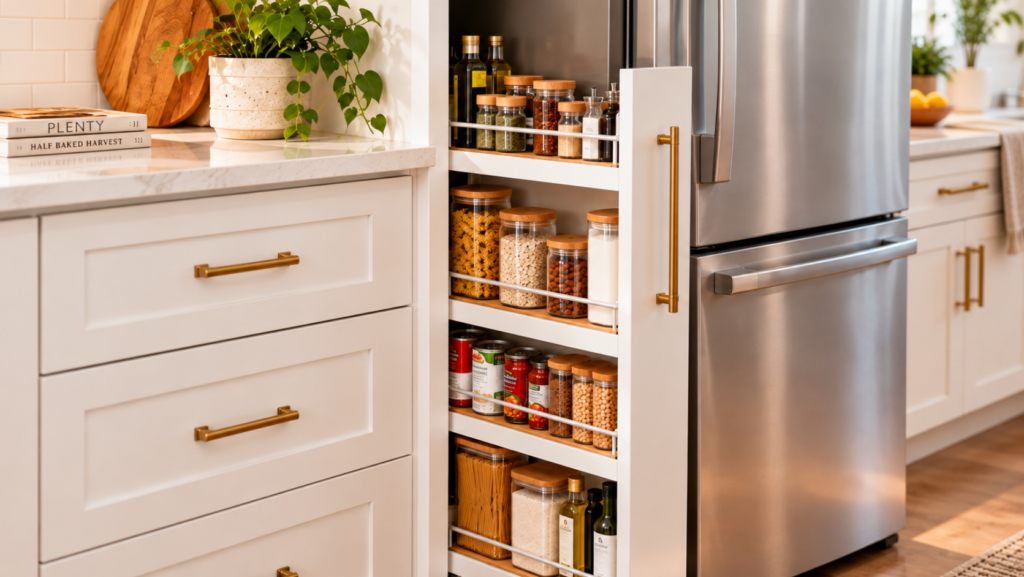
16. Use a Narrow Space for Extra Storage
Look around your kitchen for narrow gaps that are currently doing nothing.
A space beside the refrigerator, between cabinets, or along an unused wall may be wide enough for a slim rolling cart or narrow shelving unit.
These spaces are particularly useful for pantry overflow, spices, cleaning supplies, or small appliances.
Measure carefully before adding anything so the storage does not interfere with doors or walkways.
17. Add Hooks Where They Actually Help
Hooks are inexpensive and useful, but they should have a purpose.
Use them for lightweight items that you reach for regularly, such as measuring cups, kitchen towels, mugs, or utensils.
A few strategically placed hooks can free up drawer and cabinet space.
Avoid covering every available wall with hooks. Too many visible objects can make the kitchen feel busier.
Try this: Choose one small area for hooks and use it for a single category.
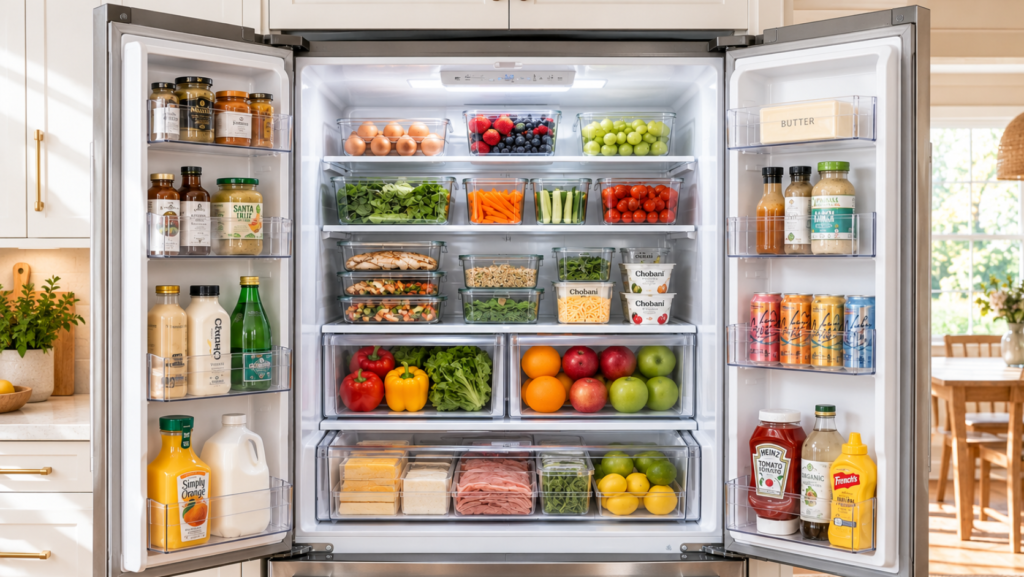
18. Organize the Refrigerator by Category
Kitchen organization does not stop at cabinets and drawers.
A simple refrigerator system can make meal preparation easier and help reduce food waste.
Group similar foods together. Keep drinks in one area, dairy in another, produce together, and ready-to-eat foods where they are easy to see.
Clear bins can help contain smaller items and prevent them from getting pushed to the back.
19. Create a Dedicated Cleaning Zone
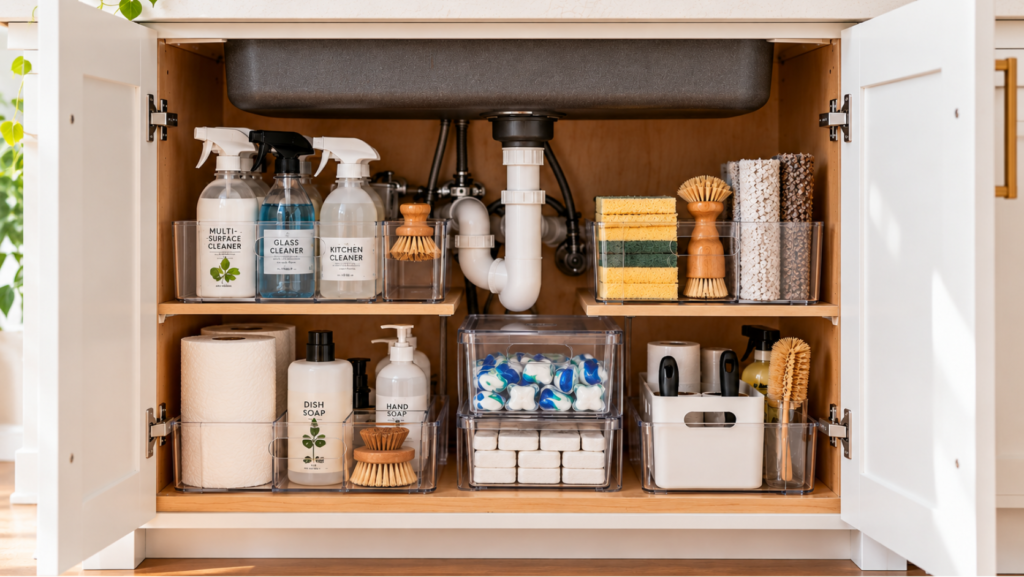
Cleaning supplies are easier to manage when they have a designated home.
The cabinet underneath the sink is often the most practical location, but you can also use a nearby cabinet or narrow storage area.
Group sprays, sponges, brushes, dishwasher supplies, and cleaning cloths together.
Use small bins to prevent products from becoming mixed together.
Try this: Keep the products you use most often toward the front and less frequently used supplies farther back.
20. Use Lazy Susans for Hard-to-Reach Corners
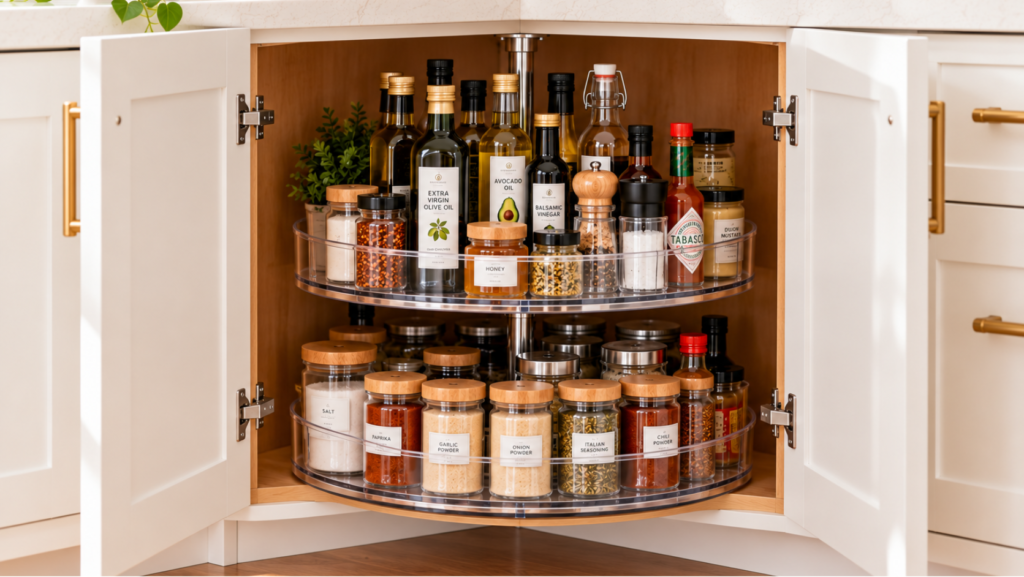
Corner cabinets can become difficult to use because items disappear toward the back.
A lazy Susan can make these spaces much more accessible. They work particularly well for sauces, oils, spices, condiments, and other small containers.
Instead of reaching behind several bottles, you can rotate the organizer and bring the item toward you.
21. Create a Simple Spice System
Spices are small, but they can create a surprisingly frustrating storage problem.
Keep your most-used spices easy to see and group them together.
A drawer, narrow shelf, cabinet riser, or spice organizer can work depending on your kitchen layout.
You do not necessarily need matching jars. The priority is being able to see what you have and find it quickly.
Try this: Arrange spices alphabetically only if that feels useful to you. Otherwise, group them by frequency or type.
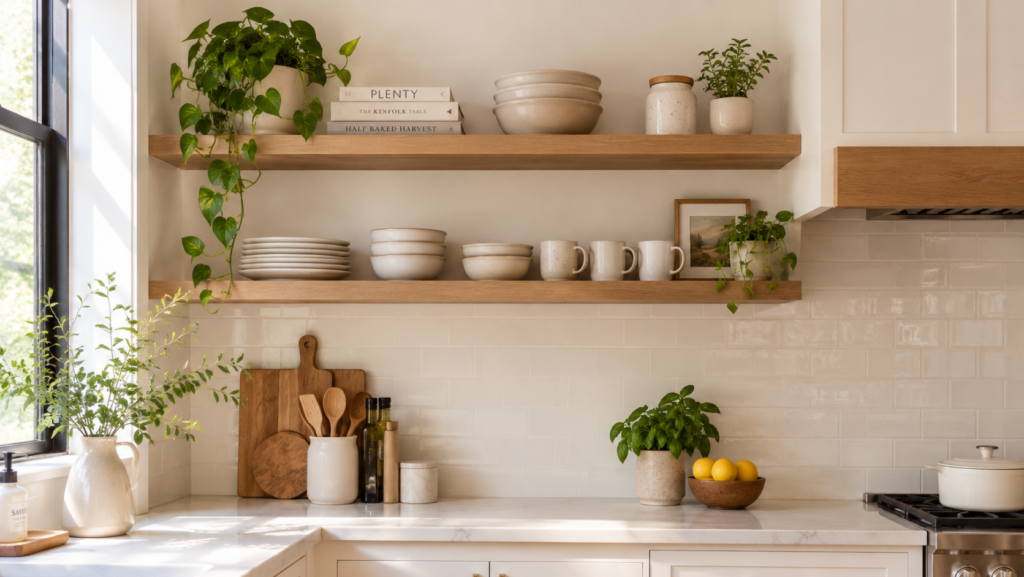
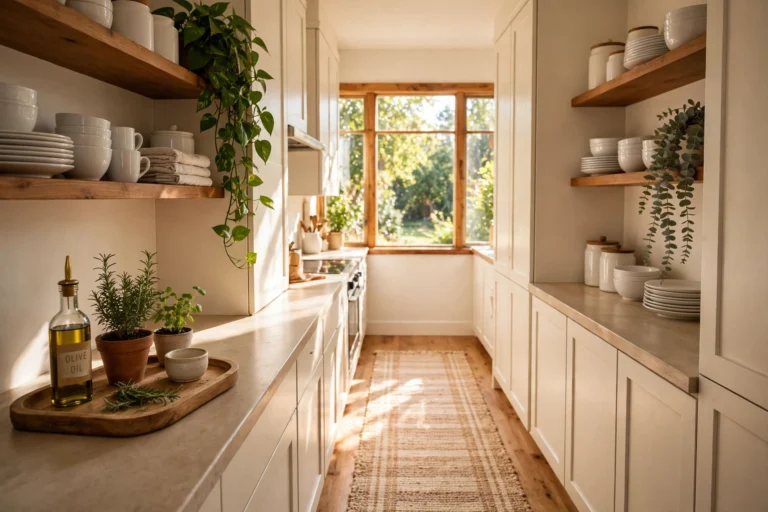
22. Use Open Shelving Carefully
Open shelves can make a kitchen feel lighter and provide easy access to everyday items.
But because everything is visible, they require more visual discipline than closed cabinets.
Use open shelving for attractive everyday pieces such as plates, bowls, mugs, cookbooks, or a few decorative items.
Avoid turning the shelves into overflow storage.
23. Organize Kitchen Items by Frequency of Use
Not everything deserves the easiest-to-reach storage.
Think about your kitchen in three categories:
Daily: Items you use almost every day.
Weekly: Items you use regularly but not daily.
Occasional: Items used only for holidays, entertaining, baking projects, or special meals.
Keep daily items within easy reach. Store occasional items in higher cabinets, deeper drawers, or less accessible areas. This simple change can make your kitchen feel much easier to navigate.
24. Give Every Kitchen Category a Home
A kitchen becomes much easier to maintain when every major category has a designated home.
Instead of having kitchen towels in three different drawers, choose one location. Do the same for food containers, baking supplies, coffee equipment, cleaning products, spices, utensils, and cookware.
When every category has a home, putting things away becomes almost automatic.
Try this: If an item does not have a clear home, decide whether you need it before creating more storage for it.
25. Leave Some Empty Space
This may be the most overlooked kitchen organization idea of all. You do not have to fill every shelf, drawer, cabinet, or countertop. Leaving some empty space makes the kitchen easier to use and gives you room to put things away after shopping or cooking.
It also makes the entire room feel less visually crowded. A well-organized kitchen is not one that contains the maximum number of items. It is one where the items you own have enough room to function comfortably.
How to Keep Your Kitchen Organized Long-Term
Organizing your kitchen once is useful. Creating a system that stays organized is even better. The easiest way to maintain your kitchen is to build small habits around the systems you already created.
Put Things Back Immediately
When an item has a designated home, return it there after using it. This prevents small amounts of clutter from becoming a large weekend cleanup.
Do a Quick Reset Each Evening
You do not need to deep-clean the entire kitchen every night. Spend a few minutes returning items to their places, clearing unnecessary countertop items, and dealing with dishes.
Review Problem Areas Regularly
If one drawer constantly becomes messy, the problem may not be your discipline. The system itself might not be working. Change the layout, remove unnecessary items, or create better categories.
Avoid Organizing More Than You Need
Do not constantly buy new containers and organizers. The best system is usually the simplest one that makes your kitchen easier to use.
What Should You Organize First in a Kitchen?
If your entire kitchen feels overwhelming, do not try to organize everything at once. Start with the areas that affect your daily routine the most.
A good order is:
- Countertops
- Everyday utensil drawer
- Main cooking area
- Food storage
- Pots and pans
- Everyday dishes
- Small appliances
- Under-sink storage
- Less frequently used items
Start with one small area and finish it before moving to another. Seeing one organized space can make the rest of the kitchen feel much more manageable.
Frequently Asked Questions
What is the best way to organize a kitchen?
The best approach is to organize the kitchen according to function and frequency of use. Keep everyday items close to where they are used, group similar categories together, and use vertical or overlooked spaces for additional storage.
How do I organize a kitchen with limited cabinet space?
Start by decluttering items you rarely use. Then maximize vertical cabinet space with shelf risers, use cabinet doors, add narrow storage where possible, and move occasional-use items into less accessible areas.
How can I make my kitchen feel less cluttered?
Keep countertops intentionally clear, avoid overfilling open shelves, group similar items together, and give every major category a designated home.
What should I organize first in my kitchen?
Start with your countertops and the areas you use every day. Once those are working well, move into drawers, cabinets, pantry storage, and less frequently used areas.
How do I keep my kitchen organized?
Create simple homes for each category and return items to those homes after use. A short daily reset and occasional decluttering will help prevent the system from breaking down.
Should I use matching storage containers?
Matching containers can create a cleaner appearance and may use space efficiently, but they are not necessary. Use them where they solve a real storage or visibility problem rather than buying containers simply for aesthetics.
Final Thoughts
The best kitchen organization system is not necessarily the one with the most containers, labels, or storage products.
It is the system that makes your everyday life easier. Give frequently used items to convenient homes. Use vertical space. Take advantage of cabinet doors and awkward corners. Keep countertops intentional instead of overcrowded.
And do not be afraid to leave some empty space. When every item has a logical place and the kitchen is organized around the way you actually use it, the room can feel noticeably bigger, calmer, and more functional without changing its actual size.

2 Comments