
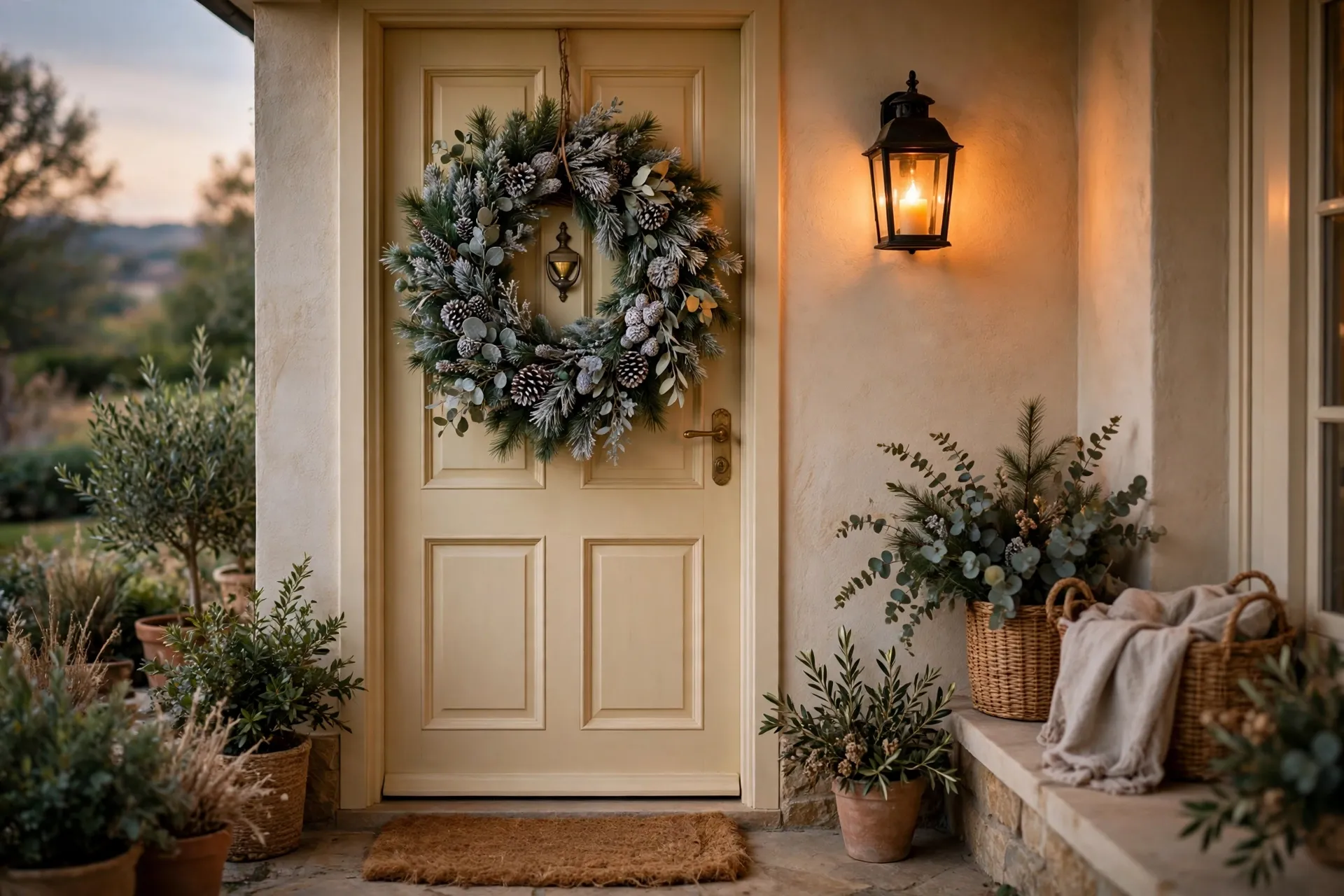
25 Winter Wreath Ideas for a Cozy Home
The first January after we moved into this house, I took the Christmas wreath off the front door and stood there staring at a very bare piece of wood. The door looked naked. The whole entryway looked like it had forgotten something. I had spent weeks making the house feel festive, and one hook later, all of it was gone. That was the winter I learned that a wreath is not a Christmas decoration. It is a winter decoration that happens to look great at Christmas too.
The next weekend I went back to the craft store with a different plan. I bought a plain evergreen wreath, no red, no gold, nothing that screamed December. I added eucalyptus, a few pinecones, and a cream ribbon, hung it up, and stepped back. The door looked warm again, and it stayed warm straight through February. IMO, a good winter wreath is the easiest win in the whole house. One hook, one wreath, and the front of your home feels finished for three months.
This guide has 25 winter wreath ideas that actually work in a real home, organized by where you will hang them: the classics, the front door, inside the house, the ones you make yourself, the small space and budget options, and how to keep them fresh all winter. Two simple rules run through all of it.
The first is my Keep, Swap, Add rule. When Christmas ends, keep the evergreens, swap out anything red or gold, and add something soft and wintry in its place. Keep the pine and cedar. Swap the red berries for white ones, or the gold ribbon for a cream one. Add eucalyptus, dried oranges, or a soft wool bow. That is the whole transition, and it takes about ten minutes. A Christmas wreath and a winter wreath are the same wreath with a different attitude.
The second is my Three Texture rule. Every winter wreath needs three textures: something green, something soft, and something that catches the light. The green is your evergreen base. The soft is a ribbon, a bit of faux fur, or dried grasses. The sparkle is a pinecone dusted with faux snow, a small glass ornament, or a string of warm fairy lights. If a wreath looks flat, one of the three is usually missing.
At the end, I will show you my Curb Test, the thirty second check that tells you whether your wreath is doing its job. But first, the wreaths themselves.
Start With the Classics: Winter Wreaths That Never Fail
The classics are classics for a reason. They work on every door, in every style of house, and they never look dated in a photo. If you only buy one wreath this winter, buy one from this section.
1. A full evergreen wreath with nothing else on it
A plain, full evergreen wreath is the most underrated decoration in the house. No ornaments, no ribbon, just deep green pine and cedar layered thick. It smells wonderful, it looks expensive, and it goes with absolutely everything. Hang it on the front door with a simple hook and let the greenery do the talking. FYI, this is the wreath to buy if you hate fussing with decor. It needs nothing added to it, and it looks right from December through March.
2. Eucalyptus and pine, the fresh modern classic
Eucalyptus is the reason so many winter wreaths look calm instead of busy. Mix silver dollar eucalyptus with pine branches and you get a wreath that feels fresh, modern, and a little bit fancy. The soft gray green of the eucalyptus plays beautifully against dark green pine, and the scent is lovely every time you open the door. For more fresh winter greenery ideas, see my guide to winter home decor.
3. Pinecones dusted with faux snow
Pinecones are free if you gather them yourself, and they are the fastest way to make a wreath look wintry. Tuck large pinecones into an evergreen base and dust them lightly with faux snow spray. The white tips catch the light and make the whole wreath look frosted, like it just came in from a snowy walk. Gather the pinecones in the fall, let them dry out fully, and bake them at a low temperature for half an hour to open the scales and chase out any bugs before you use them.

4. Magnolia leaves in soft green and brown
Magnolia leaves are the quiet luxury of winter wreaths. Their glossy green tops and soft brown undersides give a wreath depth without any color at all. A magnolia wreath looks just as good on a white farmhouse door as it does on a dark painted one, and it dries beautifully, so it keeps its shape for months. If you live somewhere warm, magnolia is your best friend, because it does not wilt the way pine can in a mild winter.
5. Dried oranges and cinnamon sticks
Dried orange slices are the oldest winter trick there is, and they still work. Their warm amber color glows against green pine, and they smell faintly sweet every time the door opens. Slice oranges thin, dry them low and slow in the oven, and wire them onto the wreath in clusters of three. Add a few cinnamon sticks tied with twine and you have a wreath that looks and smells like winter itself. It costs almost nothing, which makes it my favorite budget wreath of the whole list.
The Front Door: Make Your Entrance Feel Like a Hug
The front door is where a winter wreath earns its keep. It is the first thing guests see, the last thing you see when you leave, and the thing that makes the whole house feel welcoming on a cold evening. These five ideas are all about the entrance.
6. Go big with an oversized wreath
A small wreath on a big door looks lost, like a postage stamp on a billboard. Measure your door first. For a standard front door, a wreath of 30 to 36 inches across looks generous without overwhelming it. An oversized wreath fills the space, reads clearly from the street, and makes the whole entrance feel intentional. If your door is double width, one big wreath centered on each door looks far better than one small wreath in the middle.
7. Hang a matching pair on double doors
Double doors are made for pairs. Hang two identical wreaths, one on each door, at exactly the same height, and the entrance looks like it belongs in a magazine. The trick is the height: hang them so the center of each wreath sits at about eye level, and use the same hook on both doors so they line up perfectly. When the doors open together, the pair frames whoever walks in, which is a lovely welcome.
8. Layer a wreath over a welcome sign
A wreath hung over a simple wooden welcome sign gives the door two layers of warmth. The sign grounds the wreath, and the wreath softens the sign. Keep the sign short, one word, in a clean font, and let the wreath overlap the top of it slightly. This works especially well on a narrow door where a big wreath alone would look crowded. For more front door styling ideas, see my guide to hygge winter decor.
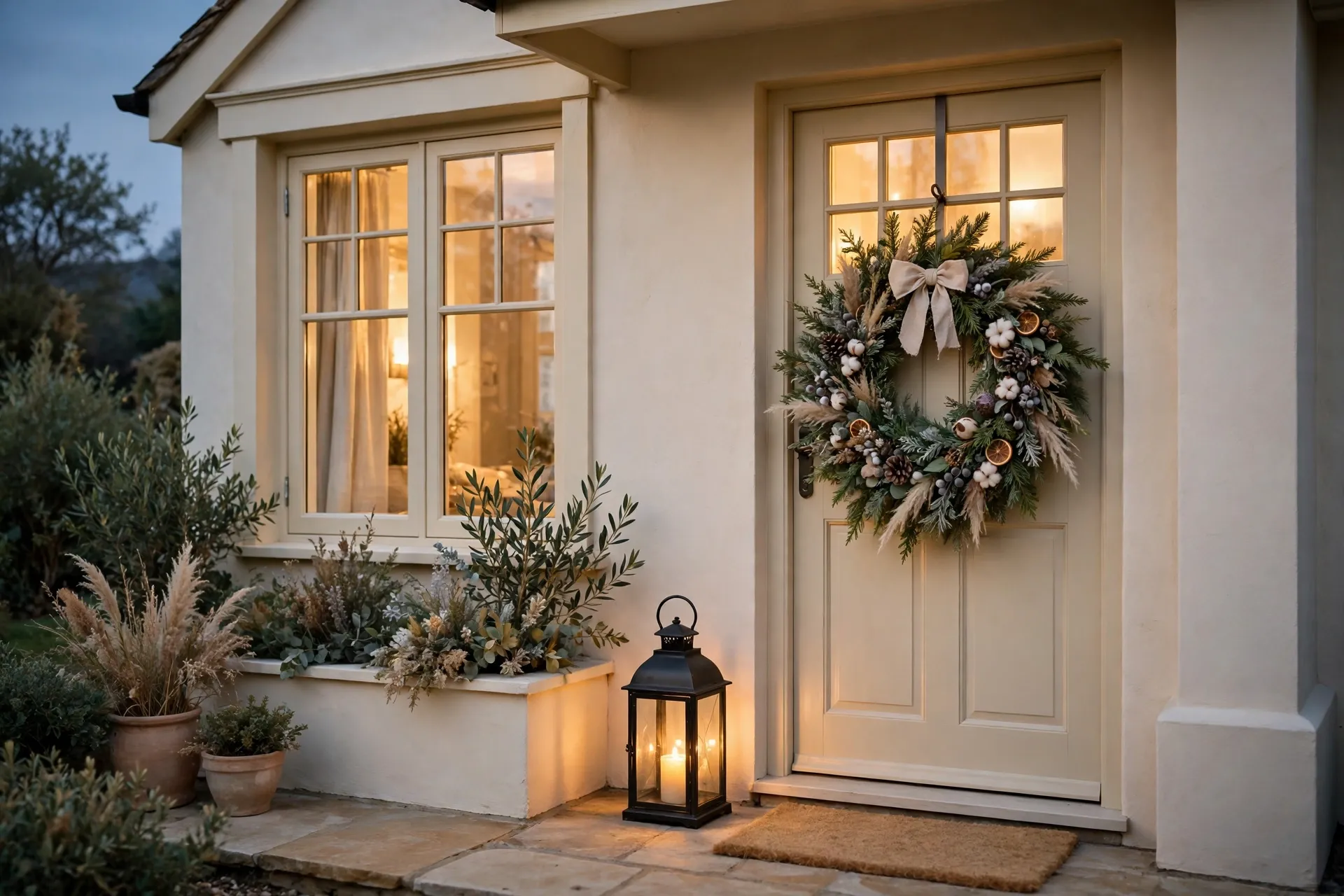
9. Add lanterns and a doormat to complete the scene
A wreath alone is nice. A wreath with a lantern on each side of the door and a thick coir doormat underneath is a whole entrance. The lanterns give you warm light at dusk, the doormat adds texture underfoot, and the wreath ties it all together. Keep the lanterns in the same finish, black or brass, and use battery candles so you never have to think about them. The whole scene should feel like it grew there naturally, not like you staged it for a photo.
10. Hang the wreath inside the storm door
If you have a storm door, hang the wreath on the inside of it, on the main door itself, so it is protected from wind and rain but still visible through the glass. Use a suction hook or a magnetic hook on the glass, or hang it from the main door with a ribbon over the top. The glass adds a soft glow, and the wreath lasts twice as long because it never gets wet. This is the trick I wish someone had told me before my first wreath turned brown in a January rainstorm.
Bring Wreaths Inside: Winter Warmth in Every Room
Wreaths do not belong only on the front door. Inside, a wreath softens a bare wall, warms up a mirror, and makes a room feel finished. These five ideas take the wreath off the door and into the house.
11. Hang a wreath over the mantel
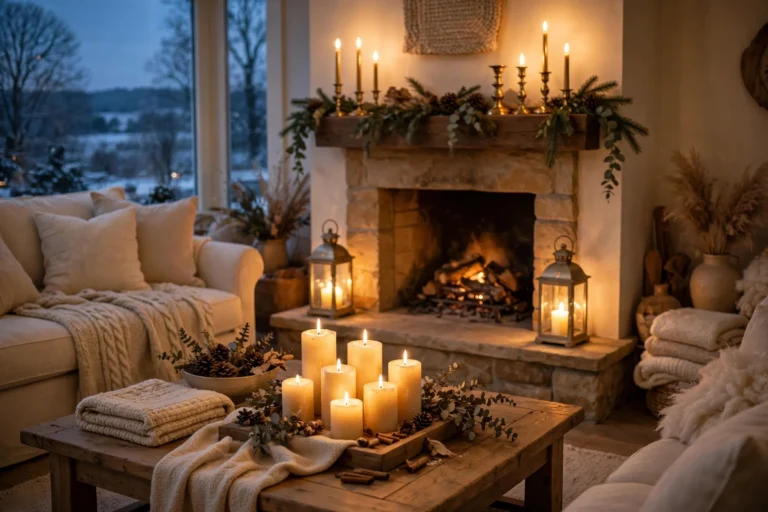
A wreath over the mantel is the coziest thing you can do in a living room in January. The fireplace is already the warm heart of the room, and a wreath above it makes the whole wall feel complete. Choose a wreath slightly smaller than the mantel is wide, hang it from a hook or a nail hidden behind the top, and keep the mantel styling simple underneath: a few candles, a stack of books, nothing that competes. For more mantel styling, see my guide to Christmas wreath ideas.
12. Layer a wreath on a mirror
Hang a small wreath in front of a mirror and you get two wreaths for the price of one, because the mirror doubles it. The reflection adds depth and light to a hallway or entryway that can feel dark in winter. Use a ribbon to hang the wreath from the top of the mirror frame so it floats in the center, and keep the wreath slim so it does not cover the whole mirror. A eucalyptus wreath works best here because it is light and airy.
13. Put a wreath on the dining room wall
The dining room is where winter gatherings happen, and a wreath on the wall behind the table makes every meal feel a little more special. Hang it at eye level when you are seated, not standing, so it sits in your sightline during dinner. A wreath with dried oranges and cinnamon works beautifully here, because the scent drifts over the table. Keep it flat against the wall so it does not shed pine needles into the soup.

14. Hang mini wreaths on bedroom doors
Mini wreaths on bedroom doors are the sweetest small touch in the house. A six inch wreath on each bedroom door, tied with a cream ribbon, makes the hallway feel like a cozy inn. Kids love choosing their own ribbon color, and it is a lovely way to make a guest room feel welcoming. Use a small adhesive hook so you do not mark the door, and keep the wreath light so the hook holds all winter. For more cozy bedroom styling, see my guide to winter bedroom decor.
15. Dress up kitchen cabinet doors with tiny wreaths
Tiny wreaths on kitchen cabinet doors are the detail guests notice and immediately ask about. Use four inch wreaths, one on each upper cabinet door, tied with a thin ribbon looped over the top of the door. The ribbon hides inside the cabinet, so nothing shows but the wreath. Keep them identical for a calm look, or vary the ribbon color slightly for a playful one. This is a five minute project that makes the whole kitchen feel styled.
Make It Yourself: Easy DIY Winter Wreaths
You do not need to be crafty to make a winter wreath. You need a base, some greenery, and about an hour. These four projects are the ones I actually make, and none of them requires special tools.
16. Start with a grapevine base and fill it with foraged branches
A grapevine wreath base costs a few dollars and lasts for years. Buy one, then fill it with branches you cut yourself: pine, cedar, fir, whatever grows nearby. Tuck the branches into the grapevine in the same direction, working around the circle, and secure them with floral wire. Add pinecones last, wired in place. The whole thing takes about an hour, and the smell of fresh cut pine in the house is worth the effort alone.
17. Dry your own orange slices for a citrus wreath
Dried orange slices are the prettiest cheap wreath material there is. Slice oranges about a quarter inch thick, lay them on a baking sheet, and dry them in the oven at its lowest setting for two to three hours, flipping once. They should feel dry and slightly stiff, not sticky. Wire them onto a grapevine base in clusters, add a few sprigs of rosemary, and finish with a cream bow. The wreath costs less than five dollars and looks like it came from a boutique.
18. Tie the perfect bow, the florist way
A bad bow can ruin a good wreath, and a good bow can save a plain one. Here is the florist trick: make two loops like bunny ears, cross the right loop over the left, pull it through the hole underneath, and then pull both loops outward while keeping the tails straight. Fluff the loops by pulling the edges gently, and trim the tails at an angle. Practice twice on a scrap ribbon before you do it on the wreath. A wired ribbon holds its shape far better than a soft one, so buy the wired kind.
19. Turn a thrifted wreath into a new one
Thrift stores are full of tired old wreaths for a dollar or two, and most of them have a perfectly good base hiding under the faded decorations. Strip off the old ornaments, keep the evergreen base, and rebuild it with your own greenery, ribbon, and pinecones. Spray the base lightly with faux snow if it looks dull. This is the cheapest way to get a full, lush wreath, and it keeps a good base out of the trash.
Small Spaces and Small Budgets: Wreaths for Everyone
Not everyone has a big front door and a big budget. These three ideas are for apartments, narrow entries, and wallets that need a break.
20. A slim wreath for an apartment door
Apartment doors are often narrow, and a big wreath can overwhelm them and annoy the neighbors. A slim wreath, about 18 inches across and flat against the door, gives you the welcome without the bulk. Eucalyptus works best for slim wreaths because it lies flat naturally. Hang it with a magnetic hook or an over the door hook that leaves no marks, because your landlord will notice. A slim wreath is also the easiest one to store when spring comes.
21. One wreath, three rooms: move it through the season
If your budget allows only one wreath, make it work hard. Hang it on the front door for December, when guests are coming and going. Move it to the mantel in January, when you are spending evenings by the fire. Move it to the dining room wall in February, when the days are getting longer and you want the table to feel special. One wreath, three looks, and nobody will notice it is the same one, because the setting changes everything.
22. A five dollar wreath from the dollar store
A plain evergreen wreath from the dollar store, a roll of cream ribbon, and a bag of pinecones from your own yard will make a wreath that looks ten times its price. The trick is the ribbon. A wide, good quality ribbon on a cheap wreath makes the whole thing look expensive, while a thin, shiny ribbon makes even a nice wreath look cheap. Spend your money on the ribbon, not the wreath. This is the Buy Once rule in action: buy one good ribbon, use it on every wreath you ever make.
Keep It Fresh All Winter Long
A winter wreath should last from December to March, but only if you treat it right. These three ideas are about care, not decoration, and they are the difference between a wreath that looks fresh in February and one that looks tired by New Year.
23. Weatherproof the wreath before you hang it
Before a fresh wreath goes outside, spray it lightly with an anti-desiccant spray, the kind sold for Christmas trees. It seals in moisture and slows down drying. Hang the wreath in a spot that gets some shelter from direct wind, and bring it inside during a hard freeze or a heavy ice storm if you can. A wreath that stays dry lasts weeks longer than one that gets soaked and frozen over and over.
24. Refresh the wreath in mid January with one swap
By mid January, even a good wreath starts to look a little tired. Do not replace it. Refresh it with one swap: take off the bow and put on a fresh one in a different texture, or pull out a few browned sprigs and tuck in fresh eucalyptus. One small change makes the whole wreath look new again, and it costs nothing. This is the Keep, Swap, Add rule working at the smallest scale, and it is the reason my wreaths last the whole winter.
25. Store the wreath properly so next year is easy
When spring finally comes, do not toss the wreath in a bag and forget it. Hang it on a hook in a closet, or lay it flat in a wreath storage box with tissue paper between the layers. Keep it somewhere cool and dry, out of the attic heat. A well stored wreath comes out next December looking almost new, and you will thank yourself when you open the box and find a wreath instead of a flat, dusty circle.
Weather, Budget, and Troubleshooting
A few practical notes before you hang anything. First, the weather check. If your door faces south and gets full sun, a fresh wreath will dry out fast, so choose a faux wreath or a hardy magnolia one that handles sun better. If your door is covered and shaded, a fresh pine wreath will last for months. Wind is the real enemy: a wreath that swings and bangs against the door will shed needles fast, so secure it with a hook that holds it tight, not a loose ribbon.
On budget, here is my honest math. A good faux wreath costs thirty to fifty dollars and lasts five years or more, which is about eight dollars a winter. A fresh wreath costs fifteen to twenty five dollars and lasts one season. A DIY wreath costs five to ten dollars in materials and an hour of your time. Buy once if you want the same look every year. Go fresh if you love the smell and the ritual. Go DIY if you enjoy making things and want a wreath nobody else has. All three are good choices, and the wrong choice is buying a cheap wreath every year that looks tired by January.
If your wreath sheds needles everywhere, it is too dry. Mist it lightly with water every few days, or move it to a shadier spot. If the bow keeps drooping, the ribbon is too soft. Switch to a wired ribbon, or spray the bow lightly with hairspray to stiffen it. If the wreath looks lopsided, hang it, step back, and turn it a quarter turn at a time until it looks balanced. Most lopsided wreaths are just hung at the wrong angle. And if your hook keeps falling off the door, clean the surface with rubbing alcohol first, then press the hook on and wait a full day before hanging the wreath. The adhesive needs time to bond.
Now, the Curb Test. Hang the wreath, close the front door, walk to the end of your driveway or across the street, and turn around. That is what your guests see, and that is what the wreath is for. From the curb, the wreath should be clearly visible, centered on the door, and big enough to read. If it disappears from the curb, it is too small or too dark. If it looks perfect from the curb, it will look perfect up close too. Thirty seconds, one walk, and you will know.
Frequently Asked Questions
How long does a fresh winter wreath last outside?
A fresh evergreen wreath lasts four to six weeks outside in cold weather, and longer if the door is covered and shaded. Mist it with water every few days and keep it out of direct wind to stretch it toward eight weeks.
Can I use my Christmas wreath as a winter wreath?
Yes, and it is the easiest switch of the season. Take off the red berries, gold ornaments, and red ribbon, then add eucalyptus, dried oranges, or a cream bow. That is the Keep, Swap, Add rule, and the wreath will look right through February.
What size wreath should I buy for my front door?
For a standard 36 inch front door, a wreath of 24 to 30 inches across looks best. Measure the door width and choose a wreath about two thirds as wide. For double doors, hang two matching wreaths of 20 to 24 inches, one on each door.
How do I hang a wreath without damaging my door?
Use an over the door wreath hanger, a magnetic hook for metal doors, or a suction hook for glass storm doors. For a wreath hung with ribbon, loop the ribbon over the top of the door and secure it inside with a small nail or hook. Avoid adhesive hooks on painted wood in freezing weather, since the cold can weaken the bond.
What is the best winter wreath for a sunny front door?
A faux wreath or a magnolia leaf wreath handles sun best, since fresh pine dries out quickly in direct sun. If you want fresh greenery, choose a covered or north facing door, and mist the wreath with water every few days to keep it from browning.


One Comment