
25 Winter Home Decor Ideas for a Cozy Home
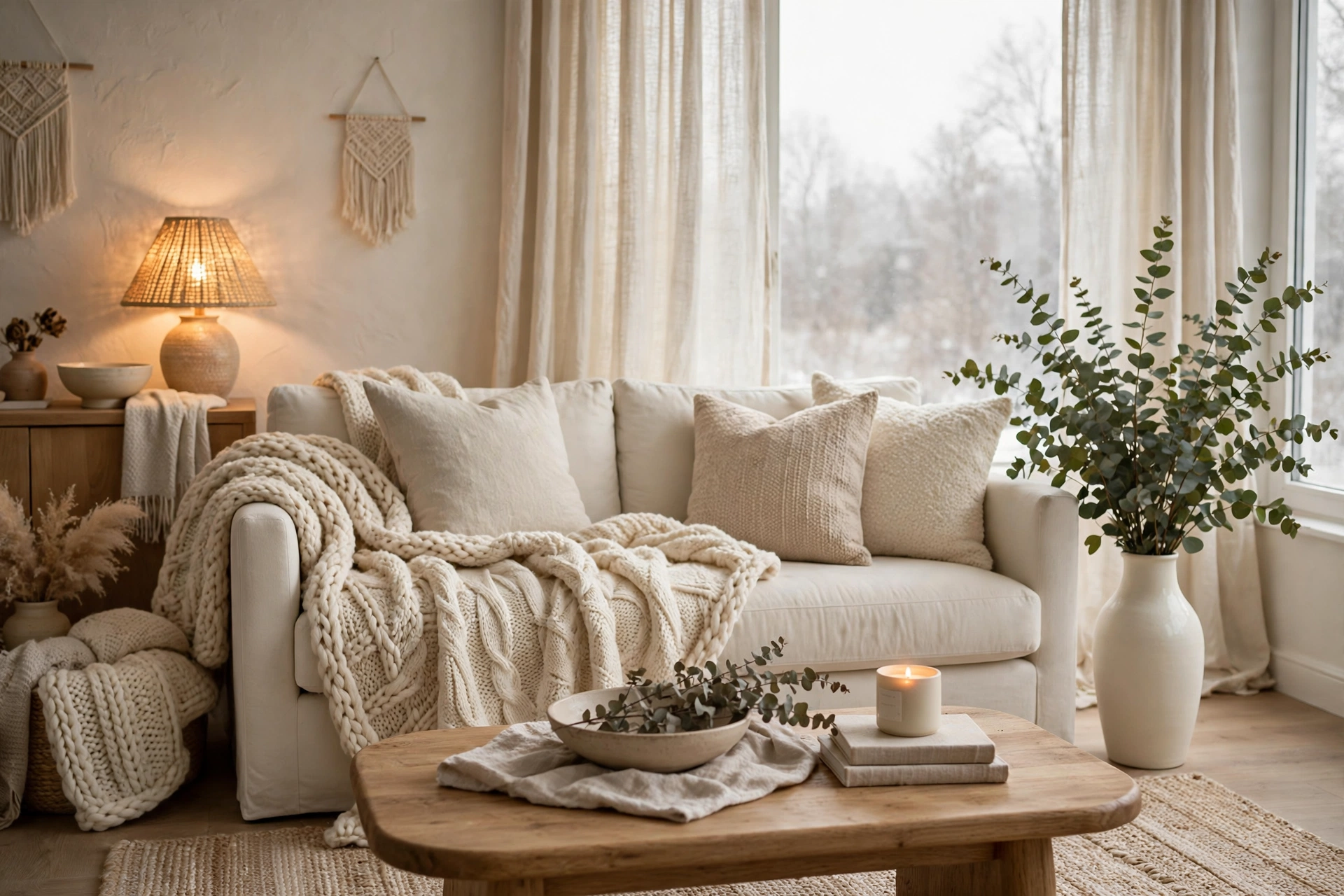
The first year I decorated for Christmas properly, I took everything down on December 26 and my house looked like a grey waiting room. Bare mantel, bare table, bare front door, and three long months of winter staring back at me. I had spent weeks making the house feel magical and then I undid it all in one afternoon, because I thought Christmas decor and winter decor were the same thing. They are not. Winter decor is its own season, and it is the season that actually lasts, from the day the Christmas boxes go back in the attic until the first warm day in March. These 25 winter home decor ideas are everything I have learned since that bare grey January, from the palette that warms a room to the greenery that stays alive all winter.
Two ideas run through everything below. The first is the Keep, the Swap, the Store rule: keep the evergreens, swap the red and gold for winter white, and store the ornaments, because the fastest way to a winter home is to edit the Christmas home, not to start from zero. The second is the Candlelight Test: sit in the room at dusk with only candles and lamps on, and if the room feels warm, the room is done, because winter is a low light season and the test never lies. FYI, both rules take five minutes to learn and they fix almost every winter decorating mistake I have ever made, including my own grey waiting room January.
Winter Home Decor Ideas Start With the Palette: Whites and Warm Neutrals
1. Winter white as the base, not the accent
Winter white works as the base of the whole room, not just as an accent, because white is the color of snow light and it makes a dark season feel bright. Start with a white or cream throw on the sofa, white pillow covers, a white table runner, and let the rest of the room build on that bright base. White in winter reads clean and calm, never cold, as long as you pair it with warm wood and warm light, because the warmth comes from the texture and the glow, not from the color itself. IMO, the mistake is treating white as a summer color, when winter is the season white actually belongs to.
2. Oatmeal and cream layers that warm up white
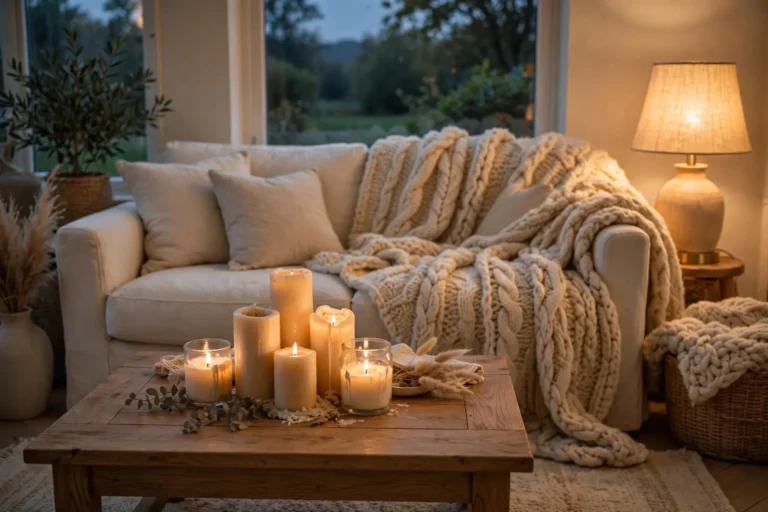
Oatmeal and cream layers are what keep winter white from feeling cold, because a room of pure white looks like a showroom and a room of white plus oatmeal looks like a home. Layer a cream knit throw over an oatmeal linen cushion, add a beige wool blanket on the arm of the chair, and suddenly the white has depth and the room has warmth. Oatmeal is the quiet hero of winter palettes, because it goes with every other winter color, from forest green to soft gray, and it never fights the greenery. Our winter living room decor guide uses the same oatmeal and cream layering on the sofa, because the living room is where you feel the palette most.
3. Soft gray walls and furniture that calm a room
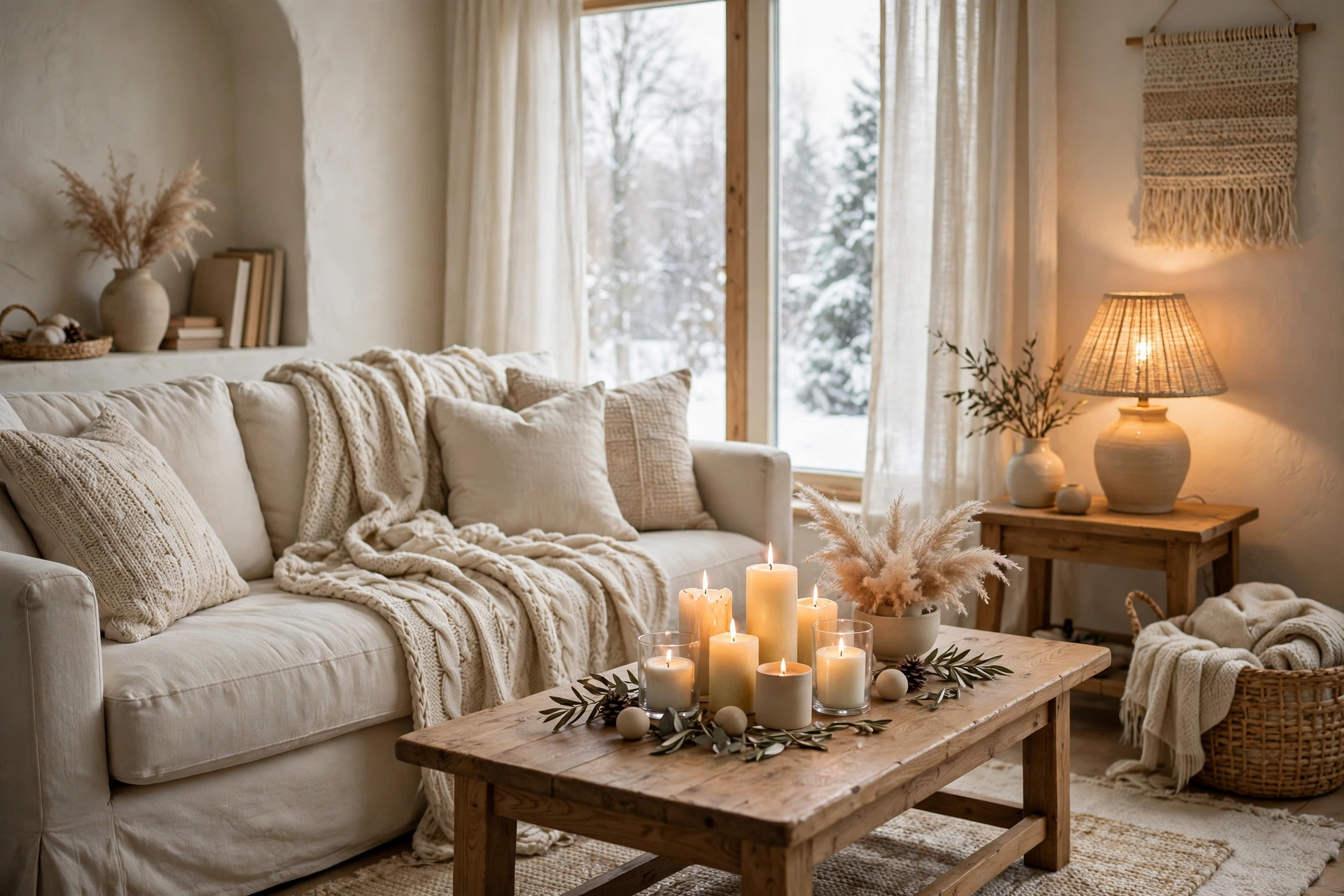
Soft gray is the calmest winter color there is, because it is the color of a January sky and it makes a room feel quiet in the best way. A soft gray throw, gray linen cushions, or a gray wool rug grounds the white and oatmeal layers, and it pairs beautifully with pale wood and brass. Keep the gray warm, not blue, because a warm gray with a beige undertone feels cozy and a cold blue gray feels like an office. If your walls are already gray, you are halfway there, just add the cream and the wood and the candles, and the room does the rest.
4. A touch of deep forest green for depth
A touch of deep forest green gives a winter room its depth, because white and oatmeal and gray are all light colors and a room needs one dark note to feel finished. One deep green cushion, a green velvet throw, or a dark green vase on the mantel is enough, because the green echoes the evergreens outside and makes the whole palette feel like it belongs to the season. Forest green is the winter green, not the bright Christmas green, so pick the deep muted shade, the one that looks like pine needles in shade. Too much green turns the room back into Christmas, so one or two touches is the whole trick.
The Keep, the Swap, the Store: From Christmas to Winter
5. The Keep, the Swap, the Store rule, and why it works
The Keep, the Swap, the Store rule is the whole Christmas to winter transition in one sentence: keep the evergreens, swap the red and gold for winter white, and store the ornaments. The rule works because most of what makes a house feel like Christmas is actually winter, the greenery, the candles, the warm light, and only a small part is Christmas specific, the ornaments, the red, the Santas. Once you know the rule, the day after Christmas takes twenty minutes instead of a whole weekend, and the house never goes through the bare grey phase that taught me this lesson in the first place.
6. Keep the evergreens, lose the red
Keep the evergreens and lose the red, because the pine garland on the mantel, the wreath on the door, and the little potted evergreen on the table are all winter, not Christmas. Take down the red bows, the red ornaments, and the red ribbon, and the same garland suddenly reads as January instead of December. Fresh evergreens last about three weeks indoors, so if your garland is looking tired, swap it for a faux one or a eucalyptus bunch, because the rule is about the greenery, not about keeping one specific branch alive until March. The evergreens are the backbone of the whole winter look, so they stay.
7. Swap gold and red for brushed brass and matte black
Swap the gold and red for brushed brass and matte black, because the metallics are what date a room to December, and the swap is what moves it into January. Take the shiny gold ornaments off the mantel and leave the brushed brass candlesticks, because brushed brass is warm and quiet and it works all winter. Add a matte black lantern or a black picture frame, because black is the grounding color that makes white and oatmeal look intentional instead of unfinished. The swap costs nothing if you already own the pieces, and it is the single fastest change you can make on the day the Christmas boxes come out.
8. Store ornaments in labeled bins so January is easy
Store the ornaments in labeled bins so January is easy, because the transition only works if the Christmas things actually leave the room. Put the ornaments, the red ribbon, the stockings, and the tree skirt in one bin labeled Christmas, and put the winter things, the white candles, the oatmeal throws, the eucalyptus, in a different bin labeled Winter. Labeling matters, because next December you will open the Christmas bin and find everything, and next January you will open the Winter bin and find everything, and neither season will ever be a treasure hunt in the attic again. This is the least glamorous idea on the list and the one that saves the most time.
Layer Texture Like You Mean It
9. Chunky knit throws on every chair
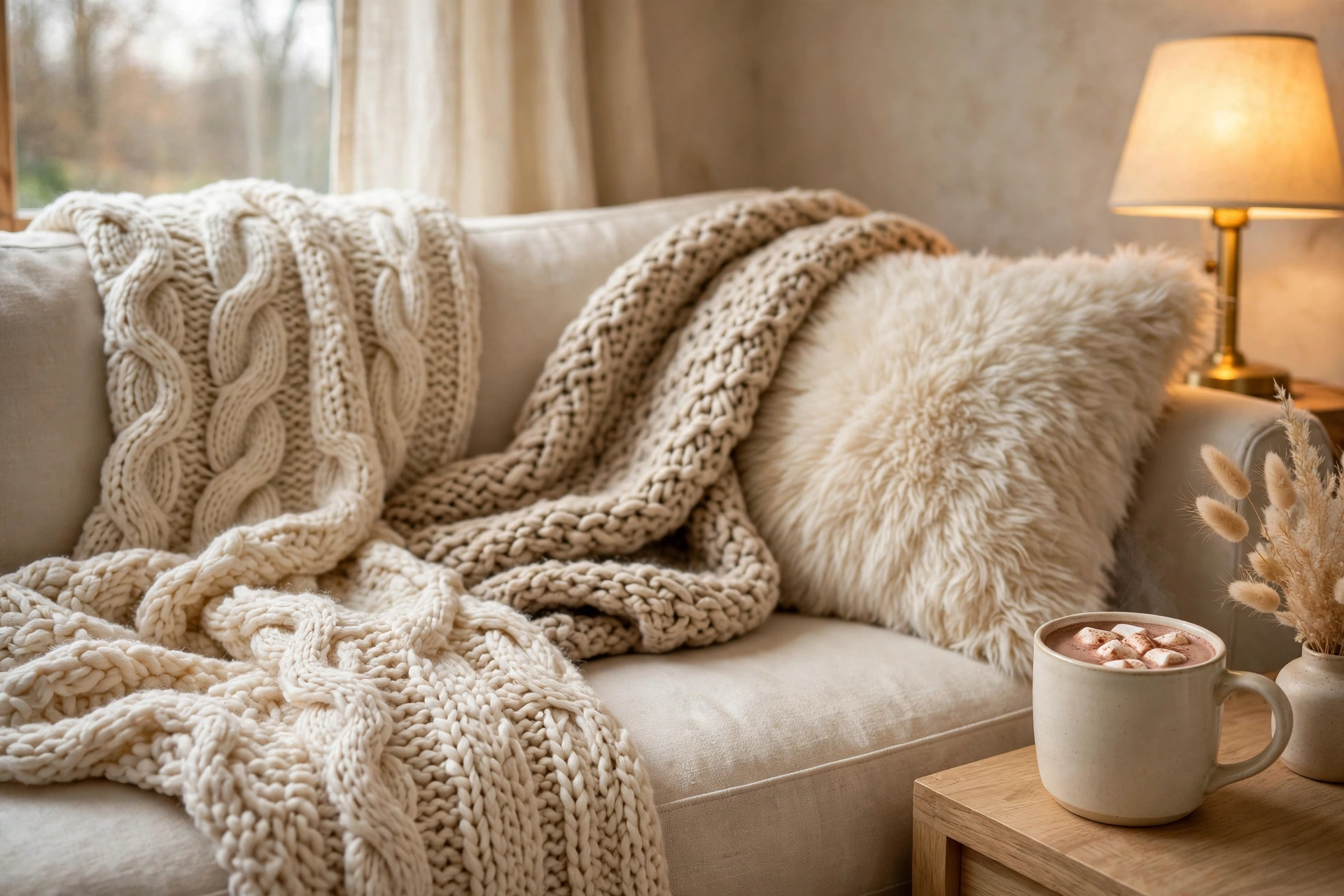
Chunky knit throws on every chair are the fastest way to make a winter room feel warm, because a knit throw is warmth you can see from across the room. Drape one over the arm of the sofa, one over the reading chair, and one folded at the foot of the bed, and the whole house suddenly looks like it is ready for a snow day. Pick throws in cream, oatmeal, or soft gray, because the winter palette does the work and the texture does the rest. A good chunky knit costs less than a dinner out and it gets used every single day from December to March, which is the best return on a decor purchase I know.
10. Faux fur and sherpa, layered not piled
Faux fur and sherpa add the softest layer in a winter room, but the trick is to layer them, not pile them, because a pile of furry things looks like a laundry basket and a layer looks like a hotel. One faux fur throw on the sofa, one sherpa cushion on the chair, and that is enough, because the eye needs one soft thing per seat, not three. Keep the faux fur cream or white, because a white fur throw on a gray sofa is the whole winter look in one object. Our winter bedroom decor guide layers the same faux fur at the foot of the bed, because the bedroom is where the soft layers matter most on a cold night.
11. A thick rug underfoot, or two rugs layered
A thick rug underfoot changes how a winter room feels, because cold floors are the first thing your feet notice in January and a rug is the first thing that fixes it. If you already have a rug, layer a smaller thick one on top, a sheepskin or a high pile rug over a flat weave, because the layered look is warmer and it looks intentional. Keep the rug in the winter palette, cream, oatmeal, or soft gray, and let the pattern be quiet, because the rug is doing the job of warmth, not the job of being the star. In the living room, the rug should be big enough for the front legs of the sofa and the chairs, because a rug that is too small makes the whole room feel cold and unfinished.
12. Velvet cushions in deep winter tones
Velvet cushions in deep winter tones are the luxe layer, because velvet catches the low winter light in a way no other fabric does. Two velvet cushions in forest green or deep burgundy on a cream sofa, and the whole room looks richer without a single new piece of furniture. Velvet is a winter fabric, it holds warmth and it looks warm, so it belongs on the sofa from December to March and then it goes back in the closet for summer. Mix one velvet cushion with one knit cushion, because the contrast between smooth velvet and chunky knit is what makes a sofa look styled instead of matched.
Light and Glow: Candles, Lamps, and the Candlelight Test
13. Candle clusters on the mantel and the table
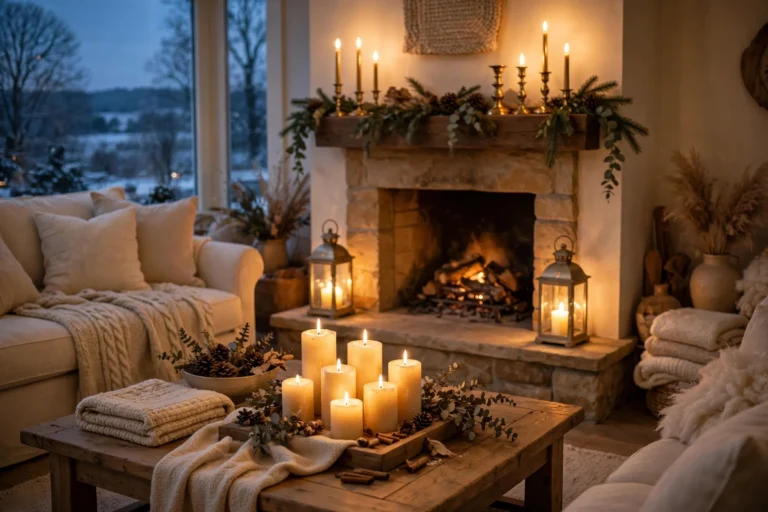
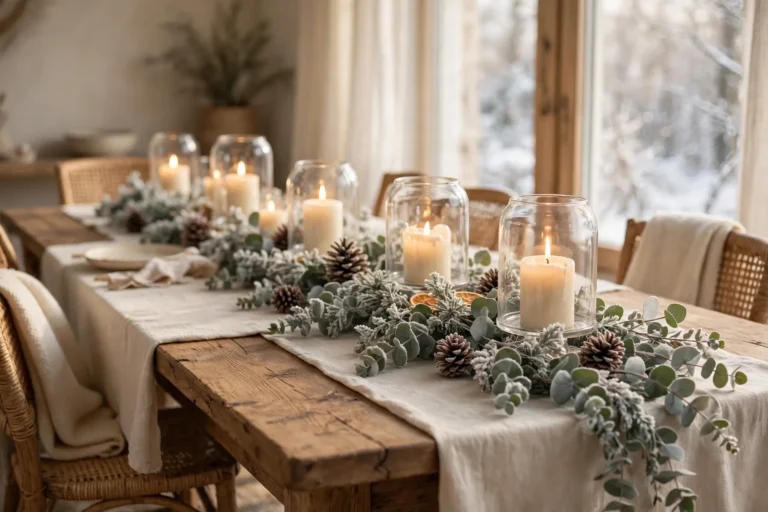
Candle clusters on the mantel and the table are the heart of winter light, because winter days are short and the house needs its own glow by four in the afternoon. Group three candles of different heights together, a tall taper, a medium pillar, and a short votive, and the cluster reads as one arrangement instead of three random candles. Put a cluster on the mantel, one on the dining table, and one on the entryway console, because three clusters around the house make the whole home glow, and one cluster in one room makes only that room glow. Battery candles work just as well when kids or pets are around, and nobody can tell the difference from across the room.
14. The Candlelight Test, and how to run it
The Candlelight Test is the final check for any winter room: wait until dusk, turn off the overhead lights, light only the candles and the lamps, and sit in the room for five minutes. Does the room feel warm? Then the room is done, and you can stop decorating. Does it feel flat or cold? Then the room needs one more warm thing, a throw, a lamp, or a candle cluster, because the test shows you exactly what is missing. Run the test in every room you decorate, because a room that passes the Candlelight Test in January is a room you will actually want to sit in, and a room that fails it is a room you will walk through without stopping. FYI, this test caught my bare grey living room the first winter, and it has not failed me since.
15. Warm lamps instead of overhead lights
Warm lamps instead of overhead lights are the single biggest lighting upgrade for winter, because overhead light is flat and cold and lamp light is warm and low. Put a lamp on the side table, one on the console, and one on the desk, and turn them on at dusk, and the room glows from three low points instead of one harsh point above. Pick warm bulbs, 2700K or lower, because a warm bulb makes white walls look cream and a cool bulb makes them look grey. A lamp with a linen shade softens the light even more, and a dimmer switch is worth every penny in January, because the right light level at seven in the evening is the difference between cozy and cave.
16. Fairy lights in a jar or under a cloche, winter style
Fairy lights in a jar or under a cloche are the winter version of Christmas lights, because the trick is to take the lights off the tree and put them in a small container where they read as winter, not as Christmas. Fill a big glass jar with a strand of warm white fairy lights and a few pinecones, set it on the mantel or the side table, and it glows like a little lantern all evening. A cloche over a candle and a few sprigs of greenery does the same job, and both versions cost almost nothing. Keep the lights warm white, never cool white, because cool white fairy lights look like a freezer and warm white looks like candlelight.
Greenery That Lasts All Winter
17. Eucalyptus in a tall vase by the door
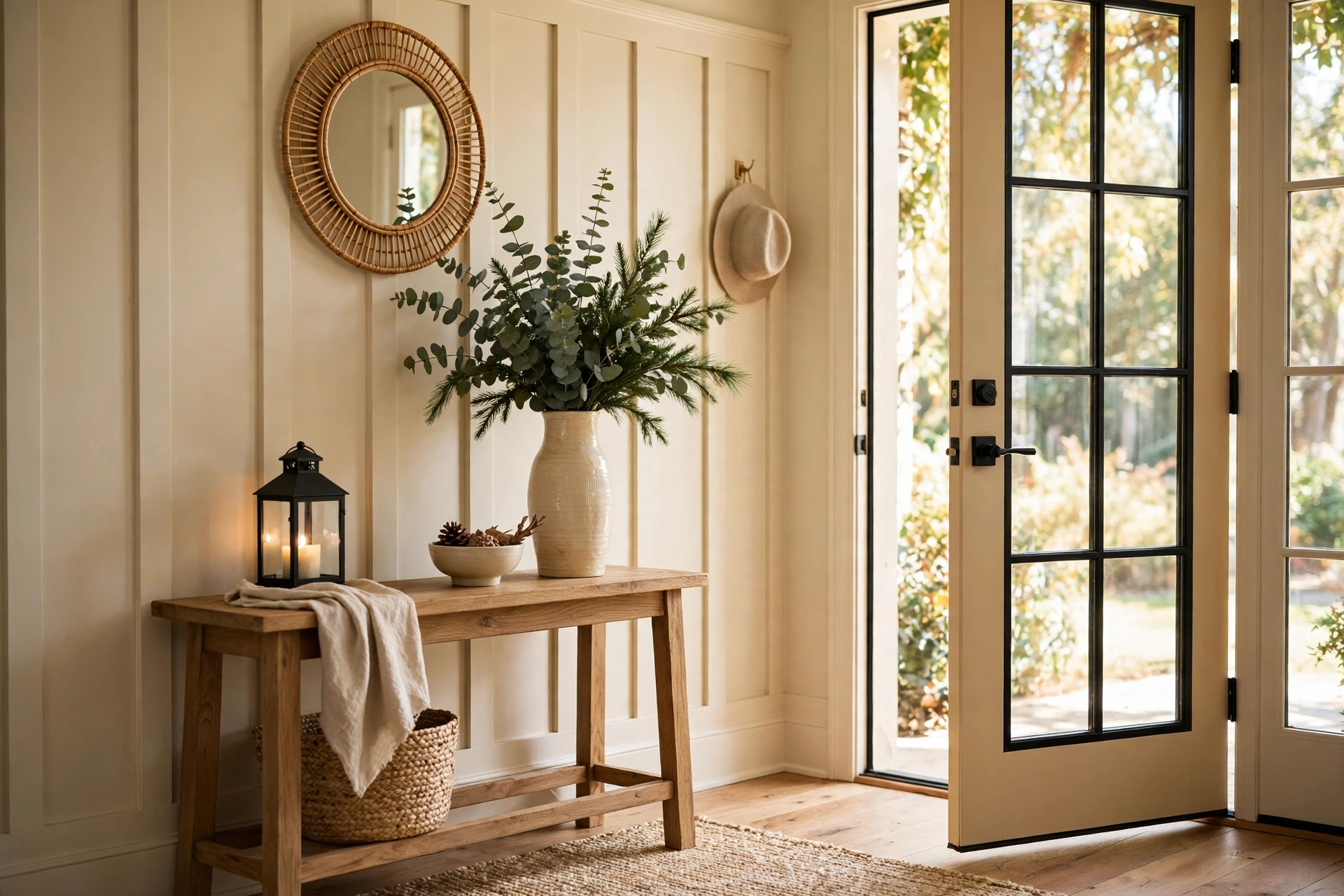
Eucalyptus in a tall vase by the door is the easiest winter greenery there is, because eucalyptus dries beautifully and it smells wonderful for weeks. Buy one bunch, put it in a tall cream or glass vase, set it by the front door or on the entryway console, and forget about it, because dried eucalyptus looks the same in March as it did in December. The silvery green is the perfect winter color, soft and muted, and it pairs with every other winter shade. If fresh eucalyptus is hard to find, dried bunches are sold everywhere in January, and a faux bunch works just as well from two feet away.
18. A winter wreath that stays up until March
A winter wreath that stays up until March is the front door version of the whole winter idea, because the wreath is the first thing guests see and it should not disappear with the Christmas boxes. Make or buy a wreath of eucalyptus, pinecones, and dried oranges, with no red ribbon and no ornaments, and it reads as winter from January to March. Hang it on the front door with a simple hook, and swap the dried oranges for fresh ones once if they fade, because the wreath is the one piece of winter decor that works the hardest and asks the least. A good winter wreath costs about the same as a Christmas wreath and lasts twice as long.
19. Evergreen planters by the front door
Evergreen planters by the front door frame the entrance all winter, because a planter of pine, cedar, and spruce looks alive in January when everything else in the yard is asleep. Fill two matching planters, one on each side of the door, with cut evergreen branches, a few pinecones, and a birch log or two, and the entrance looks cared for from the street. The planters survive frost, snow, and neglect, which is more than you can say for most winter decor, and they cost almost nothing if you cut the branches from your own yard. Water them once a week if the weather is dry, and they will stay green until spring.
20. Bare branches in a dough bowl on the table
Bare branches in a dough bowl on the table are the simplest winter centerpiece, because a branch is free and a dough bowl is the one piece of farmhouse decor that never goes out of style. Cut a few bare branches from the yard, set them in a long wooden dough bowl with a few pinecones and a couple of white candles, and the table has a centerpiece that lasts all winter. The branches look sculptural, almost like art, and they cost nothing, which is the best kind of decor. If you have no dough bowl, a low tray or a shallow basket does the same job, because the idea is the branches, not the bowl.
Winter Home Decor Ideas Room by Room
21. The winter living room: one cozy corner is enough
The winter living room does not need a full makeover, it needs one cozy corner, because a corner with a chair, a throw, a lamp, and a small table is where everyone ends up on a cold night anyway. Pick the corner by the window or by the fireplace, add the chunky knit throw and the warm lamp, and let the rest of the room stay as it is. Our winter living room decor guide builds the whole room around that one corner, because the corner is the room in winter, and the sofa is just where the corner spills over. IMO, the cozy corner is the best winter investment, because it gets used every single evening.
22. The winter bedroom: flannel, wool, and a heavier duvet
The winter bedroom is about sleep, and sleep in winter means flannel sheets, a wool throw, and a heavier duvet, because the bedroom is the room where warmth is not decoration, it is the whole point. Swap the light summer bedding for flannel, add a wool throw at the foot of the bed, and put a warm lamp on the nightstand instead of the bright overhead light. The bedroom does not need a theme, it needs layers, and layers are what make a cold night feel like a good night. Keep the palette white and oatmeal, because a calm bedroom sleeps better than a busy one, and the winter palette is calm by nature.
23. The winter kitchen: the cocoa station stays
The winter kitchen keeps the cocoa station, because the cocoa station is not Christmas, it is winter, and it earns its place on the counter from December to March. Keep the mugs, the marshmallows, and the cocoa mix on a tray by the kettle, add a small eucalyptus sprig in a jar, and the kitchen has a winter corner that gets used every morning. Our winter kitchen decor guide keeps the same station going all season, because a kitchen that smells like cocoa at seven in the morning is a kitchen that feels like winter in the best way. Swap the candy canes for cinnamon sticks in January, and the station is winter, not Christmas.
24. The winter bathroom: spa touches for cold mornings
The winter bathroom needs spa touches for cold mornings, because a cold bathroom at seven in the morning is the worst part of winter and a warm one is the best. Roll thick white towels on a tray, add a eucalyptus bundle to the shower head, put a candle on the vanity, and the bathroom feels like a spa instead of a cold room. Our winter bathroom decor guide uses the same three touches, because the bathroom is small and three touches are all it takes. A warm rug by the tub and a heated towel on the rail are the upgrades worth paying for, because your feet will thank you every single morning.
25. The winter entryway: boot tray, hooks, and a lantern
The winter entryway needs a boot tray, hooks, and a lantern, because winter is the season of wet boots and heavy coats and the entryway is where all of it lands. Set a boot tray by the door, hang the coats on sturdy hooks, and put a lantern with a battery candle on the console, and the entryway handles winter without looking like a mudroom. Add a small evergreen planter by the door and a woven basket for scarves, and the entrance feels welcoming instead of cluttered. The entryway is the first room you see when you come home from the cold, so make it warm, because the first room sets the feeling for the whole house.
The Durability and Care Check: Faux Snow, Candles, and Humidity
Winter decor deals with three things: dry air, open flames, and shedding. First, the greenery: fresh eucalyptus and evergreen branches dry out in heated rooms, so mist them once a week or switch to dried or faux branches, because a shedding garland is worse than no garland. Second, the candles: never leave a real flame burning in an empty room, keep candles away from throws and garlands, and use battery candles in the entryway and the bathroom, where people come and go. Third, the faux snow and flocking: it sheds, so keep flocked pieces on a tray and vacuum the mantel once a week, because white dust on dark furniture is the one winter look nobody wants. Check the candles and the greenery once a week, and the house stays safe and pretty all season.
Buy Once vs Buy Every Winter
Buy once, and buy well: the throws, the rug, the lamps, and the dough bowl. These four pieces carry the winter look year after year, and spending a little more on them pays off every single January. Buy every winter, and buy cheap: the eucalyptus, the candles, the fairy lights, and the dried oranges. The fresh pieces are what make the room feel new, and they are also the pieces that dry out, burn down, or go out of style. My rule is simple: if it holds warmth or holds the light, buy it once and buy it well; if it wilts, melts, or dries out, buy it fresh and cheap every winter. A full winter refresh runs about 40 dollars on the fresh layer, and the buy once pieces are the ones that last a decade.
Small-Space Variations
A tiny home can still have a great winter, it just needs a smaller version of the formula. Use one cozy corner instead of a whole room, one throw instead of three, and one candle cluster instead of three, because the rules are the same at any size. If your home has no mantel, the candle cluster lives on a shelf or a side table, and if the dining table is small, the dough bowl centerpiece shrinks to a tray with one branch and one candle. In a rental, lean on throws and lamps, because they move with you and they need no holes in the wall. And if you have no entryway at all, a boot tray by the door and a hook on the wall is the one winter upgrade that changes how the whole home feels. Even the laundry room gets the same winter treatment, a folded stack of white towels, a small candle, and a sprig of eucalyptus, because our winter laundry room decor guide proves the smallest room in the house can feel like winter too.
Troubleshooting Fixes
If the room still feels cold after you decorate, run the Candlelight Test, because the room is probably missing warm light, not more stuff. If the white looks stark instead of cozy, add oatmeal and wood, because white alone is a showroom and white plus warm neutrals is a home. If the greenery keeps shedding, switch to dried eucalyptus or faux branches, because a shedding garland is a mess and a dried one lasts all season. If the room looks like Christmas in February, take down the red and the gold, because the Keep, the Swap, the Store rule is the fix and it takes twenty minutes. If the candles keep going out, move them away from the draft by the door, because a candle in a draft is a candle that never stays lit. If the throws keep sliding off the sofa, fold them over the arm instead of draping them flat, because a folded throw stays put and a draped one slides.
Frequently Asked Questions
When should I put up winter decor?
Put winter decor up the day the Christmas decor comes down, usually the day after Christmas or the first weekend in January. Winter decor stays up through February and into March, because it is the season itself, not a holiday, so there is no rush to take it down.
What is the difference between Christmas decor and winter decor?
Christmas decor uses red, gold, ornaments, and holiday figures, while winter decor uses winter whites, oatmeal, soft gray, evergreens, and candles. Winter decor keeps the greenery and the glow and drops the holiday symbols, so the same mantel works from January to March.
How do I make my home feel cozy in winter without buying everything new?
Start with what you own: move the throws to the chairs, cluster the candles you already have, and cut branches from the yard for the table. Add one new thing, a chunky knit throw or a warm lamp, and run the Candlelight Test to see what is still missing before you buy anything else.
What colors work best for winter decor?
Winter white, oatmeal, cream, soft gray, deep forest green, and a touch of cool blue work best for winter decor. Keep the palette light and warm, with one dark note like forest green or matte black to ground the room, and avoid red and bright gold, which read as Christmas.
How long can I leave winter decor up?
Leave winter decor up through February and into early March, as long as the greenery still looks fresh. Swap dried eucalyptus or faux branches in when the fresh ones fade, and take the winter pieces down when the days get long and the house starts to feel like spring.



5 Comments