25 Thanksgiving Buffet Table Decor Ideas That Make Your Feast Feel Warm and Welcoming
The Thanksgiving I Ran Out of Table
The first Thanksgiving I hosted, I invited fourteen people to a house with a dining table that seats eight. I did the math three times, moved the chairs around twice, and still ended up with six people and nowhere to put them. So I did what a lot of first-time hosts do. I panicked, dragged the folding table out of the garage, and set up a buffet in the living room, on a table covered with a wrinkled sheet, with the turkey balanced on a cutting board and the gravy boat hiding behind the cranberry sauce like it was embarrassed to be there.
It worked, sort of. People ate. Nobody starved. But the line jammed up by the mashed potatoes, my uncle stood in the hallway holding a plate and a glass and looking lost, and the whole setup felt like an afterthought, which is exactly what it was. That night, after everyone left, I sat on the couch with the leftover pie and made a promise to myself. Next year the buffet would not be the backup plan. It would be the plan.
It took me a few Thanksgivings to figure out what makes a buffet table actually work, and it is not money or a bigger house. It is three things, and once you know them, everything else falls into place. The food has to be easy to reach, the table has to look like Thanksgiving and not like a cafeteria, and people have to move through the line without bumping into each other or getting stuck. That is the whole secret. These 25 thanksgiving buffet table decor ideas are built around it, and every one of them comes from a real Thanksgiving in my house, including the mistakes.
My Two Rules: Serve, Style, Flow and the Guest Flow Test
Before the ideas, here are the two frameworks I use every year now. They keep me from buying random cute things that look good in a photo and fail at dinner.
The first is what I call The Serve, Style, Flow Rule. Every good buffet table does three jobs at once. Serve means the food is easy to reach, easy to scoop, and easy to see, with serving spoons that actually fit the dish and labels so nobody has to ask what anything is. Style means the table looks like Thanksgiving, with warm colors, real texture, and a little height and layering, so guests feel like they walked into a celebration and not a school lunch line. Flow means people move in one direction, plates first and drinks last, without doubling back or getting trapped behind the turkey. If any one of the three is missing, the buffet feels wrong even if it looks fine. FYI, flow is the one people skip most, and it is the one that causes the most chaos. A beautiful table that jams up at the gravy is worse than a plain table that moves.
The second is The Guest Flow Test. When you think the buffet is ready, pick up a plate and a glass and walk the line yourself, exactly like a guest would, before anyone arrives. Can you reach the turkey without leaning over the cranberry sauce? Can you set your glass down while you scoop? Can you get to the end without turning around? If the answer is yes to all three, the buffet works. If you have to put your plate down, shuffle sideways, or ask someone to move, fix it now, while the fix is still easy. I run this test every single year, and it has saved me from my own worst impulses more than once.
Set the Stage: The Thanksgiving Buffet Table Itself
1. Pick the Right Table for the Job
A buffet table does not have to be a dining table. Mine is a sideboard most of the year, and on Thanksgiving it becomes the most important piece of furniture in the house. A sideboard, a console table, a kitchen island, or a sturdy folding table all work, as long as the surface is at a comfortable serving height, about waist high, and long enough that the dishes do not crowd each other. Walk around it first. If you cannot reach the back row without leaning across the front row, the table is too deep or too full. IMO, a long narrow table beats a short wide one every time, because guests can move along it instead of reaching across it.
2. Build Height With Risers, Crates, and Cake Stands
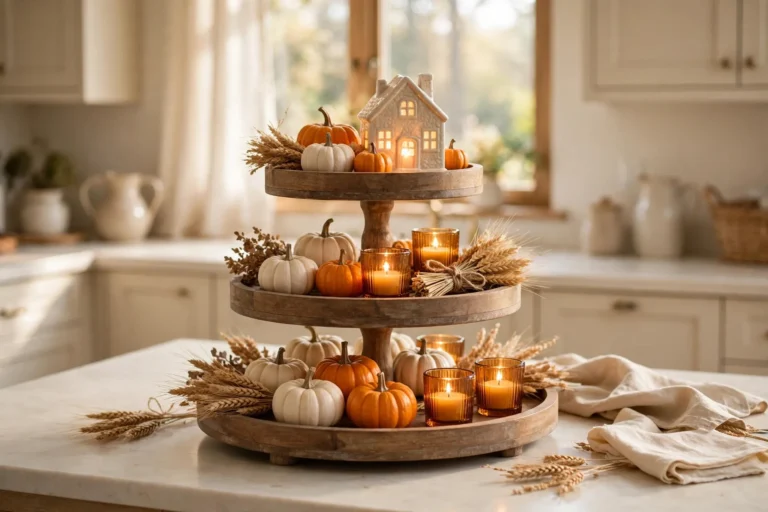
A flat buffet looks flat, and flat reads boring, no matter how good the food is. Height is what makes a buffet look like someone who knows what they are doing set it up. I stack a wooden crate under the bread basket, put the cranberry sauce on a cake stand, and set the pie on an upside-down sturdy box wrapped in linen. The turkey stays at table level, because it is heavy and nobody should be lifting a roasting pan off a wobbly stack. Keep the tallest pieces at the back and the lowest at the front, so every dish is visible from the front of the line. Our thanksgiving table decor guide has more ideas for layering height on a seated table too, if you want the same trick at dinner.
3. Layer Two Tablecloths Instead of One
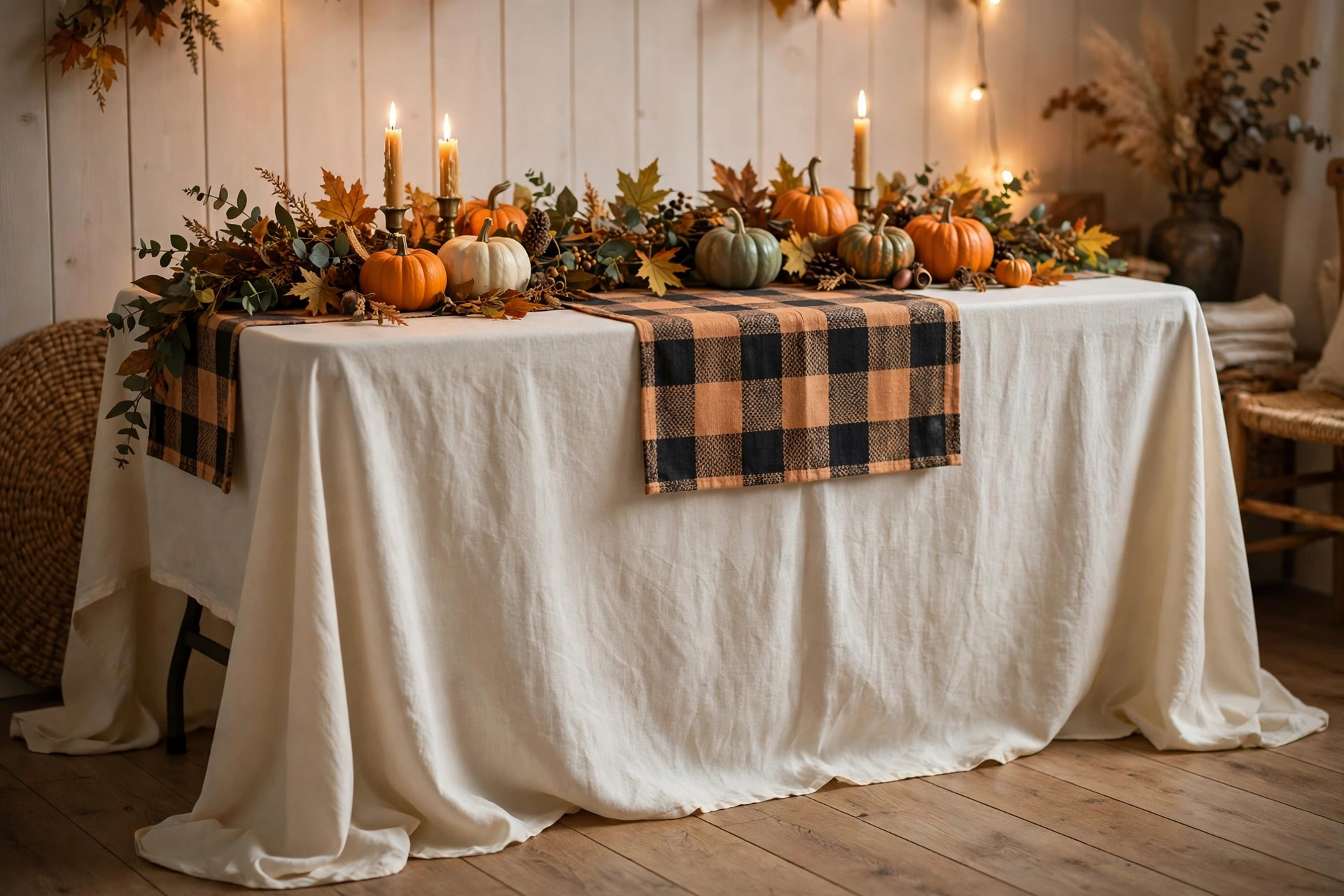
One tablecloth looks fine. Two look intentional. I put a plain cream or deep rust cloth down first, then layer a shorter plaid or burlap runner across the top, slightly off center, so the edges of the bottom cloth still show. The contrast gives the table depth, and the runner protects the spot where the hot dishes sit. If you are working with a folding table, a floor-length cloth hides the metal legs completely, which is the single cheapest upgrade in this whole list. Just make sure the cloth does not hang so low that guests trip on it when they step up to serve themselves.
4. Run a Runner Down the Center, Not Across
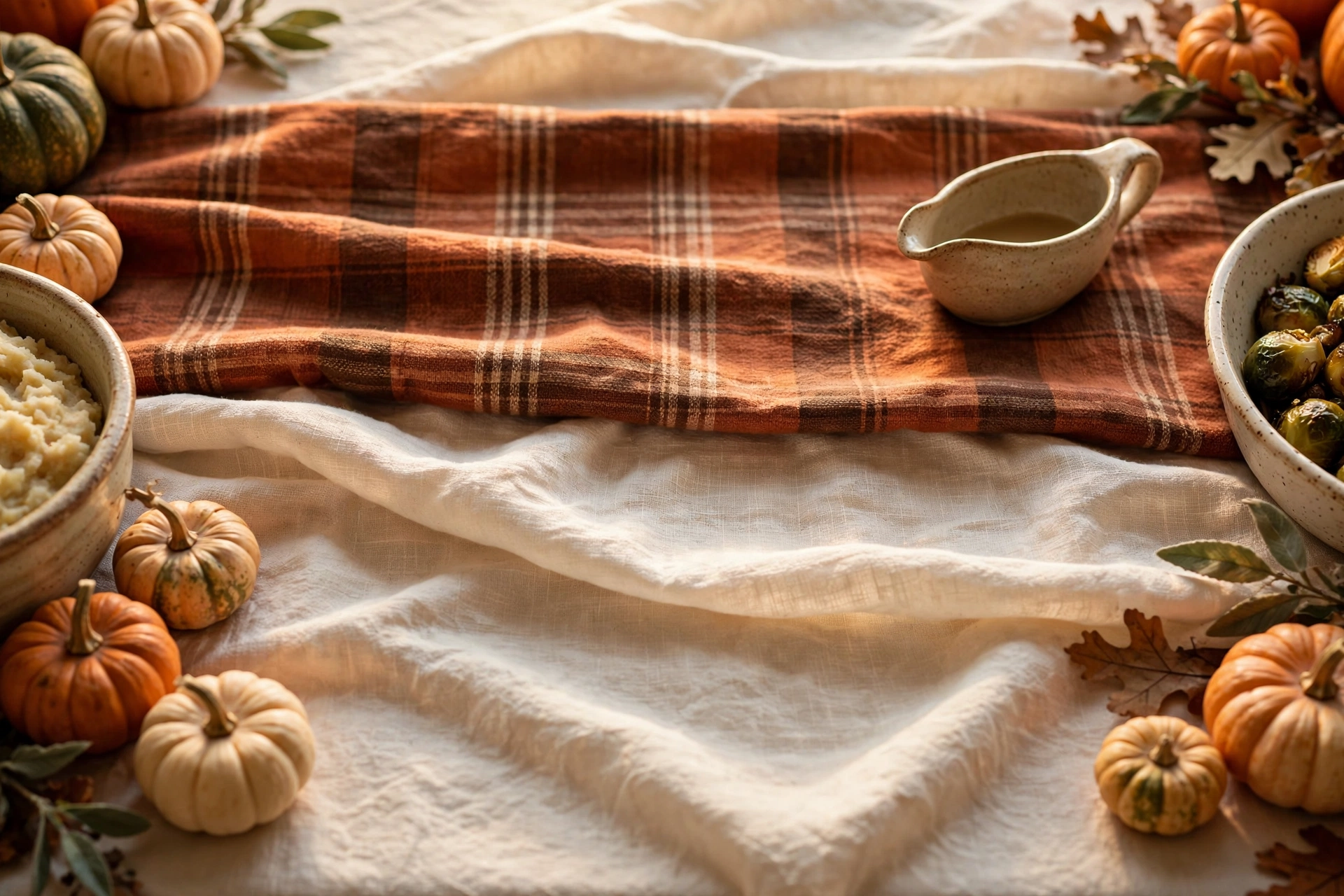
A runner that runs the length of the buffet does two jobs. It protects the table from hot dishes, and it gives your eye a line to follow, which makes the whole setup feel organized. I use a plaid runner in rust and cream, or a simple linen one in a warm gold, and I let it hang a few inches over each end. Skip the runner that runs across the table, because it chops the buffet into pieces and fights with the flow of the line. One long runner, one direction, done.
The Flow: How Guests Move Through the Line
5. Set the Line in This Order: Plates, Main, Sides, Sauce, Bread, Dessert
The order of the line is the order guests eat, and getting it wrong is how you end up with gravy on the salad and no room for the turkey. Plates go first, then the turkey, then the hot sides in the order people actually scoop them, mashed potatoes, stuffing, green beans, then the sauces and cranberry, then bread and butter, then drinks and dessert at the very end or on a separate table entirely. Put the napkins and the silverware at the end of the line, not the beginning, so guests are not juggling a fork while they try to carve turkey. This one change alone fixed half the chaos at my house.
6. Make the Line One Way and Mark It
A buffet only works if everyone moves the same direction. I put the plates at one end and the drinks at the other, and I leave a little gap at the start so the first person in line is not blocking the doorway. If your room has two ways in, block one of them gently with a chair or a plant, just for dinner, so nobody wanders in backwards and causes a jam. Kids go through the line with an adult the first time, because a seven-year-old with a plate of mashed potatoes and no plan is a recipe for a spill. It sounds fussy, but a one-way line is the difference between a smooth dinner and a traffic jam in your living room.
7. Put the Drinks at the End, or on a Separate Table
Drinks are the number one cause of buffet traffic jams. Someone stops to pour, someone else waits, and suddenly five people are standing still holding plates. I moved the drinks to the very end of the line, past the food, or better yet to a small side table or a kitchen counter nearby. A drink station with a pitcher of cider, a few glasses, and a small sign keeps the thirsty people out of the food line entirely. It also means nobody has to balance a full glass while they scoop hot gravy, which is a spill waiting to happen.
8. Give Kids Their Own Little Station
If you have kids at Thanksgiving, give them their own small station. A low table or a cleared spot on the kitchen counter with their own plates, a few simple dishes, and a stack of napkins keeps them out of the adult line and makes them feel like the day is theirs too. I set out mini pumpkin pies, a small bowl of rolls, and a pitcher of juice they can pour themselves. The kids love it, the adults move faster, and the only thing that gets spilled is usually juice on a washable tablecloth, which is a trade I will take every time.
The Food Display: Making Dishes Look Like Decor
9. Let the Turkey Be the Centerpiece
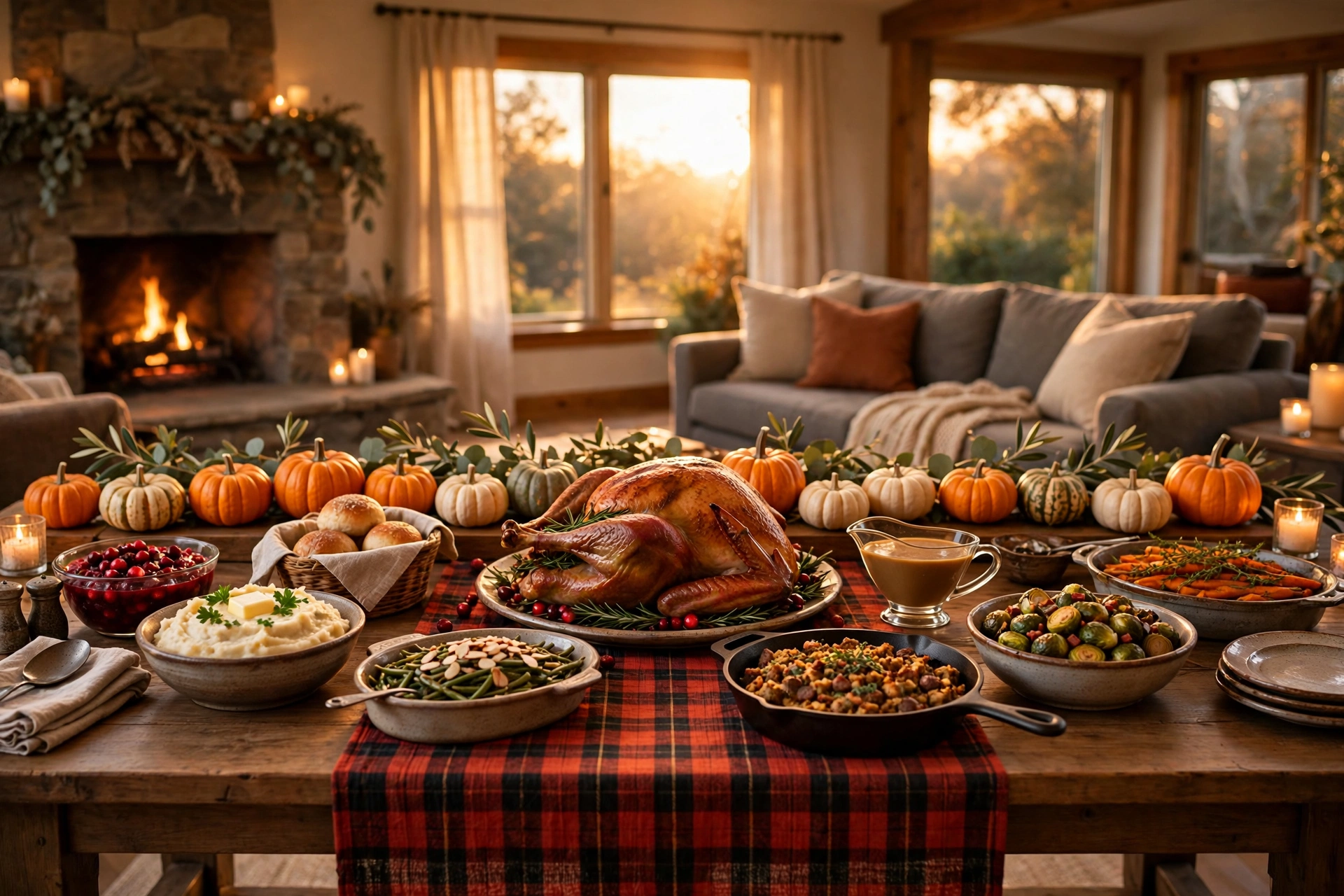
The turkey is the star of Thanksgiving, so let it act like one. I carve a few slices for easy serving, but I leave the bird whole on its platter, garnished with rosemary sprigs and orange slices, right in the middle of the buffet where everyone can see it. A whole turkey on a big platter, with a little height from a folded towel underneath, looks generous and celebratory in a way that a tray of pre-sliced meat never will. Put a carving fork and a sharp knife beside it, and a small sign that says carve your own, so guests know they can help themselves. The turkey earns its spot at the center, so give it the center.
10. Use Matching Serving Dishes in Warm Colors
You do not need a matching set, and you definitely do not need to buy one. What you need is a loose color family. I pull out every cream, warm white, and soft brown dish I own, and the mismatched shapes suddenly look like a collection instead of a mistake. A white casserole dish next to a cream serving bowl next to a wooden salad bowl reads warm and homemade. What breaks the look is a random bright red plastic bowl or a neon green serving spoon in the middle of it all. Keep the serving dishes in warm neutrals, and let the food bring the color.
11. Label Every Dish With a Little Card
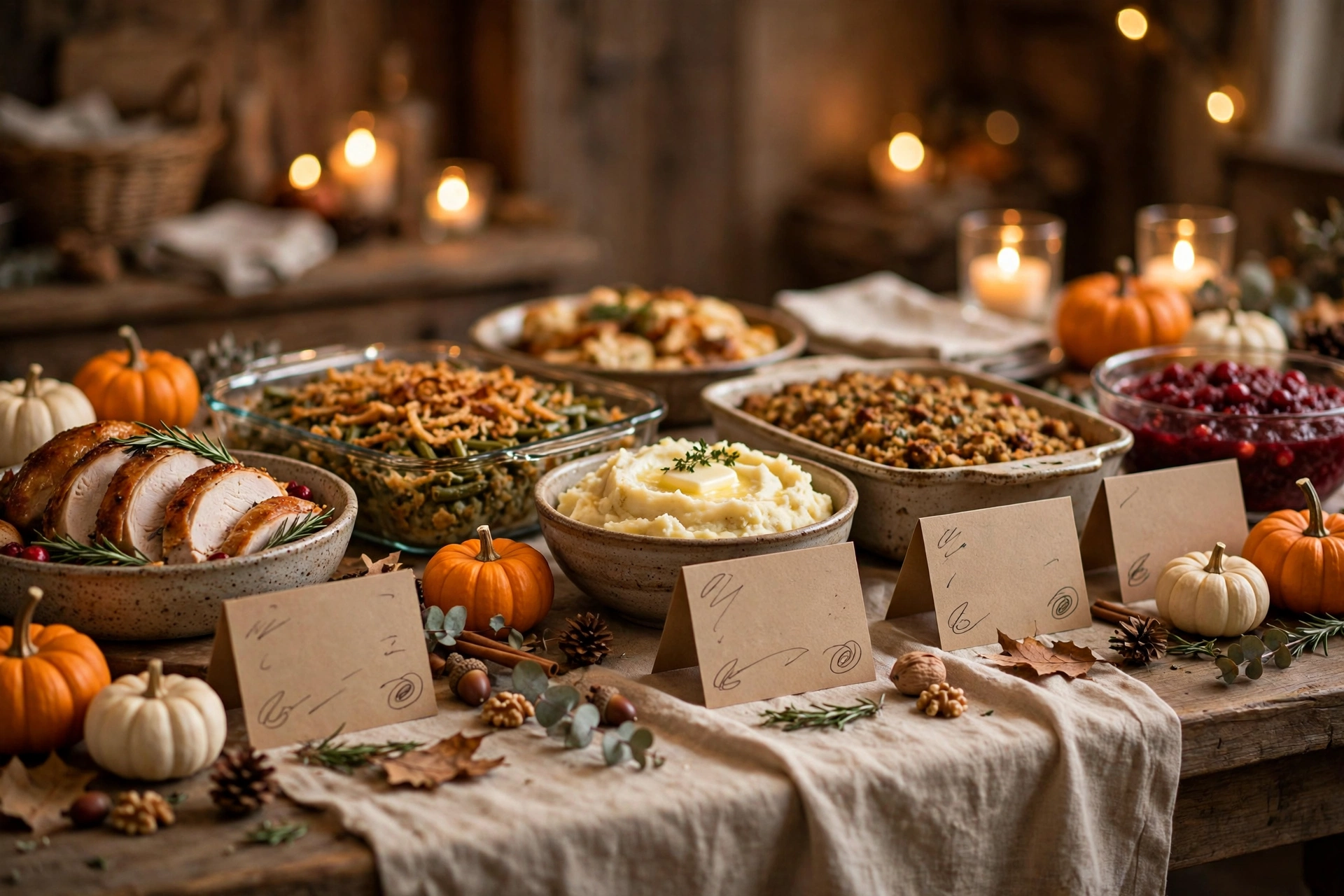
Nobody wants to ask what the mystery casserole is, and nobody with an allergy wants to guess. I write a little card for every dish, the name of the food and one line about what is in it, and I prop the card in front of the dish on a folded piece of cardstock. Mini pumpkins make great card holders, just tuck the card into the stem. This takes ten minutes and it is the single most appreciated detail on the whole buffet. Guests with nut allergies, vegetarians, and picky kids all quietly thank you for it, and the cards themselves look charming lined up along the table.
12. Garnish the Edges, Not Just the Food
A buffet looks finished when the empty spaces are filled on purpose. I tuck rosemary sprigs around the base of the serving dishes, scatter a few cranberries along the runner, and put a small bowl of whole walnuts at the end of the line for texture. The garnish costs almost nothing, because it comes from the same herbs and fruit I already bought for cooking, and it makes the table look like a food magazine spread instead of a potluck. Just keep the garnish out of the food itself, and skip anything that sheds, because nobody wants pine needles in the mashed potatoes.
13. Stack the Plates and Bowls at Different Heights
Plates stacked flat on the table take up space and look boring. I stack the dinner plates on a small riser or a sturdy upside-down bowl, and I put the small dessert plates and bowls on a second, lower stack beside them. The height difference makes the start of the line feel considered, and it saves table space for the food. Put a little sign at the plates that says start here, because the first time someone walks up to a buffet, they always pause and look around for where to begin.
Warmth and Texture: The Thanksgiving Look
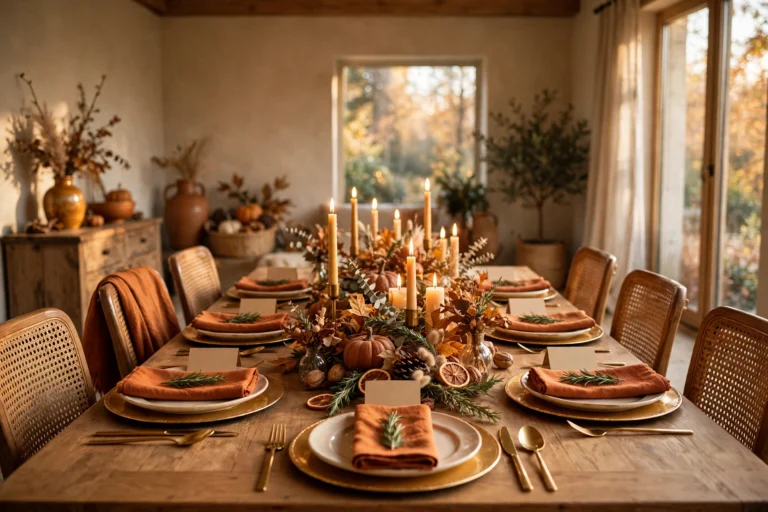
14. Line the Back of the Table With Mini Pumpkins and Gourds
The back edge of the buffet is free real estate, and mini pumpkins are the easiest way to use it. I line up a row of small white and orange pumpkins along the back, mixed with a few gourds, and the table instantly reads Thanksgiving from across the room. They are cheap, they last for weeks, and they do not need water or care. Keep them behind the food, not in front of it, so nobody has to reach over a pumpkin to get to the green beans. After dinner, the kids get to take one home, which is a tradition now and costs me nothing.
15. Drape a Eucalyptus or Leaf Garland Along the Front Edge
The front edge of the buffet is what guests see first, and a garland turns it from a table into a display. I drape a simple eucalyptus garland, or a string of fall leaves, along the front edge, letting it hang just a little over the side. If you are buying one, get the kind that looks full on its own, because a sparse garland reads sad. If you are making one, a few branches from the yard and some twine do the job in ten minutes. Our thanksgiving dining room decor guide shows the same garland trick on a seated table, if you want to carry the look through the whole room.
16. Add Candlelight, But Keep It Safe
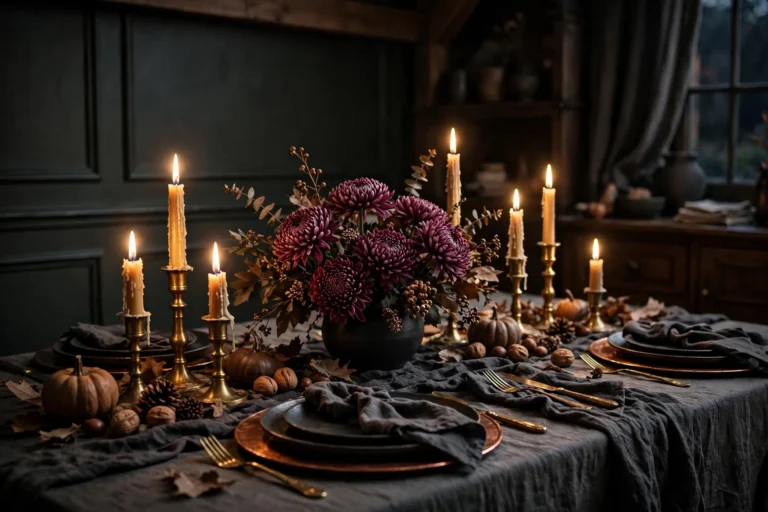
Candlelight makes a buffet feel like a celebration, but open flames next to a crowd and a tablecloth are a bad combination. I use flameless pillar candles in glass hurricanes along the back of the table, where nobody will bump them, and real taper candles only on the dining table itself, far from the line. The flameless ones flicker just like the real thing, and I can leave them on all evening without worrying. Put the candles at the back, never at the front where sleeves and scarves brush past, and never next to anything paper, including those little dish labels.
17. Layer Plaid and Linen for Instant Warmth
Texture is what makes a buffet feel cozy instead of clinical. I fold a plaid throw over the end of the buffet table, layer linen napkins in a basket instead of paper ones, and use a woven basket for the rolls instead of a plate. The mix of plaid, linen, and wood reads warm and autumnal without a single plastic decoration. If you only buy one thing for the buffet this year, make it a set of cloth napkins in a fall color, because they show up in every photo and they cost less than a takeout lunch.
The Thanksgiving Buffet Table Details Guests Notice
18. Put a Thankful Board at the End of the Line
The best detail on my buffet is not food at all. It is a small chalkboard at the end of the line that says “I am thankful for” with a piece of chalk beside it, and guests write one thing as they walk past. By dessert, the board is full of kids handwriting, inside jokes, and at least one person who wrote “the gravy.” It costs nothing, it takes up no table space, and it is the thing people photograph most. If a chalkboard feels too crafty, a framed print with the same words works just as well.
19. Set Up a Small Drink Station With Labels
A drink station does not need to be fancy, but it does need labels. I set out a pitcher of apple cider, a carafe of water with orange slices, and a bottle of sparkling cider, each with a little tag. Guests pour their own, they know what they are drinking, and the food line keeps moving. Put the glasses upside down on a small tray so they stay clean, and keep a stack of cocktail napkins beside them. The whole station fits on a tray, so it can live at the end of the buffet or on a side table if you are short on space.
20. Give Dessert Its Own Corner
Dessert deserves its own moment, and it also deserves to be out of the way of the main line. I set the pies on a side table or at the far end of the buffet, after the drinks, with a stack of small plates, a pie server, and a little bowl of whipped cream. Putting dessert last means guests are not trying to carry a slice of pie while they scoop mashed potatoes, and it means the pies stay whole and pretty until the main plates are cleared. Our thanksgiving dessert table decor guide has a full setup for a dedicated dessert table if you have the room for one.
21. Keep Extra Serving Spoons and a Spare Stack of Plates Handy
The most boring idea on this list is also the one that saves dinner. Keep a spare stack of plates, a few extra serving spoons, and a stack of napkins tucked under the buffet table, out of sight but within reach. Spoons disappear, plates get dropped, and someone always shows up who was not on the list. When it happens, you reach under the table and fix it in ten seconds instead of running to the kitchen while the line waits. I also keep a roll of paper towels under there, because gravy spills happen, and a calm host with a paper towel beats a panicked host every time.
Small Spaces and Budget
22. Turn Your Kitchen Island Into the Buffet
No dining room? No problem. A kitchen island makes a perfect buffet, and it has one huge advantage over a dining table, because guests can walk all the way around it, so the line never jams. Clear everything off the island, put the food on one side and the plates on the other, and let people serve themselves from both sides at once. If the island is small, put the drinks and dessert on the kitchen counter and keep the island for the main dishes only. Our thanksgiving kitchen decor guide has more island styling ideas that work all season, not just on the big day.
23. Use a Folding Table Dressed Up Like a Sideboard
A folding table is the most useful piece of furniture a Thanksgiving host owns, and it does not have to look like one. A floor-length tablecloth hides the legs, a runner adds warmth, and a row of pumpkins along the back makes it look like a sideboard that cost ten times as much. The trick is the cloth. If the cloth reaches the floor, nobody can tell what is underneath, and the table reads as furniture instead of a rental. Borrow one from a neighbor if you need to, because every neighborhood has at least three folding tables sitting in garages.
24. Build the Whole Buffet for Under $50
A beautiful buffet does not need a big budget. My cheapest year, the whole setup cost under fifty dollars. The tablecloth was a flat sheet I already owned, the runner was a length of burlap from the craft store, the risers were upside-down boxes wrapped in linen napkins, the labels were folded cardstock, and the decor was pumpkins from the grocery store and rosemary from the garden. The only things I bought were the pumpkins and the burlap. Spend your money on the food and on one good serving platter, because that is what guests actually remember.
25. Make It Renter Friendly With Zero Damage
If you rent, everything on this list still works, because none of it touches the walls. No nails, no hooks, no adhesive, no Command strips that take paint with them in January. The garland drapes, it does not hang. The labels prop, they do not stick. The tablecloth covers, it does not attach. The whole buffet packs into two boxes after dinner and goes back in the closet, and your landlord never knows it happened. That is the beauty of a buffet. It is a whole Thanksgiving display that leaves no trace.
The Spill and Steam Test: Will Your Buffet Survive Dinner?
Hot food, crowded rooms, and a table full of breakable dishes are a recipe for a mess, so I run a durability check before guests arrive. First, the wobble test. Put a heavy casserole dish on the table and lean on the edge. If the table rocks, move it against a wall or put a folded towel under the short leg. Second, the heat test. Every hot dish gets a trivet, a folded towel, or a cork mat underneath it, because a hot roasting pan will melt a plastic tablecloth and scorch a wooden top. Third, the spill plan. Keep a stack of cloth napkins and a roll of paper towels under the table, and know where the stain remover lives before you need it. A buffet that survives dinner is a buffet you will actually enjoy, instead of one you spend the whole evening guarding.
Buy Once vs Refresh Each Thanksgiving: Where to Spend
Some buffet pieces are worth buying once and keeping forever, and some are worth refreshing every year. Buy once: a good carving board, a big white serving platter, a set of cloth napkins, a sturdy cake stand, and a set of serving spoons that actually fit the dishes. These are the workhorses, and they make every Thanksgiving easier. Refresh each year: the table runner if you want a new color, the mini pumpkins, the fresh greenery, the paper labels, and the garnish herbs. The fresh stuff is what makes the table feel new each year, and it costs less than a pizza. Skip the themed serving dishes with turkeys printed on them, because you will be tired of them by year two and they only work for one meal a year.
Small Space Variations
A small house does not mean a small Thanksgiving. It means a smarter buffet. If your table is short, go vertical, with risers and stacked plates, and keep only the main dishes on the table while the extras live on the kitchen counter. If your room is narrow, set the buffet against one wall and run the line in a single direction, with the plates at one end and the drinks at the other. If you have no dining room at all, the kitchen island is your buffet, and the dining table becomes the eating table, which is how the best small Thanksgivings I have been to actually worked. And if you are feeding six people instead of sixteen, skip the folding table entirely and set the buffet on the sideboard, because a small buffet that looks full beats a big buffet that looks empty.
Troubleshooting: Quick Fixes When the Buffet Goes Wrong
The line is jammed at the turkey. Move the carving board to the end of the table and put a second serving spoon in the mashed potatoes, because the jam is almost always one dish with one spoon. The table looks empty on one side. Slide the dessert forward early, or move a bowl of rolls into the gap, because an empty spot reads like you ran out of food. The gravy is getting cold. Put the gravy boat on a small trivet over a tea light warmer, or just microwave it every twenty minutes and pour it back, because lukewarm gravy is the saddest thing on a Thanksgiving table. Someone spilled cranberry sauce on the tablecloth. Blot it, do not rub it, cover the spot with a folded napkin, and deal with it after dinner, because nobody remembers a stain and everybody remembers a host who panicked. The kids are bored in line. Hand them the thankful board chalk and let them write on it while they wait, because a busy kid is a kid who is not swinging a serving spoon like a sword.
Frequently Asked Questions
How do I set up a Thanksgiving buffet table for a crowd?
Start with the line order: plates first, then the turkey, then hot sides, then sauces, bread, and drinks last. Give the table height with risers and cake stands, label every dish, and run the line in one direction so guests never double back. A folding table with a floor-length cloth works just as well as a dining table.
What should go first on a Thanksgiving buffet line?
Plates always go first, then the turkey, because the turkey is the main event and guests build their plate around it. Hot sides come next in the order people scoop them, then sauces and cranberry, then bread and butter. Put napkins and silverware at the end of the line so guests are not juggling a fork while they serve themselves.
How do I keep food warm on a buffet table?
Use chafing dishes or slow cookers on the warm setting for the dishes that cool fastest, like mashed potatoes and gravy. Cover dishes with foil or lids between servings, and set the gravy boat on a tea light warmer. Refill small batches rather than putting everything out at once, so the food stays hot and fresh through the whole meal.
How much table space do I need per dish?
Plan on about twelve inches of table width per serving dish, plus room for the serving spoon beside it. A six-foot table comfortably holds eight to ten dishes with risers and labels, and a four-foot table holds five or six. If you run out of room, move drinks and dessert to a separate table instead of crowding the food.
Can I use my kitchen island as a Thanksgiving buffet?
Yes, and it is one of the best options, because guests can walk all the way around it and serve themselves from both sides. Clear the island completely, put the main dishes on one side and the plates on the other, and keep drinks and dessert on the kitchen counter. It works especially well in small homes with no separate dining room.