15 Small Kitchen Organization Ideas to Maximize Every Inch
A small kitchen can feel crowded surprisingly fast. A few appliances on the counter, an overstuffed cabinet, or a drawer filled with random utensils can make the entire space feel harder to use than it actually is.
The good news is that you do not need a bigger kitchen to make it work better. The key is using the space you already have more intentionally.
These small kitchen organization ideas focus on practical ways to create storage, clear visual clutter, make everyday items easier to reach, and use overlooked areas such as cabinet doors, narrow gaps, corners, and vertical wall space.
Whether you live in an apartment, have a compact kitchen, or simply struggle with limited storage, these ideas can help you make every inch count without making the room feel crowded.
Why Small Kitchen Organization Matters
When kitchen space is limited, organization becomes less about making everything look perfect and more about making the room easier to live in.
A well-organized small kitchen should make it easy to answer three questions:
Where does this belong?
Can I reach it easily?
Do I actually use it often enough to keep it here?
The best organization systems reduce unnecessary movement and give frequently used items a logical home.
Instead of filling every available surface with storage products, focus on using vertical space, maximizing cabinet capacity, reducing countertop clutter, and keeping everyday items within easy reach.
15 Small Kitchen Organization Ideas
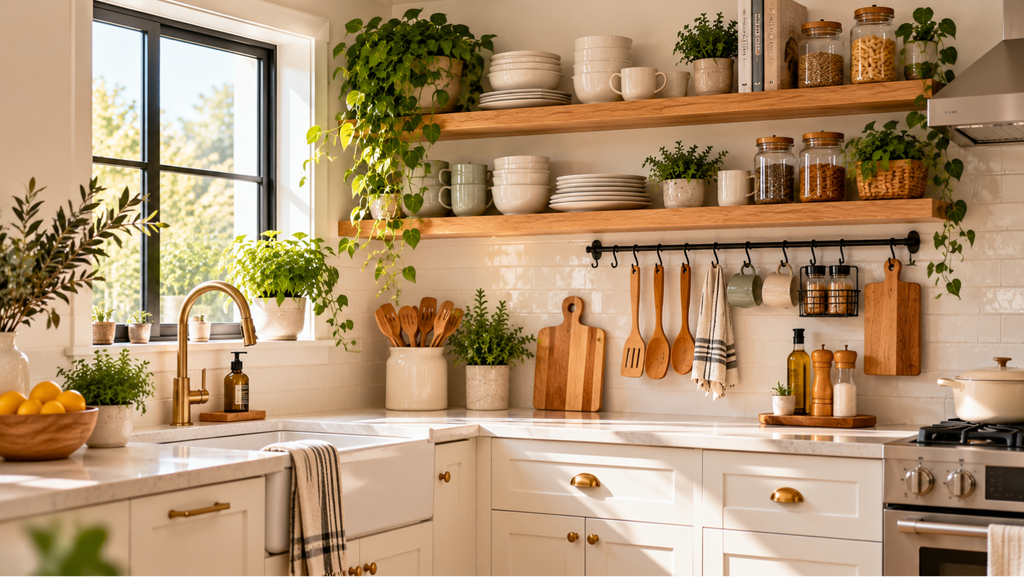
1. Use Vertical Wall Space
When countertop and cabinet space are limited, look upward.
The walls in a small kitchen can provide valuable storage without taking up precious floor or counter space. A simple rail, pegboard, floating shelf, or wall-mounted rack can give frequently used items a dedicated home.
Use vertical storage for things such as cooking utensils, cutting boards, mugs, measuring cups, or lightweight cookware.
The key is to avoid covering every wall with storage. Choose one or two areas where wall organization genuinely improves the workflow.
Try this: Install a slim rail near your main prep area and keep the utensils you use most often within reach.
2. Add a Slim Rolling Cart
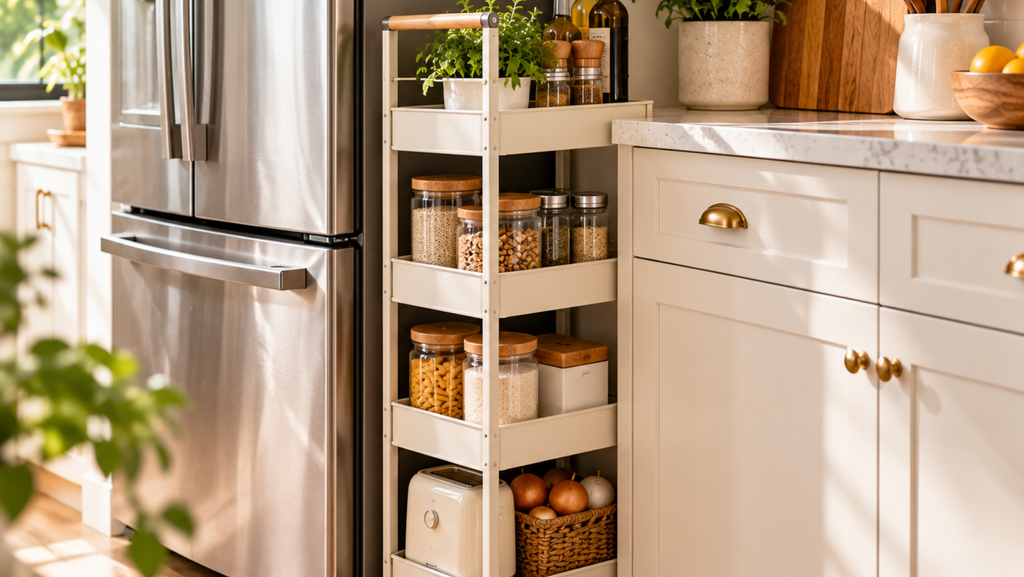
A narrow rolling cart can turn an awkward gap into useful storage.
Look for a cart that is narrow enough to fit between a refrigerator and cabinet, beside an island, or in another unused section of the kitchen.
Use different levels for different categories. The top can hold frequently used ingredients, while lower shelves can store pantry items, small appliances, or extra kitchen supplies.
Because the cart can move, it is especially useful in rental kitchens or spaces where permanent storage changes are not practical.
Try this: Measure the gap before buying a cart and leave enough clearance for doors, drawers, and walking paths.
3. Use the Inside of Cabinet Doors
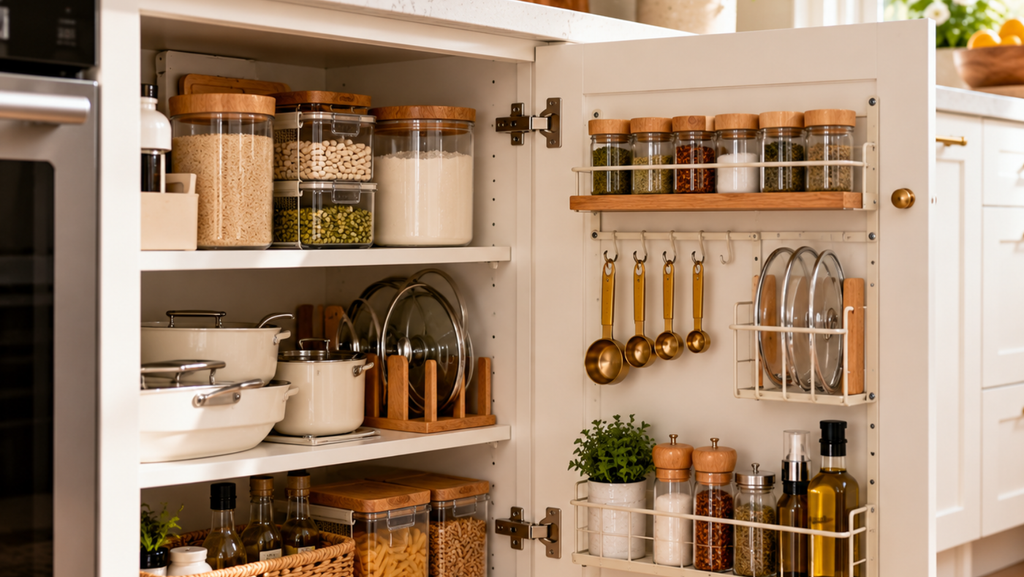
The inside of a cabinet door is easy to overlook, but it can become useful storage in a small kitchen.
Depending on the cabinet, you can add a slim organizer, adhesive hooks, or a mounted rack to hold lightweight items.
This works particularly well for measuring spoons, pot lids, cleaning supplies, spices, cutting boards, or food storage accessories.
Just make sure the added storage does not prevent the cabinet door from closing properly.
Try this: Use cabinet-door storage for small, flat items that tend to disappear inside drawers.
4. Add Shelf Risers Inside Cabinets
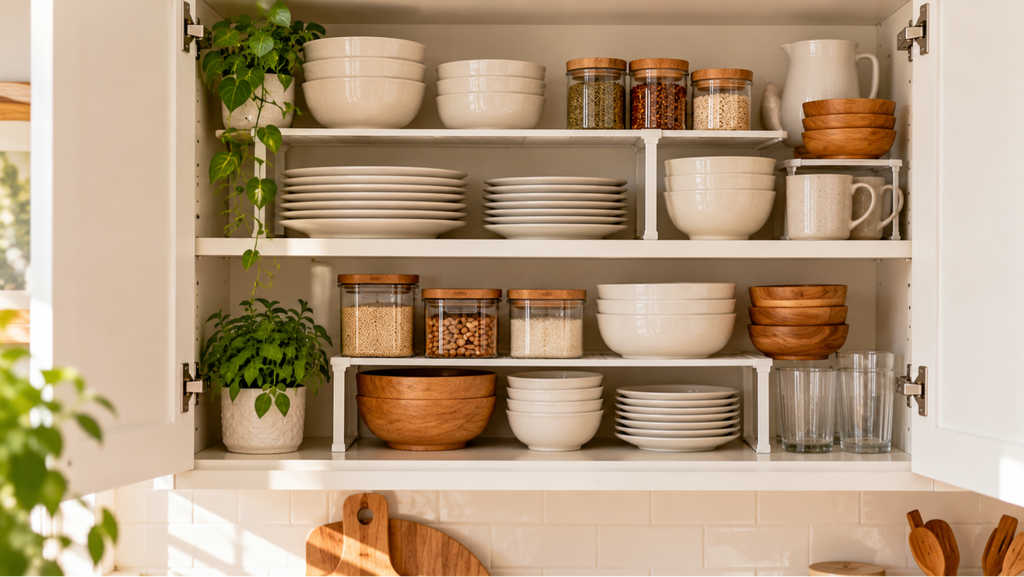
A single cabinet shelf often leaves a large amount of unused vertical space.
Shelf risers create an additional level so you can stack plates, bowls, mugs, or pantry containers without creating an unstable pile.
They are particularly helpful in cabinets where the shelves are tall but the items stored inside are relatively short.
Instead of stacking everything on top of everything else, create separate levels that make individual items easier to see and reach.
Try this: Use risers for plates and bowls that are currently taking up too much vertical space inside one cabinet.
5. Divide Kitchen Drawers Into Sections
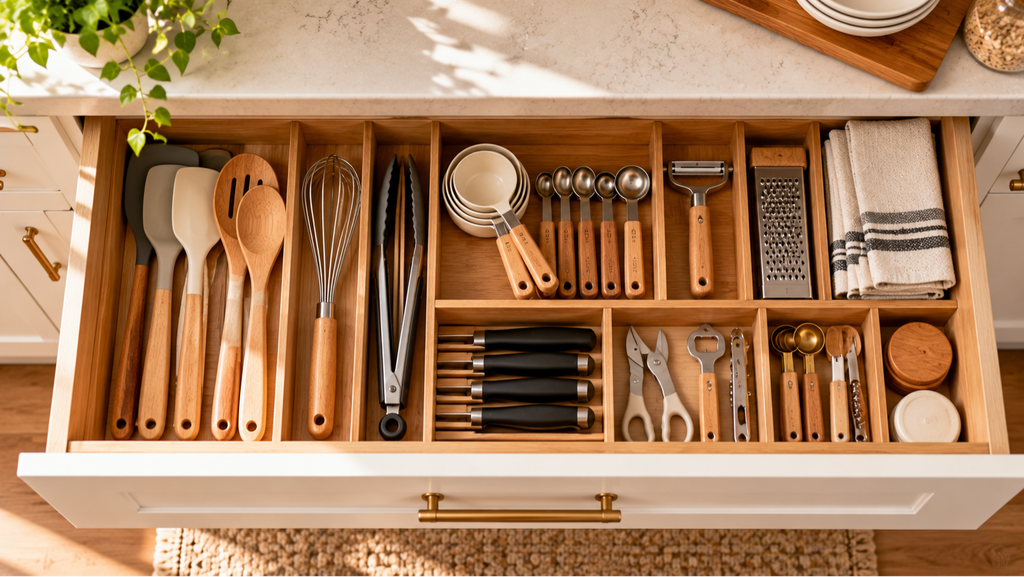
A deep kitchen drawer can quickly become a pile of utensils if everything is thrown into the same space.
Drawer dividers create simple categories and make it easier to find what you need without digging through the entire drawer.
Create sections for cooking utensils, measuring tools, serving utensils, gadgets, or everyday flatware.
The exact categories will depend on how you use your kitchen.
Try this: Take everything out of one drawer, group similar items together, remove anything you no longer use, and then create sections based on those categories.
6. Use a Magnetic Knife Strip
If your knife block takes up valuable counter space, consider moving knives to the wall.
A magnetic knife strip can keep knives visible and accessible while freeing up countertop space.
Place it somewhere convenient but away from areas where children could easily reach it. It should also be installed securely and positioned where knives can be removed safely.
Try this: Mount the strip near your main food-preparation area so your most-used knives are close to where you need them.

7. Create a Compact Coffee Station
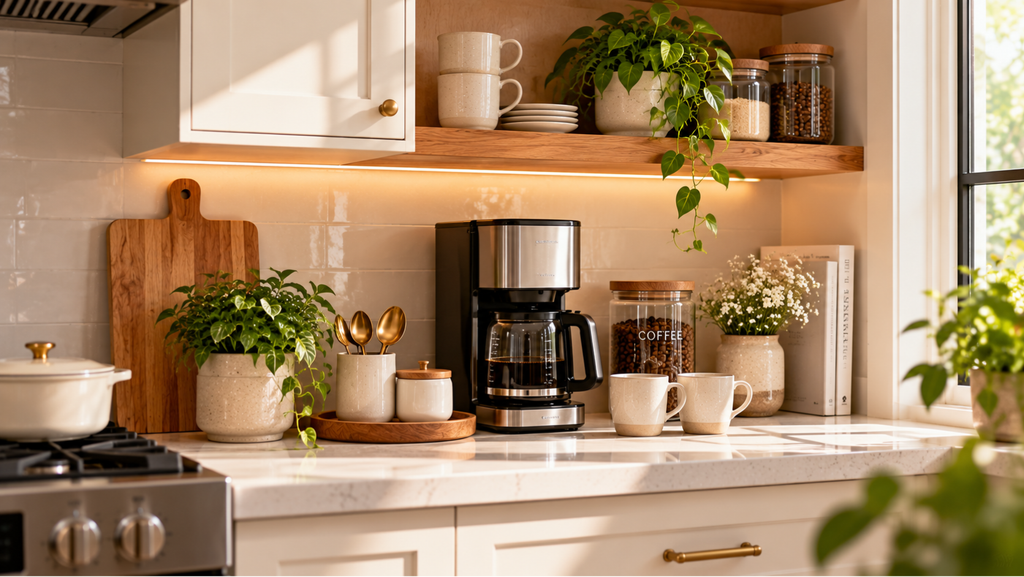
If you use your coffee maker every day, give it a defined home rather than letting coffee supplies spread across the counter.
A small coffee station can be as simple as a tray containing your coffee maker, mugs, beans, filters, and a few accessories.
Keeping everything together makes the area feel more intentional while preventing coffee-related items from taking over the entire countertop.
Try this: Keep only daily coffee essentials on the counter and store backup supplies elsewhere.
8. Use the Space Above Your Cabinets
The space above kitchen cabinets can provide additional storage, but it should be used selectively.
This area is best for items that are not needed every day, such as seasonal serving pieces, entertaining supplies, or attractive storage baskets.
Avoid using the space as a place to hide random clutter. A few coordinated baskets or containers will look much better than a collection of unrelated items.
Try this: Group rarely used items into labeled baskets so the space stays visually controlled.

9. Make Awkward Corners Work Harder
Small kitchens often have corners that are difficult to access.
Instead of allowing these spaces to become clutter traps, use storage designed around the shape of the area.
Lazy Susans, corner shelves, pull-out organizers, or carefully arranged bins can make awkward cabinets easier to use.
The goal is not simply to fit more things into the corner. It is to make the things stored there easy enough to access that you will actually use them.
Try this: Keep less frequently used items in difficult corners and reserve the easiest-to-reach spaces for everyday essentials.
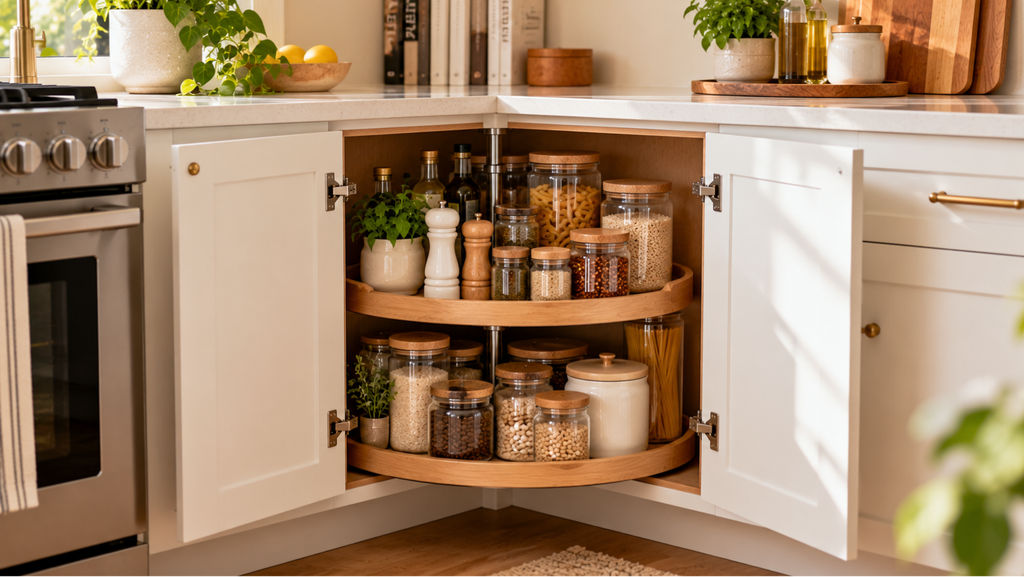
10. Choose Storage That Serves More Than One Purpose
In a small kitchen, every piece of furniture should earn its space.
A compact island, kitchen cart, or storage bench can provide more than one function.
For example, a small island can provide workspace on top while offering drawers or shelves underneath. A rolling cart can provide storage and additional prep space.
Look for pieces that solve two problems at once rather than adding furniture simply because it looks attractive.
Try this: Before adding a new storage piece, ask whether it provides both storage and another useful function.
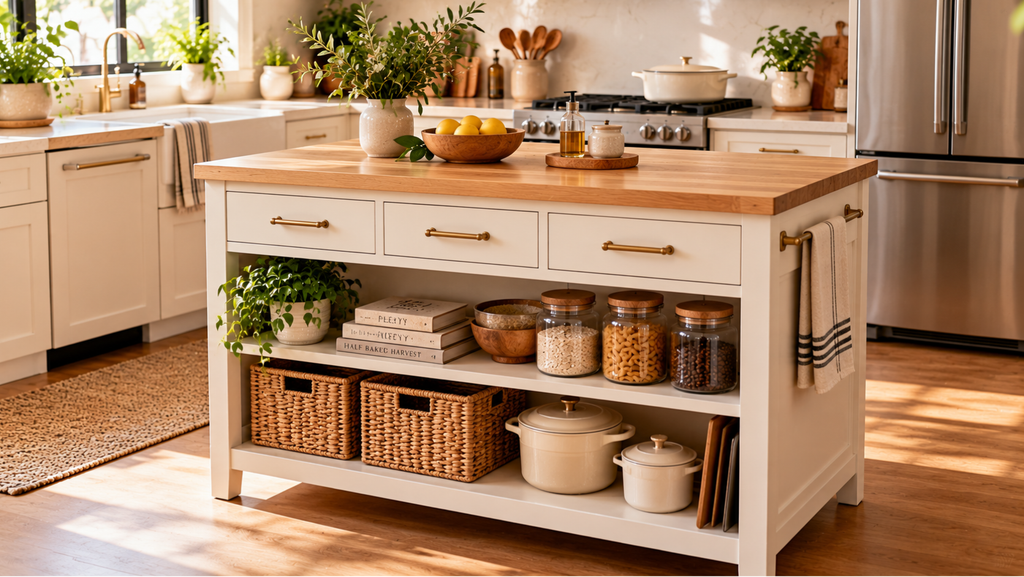
11. Keep Countertops as Clear as Possible
One of the fastest ways to make a small kitchen feel larger is to reduce visual clutter on the countertops.
That does not mean every appliance has to disappear.
Keep the appliances and tools you use daily accessible, but give everything else a designated storage location.
A mostly clear countertop creates more workspace and makes the entire room feel calmer.
Try this: At the end of each day, return unnecessary items to cabinets, drawers, or their designated homes.
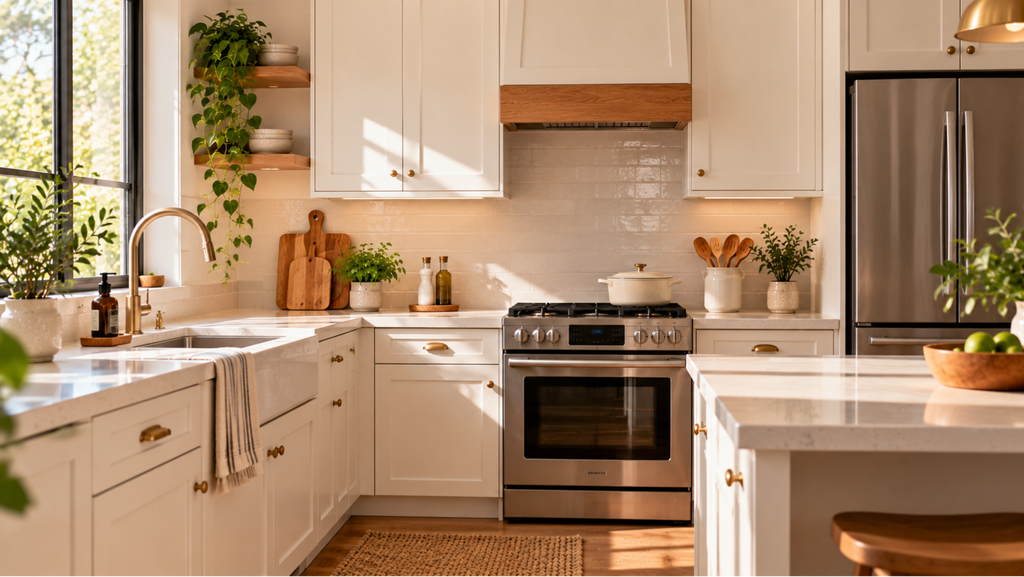
12. Give Small Appliances a Dedicated Home
Small appliances can consume a surprising amount of space.
Coffee makers, air fryers, blenders, toasters, stand mixers, and food processors should each have a logical storage location based on how often you use them.
Daily appliances can remain accessible. Appliances used once or twice a month may be better stored in a cabinet or pantry.
Avoid creating a countertop appliance collection simply because there is technically room for it.
Try this: Sort appliances into daily, weekly, and occasional-use categories before deciding where they belong.
13. Make the Area Under the Sink Work Better
The cabinet underneath the sink is often one of the messiest spaces in a kitchen.
Cleaning sprays, sponges, brushes, trash bags, dishwasher supplies, and miscellaneous products can quickly become difficult to manage.
Use stackable bins, small drawers, tension rods, or door-mounted organizers to separate categories.
Because plumbing takes up part of the cabinet, flexible storage is often more useful than rigid shelving.
Try this: Keep cleaning products grouped together and leave enough open space to access the plumbing easily.
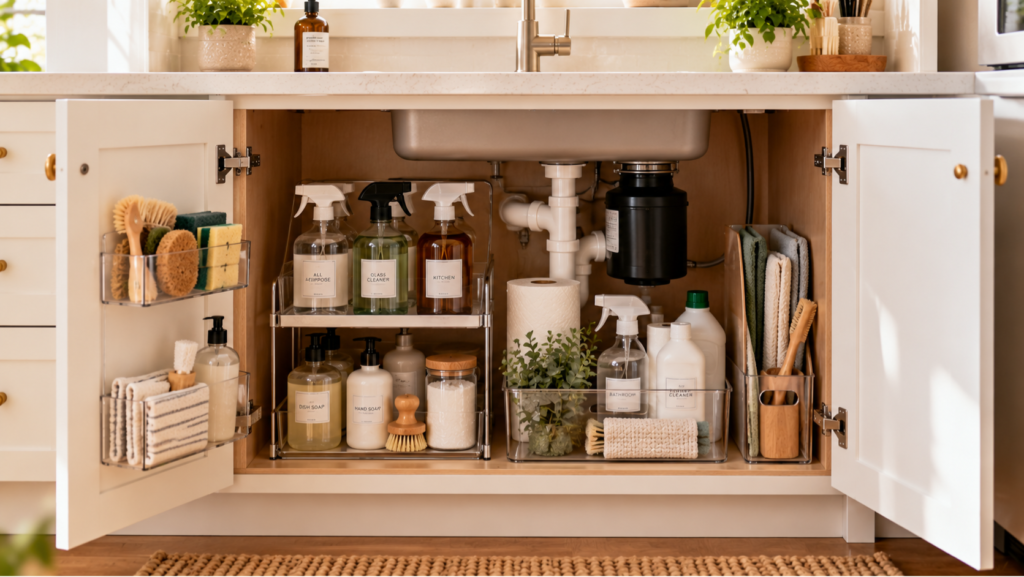
14. Hang Pots and Pans When Cabinet Space Is Tight
Large pots and pans can quickly consume an entire cabinet.
If your kitchen allows it, hanging some cookware can free up valuable cabinet space.
A wall-mounted rail or appropriately installed ceiling rack can keep frequently used cookware accessible while turning storage into part of the kitchen design.
Keep the arrangement intentional. Too many hanging items can make a small kitchen look visually busy.
Try this: Hang only your most-used cookware and store occasional-use pieces elsewhere.

15. Create Zones in Your Small Kitchen
One of the most effective organization strategies is to divide your kitchen into simple functional zones.
Instead of storing similar items wherever there happens to be room, keep related items close to where they are used.
For example:
Prep zone: cutting boards, knives, mixing bowls and food-prep tools.
Cooking zone: pots, pans, utensils, spices and oils.
Coffee zone: coffee maker, mugs, filters and coffee supplies.
Cleaning zone: dish soap, sponges, towels and cleaning products.
This approach reduces unnecessary movement and makes it easier to return things to the correct location.
Try this: Walk through the steps of preparing a typical meal and organize storage around those movements.

How to Make a Small Kitchen Feel Bigger
Organization can change how spacious a kitchen feels, even when the actual footprint stays exactly the same.
Start by reducing visual clutter. Too many objects on countertops, open shelves, and cabinet tops can make a small room feel crowded.
Use consistent containers where they genuinely improve visibility. Keep frequently used items easy to reach and less frequently used items farther away.
Light colors, reflective surfaces, clear pathways, and good lighting can also make a compact kitchen feel more open.
Most importantly, do not try to fill every empty space.
A small kitchen needs breathing room.
What Should You Get Rid of in a Small Kitchen?
When storage is limited, decluttering is just as important as organizing.
Consider removing or relocating:
- Duplicate utensils
- Appliances you rarely use
- Chipped or unused dishes
- Containers without matching lids
- Expired pantry items
- Gadgets you forgot you owned
- Mugs and glasses you never reach for
- Serving pieces used only occasionally
- Cleaning products you no longer need
- Items that belong in another room
A useful rule is to ask yourself whether an item earns the space it occupies.
If you rarely use it and it is easy to replace or borrow when needed, it may not deserve prime kitchen real estate.
Small Kitchen Organization Mistakes to Avoid
Using Every Available Surface
Just because a surface is empty does not mean it needs something on it.
Leaving some areas clear creates visual breathing room and makes the kitchen easier to work in.
Storing Everything Where It Fits
An item may technically fit inside a cabinet, but that does not mean it belongs there.
Store things according to how and where you use them whenever possible.
Buying Organizers Before Decluttering
Storage products cannot solve the problem of owning too many things.
Declutter first. Then measure the space and choose organizers based on what remains.
Making Everyday Items Difficult to Reach
If you use something every day, it should not be buried behind five other things.
Convenience is an important part of good organization.
Overloading Open Shelves
Open shelving can look beautiful, but too many items can quickly create visual clutter.
Keep displays simple and group similar pieces together.
Before and After: Making a Small Kitchen Work Better
A successful small kitchen transformation does not necessarily require a renovation.
Sometimes the biggest difference comes from changing where things live.
Imagine a crowded counter covered with a coffee maker, toaster, utensils, food containers, and random kitchen supplies.
After reorganizing, the coffee supplies can become a compact coffee station, the utensils can move into divided drawers, appliances can be grouped according to frequency of use, and unused counter space can be reclaimed.
The kitchen has not become physically larger. It simply works better. That is the real goal of small kitchen organization.
Frequently Asked Questions
How do I organize a very small kitchen?
Start by decluttering and then focus on vertical storage, cabinet-door organizers, shelf risers, drawer dividers, narrow carts, and functional zones. Keep frequently used items easy to reach and move occasional-use items into less accessible storage.
How can I maximize storage in a small kitchen?
Use vertical wall space, the backs of cabinet doors, cabinet risers, narrow gaps, corners, and the area under the sink. Multi-purpose furniture can also provide additional storage without taking up unnecessary space.
How do I keep my small kitchen from looking cluttered?
Keep countertops mostly clear, avoid overloading open shelves, group similar items together, and give everyday objects a designated home. Consistent storage containers can also reduce visual noise.
What should I organize first in a small kitchen?
Start with the areas you use most often, such as the main utensil drawer, food-preparation area, cooking zone, and countertops. Improving these areas will usually make the kitchen feel more functional immediately.
Are open shelves good for small kitchens?
They can be, but moderation matters. A small number of open shelves can make a kitchen feel lighter and provide easy access to everyday items. Too many displayed objects can make the room feel cluttered.
Final Thoughts
A small kitchen does not have to feel cramped or frustrating. The most effective organization systems are usually simple. Use the walls. Make cabinets work harder. Reduce countertop clutter. Store things according to how often you use them. Give each category a logical home.
Most importantly, organize around the way you actually use your kitchen.
You do not need to make every inch look perfectly styled. You just need to make every inch work harder.
And when your storage system makes everyday cooking, cleaning, and putting things away easier, even a very small kitchen can feel surprisingly spacious.