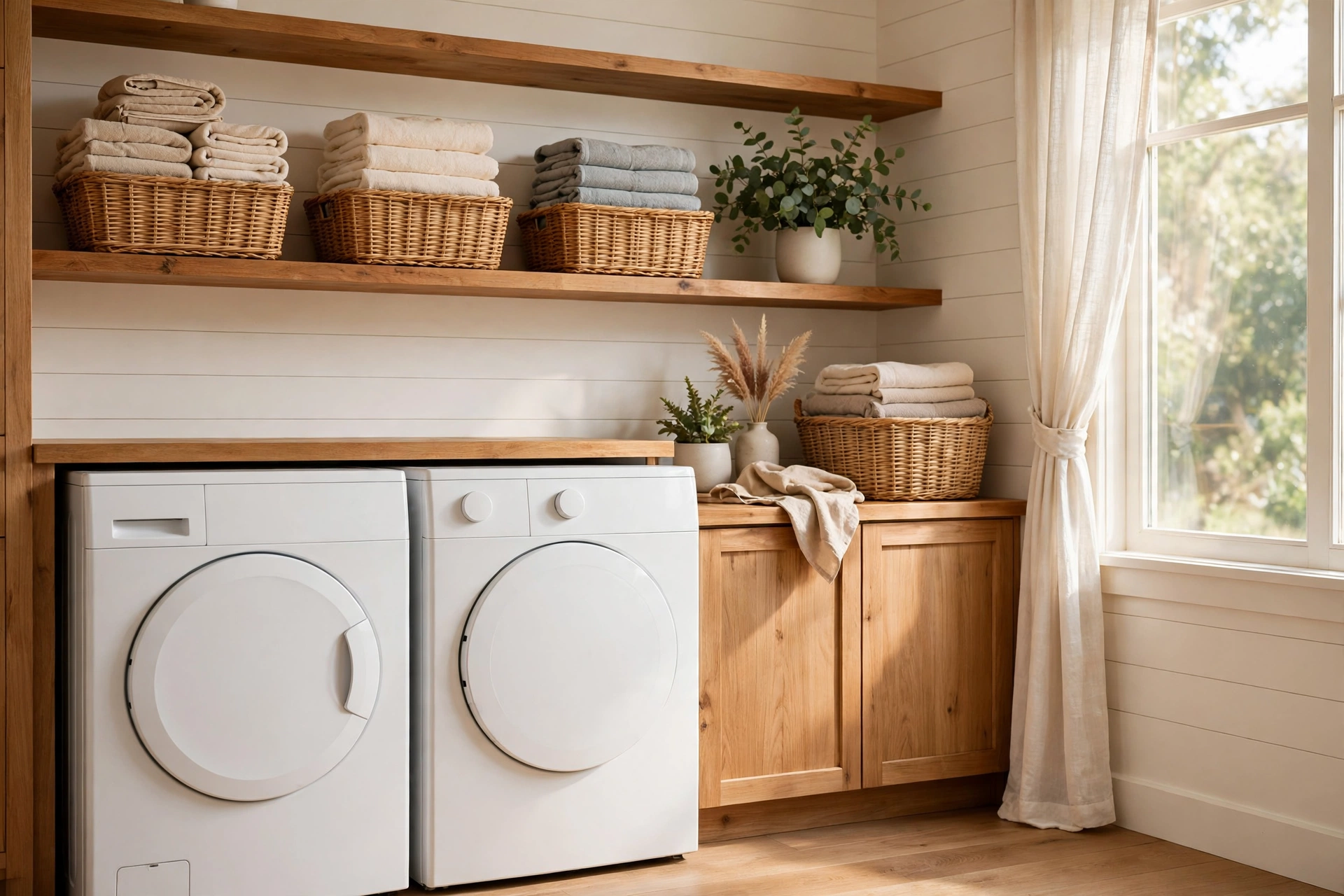
27 Laundry Room Organization Ideas That Make Wash Day Feel Easy and Calm
Two years ago my laundry room was the one room in the house I avoided looking at. The door stayed shut because behind it was a pile I did not want to deal with, clean clothes on top of the dryer, a basket of socks nobody claimed, detergent bottles crowded on a shelf I could not reach, and a folding pile that lived on the washer for a week at a time. I told myself I was too busy to fix it, but the truth was simpler. I had no system. Every load started with hunting for supplies and ended with clothes that never quite made it back to a closet.
Then one Saturday I spent three hours in that room, not decorating it, just sorting it. I pulled everything out, threw away the empty bottles and the single socks, and put back only what we actually used, in the order we used it. That one afternoon changed wash day for good, and these 27 laundry room organization ideas are everything I learned from that reset, plus the tricks I have picked up since from small apartments, rental laundry corners, and friends whose laundry rooms look calm even with kids and pets in the house. You do not need a big room or a big budget. You need a place for every step, from the dirty pile to the folded stack.
I have grouped the ideas by how laundry actually moves through the room, from sorting and washing to drying, folding, and putting away, with storage, small spaces, and budget fixes along the way. Start with one zone, finish with the One Basket Test at the end, and wash day will feel shorter even before you buy a single bin.
Laundry Room Organization Ideas That Start With Sort, Store, Reach
Before you buy anything, run every idea through three words: sort, store, reach. Sort means dirty clothes land in the right pile without thinking. Store means supplies live where the job happens, not in another room. Reach means you can grab what you need with one hand while holding a basket with the other. IMO, most messy laundry rooms fail on reach, not on storage. They have bins and shelves, but the detergent is behind the bleach, the stain spray is on a high shelf, and the clean towels are in a different room. Fix the flow first, and the pretty baskets will actually stay pretty.
FYI, I keep a small notebook on top of my washer for a week whenever I reorganize, and I write down every time I walk out of the room to fetch something. That list is my real shopping list. It is never long, and it always surprises me.
Sorting That Does Itself While You Live Your Life
1. Set Up Three Baskets and Label Them Honestly
Whites, darks, and towels and bedding. That is it. Three baskets, big enough that nobody has to balance a pile on top, labeled in plain words your whole household understands. Put them where clothes come off, not only where the washer is, if you can. A basket by the bedroom door beats a perfect sorting station nobody walks past.
2. Give Every Person One Small Hamper, Not One Giant Pile
One family pile always becomes one person’s job to sort. A small hamper per person, even just a cheap laundry bag on a hook, means each load starts sorted by owner. Kids learn fast when their own hamper is their own job, and you stop playing detective with a missing sock.
3. Hang a Mesh Bag for Delicates Right on the Washer
Delicates get ruined when they hide at the bottom of a dark load. A mesh bag clipped to the side of the washer or on a hook beside it catches bras, baby socks, and anything with a strap before it joins the wrong wash. Wash the bag with the load, zip it shut, and the small things stop disappearing.
4. Keep a Stain Station, Not a Stain Drawer
One small tray or caddy with stain spray, a soft brush, and white cloths, kept within arm’s reach of the washer. When a stain gets treated right away, it usually comes out. When it waits in a drawer for a week, it usually does not. This tray is the highest value five dollars in my whole laundry room.
5. Sort by Wash Day, Not by Perfection
If your household does two loads a week, sort for two loads. Lights and darks on Tuesday, towels and bedding on Saturday, for example. A system that matches your real schedule beats a perfect seven basket system that nobody follows past the first week.
Washing Supplies Within One Arm’s Reach
6. Put Detergent at Washer Height, Never on a High Shelf
Detergent, softener, and scent beads belong on a shelf or tray at the height of the washer lid, where you can pour without stretching or lifting a heavy jug over your head. If your shelf is high, move the everyday bottles down and keep only refills up top.
7. Decant Into Clear Jars With Big, Simple Labels
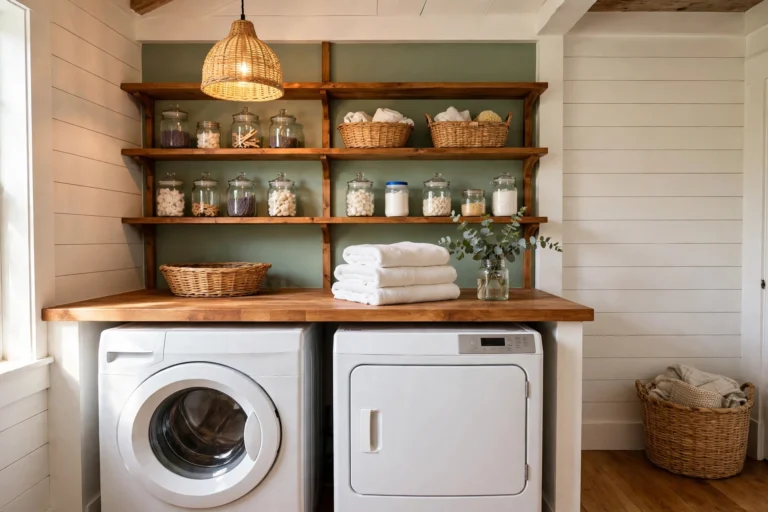
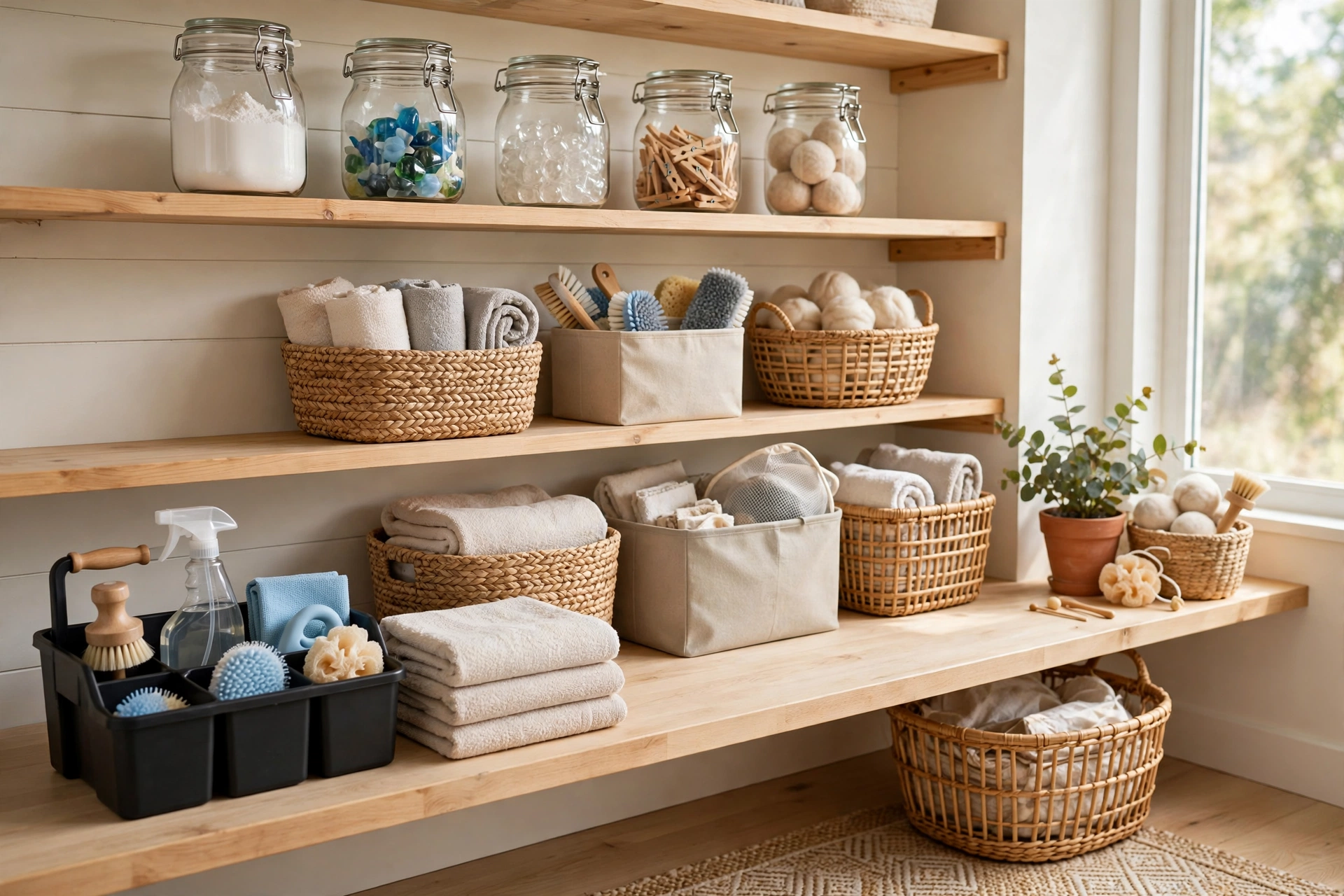
Clear jars or pumps make it obvious when you are running low, and they look calm even when the shelf is full. Label them with the product name and the dose, not just a cute word. A guest or a teenager should be able to do a load correctly without asking you.
8. Keep One Caddy for the Whole Load
A handled caddy that holds detergent, stain spray, dryer balls, and a lint roller means you carry one thing, not four. It also means the supplies travel with you if your washer is in a shared or basement space, and nothing gets left behind on top of the dryer.
9. Store Refills Up High and Backups in One Bin
Refills and bulk buys live in one labeled bin on a high shelf or in a closet, not scattered across three shelves. When the everyday bottle runs low, you refill from the bin. When the bin runs low, that is your signal to buy more, and you never end up with four half empty jugs.
10. Hang Measuring Tools Where You Pour
A small cup or scoop clipped to the detergent jar, or a hook for the measuring cap, stops the daily hunt for the scoop that fell behind the washer. It sounds tiny, and it saves a surprising amount of muttering on wash day.
Drying Space That Does Not Take Over the Room
11. Mount a Fold Down Drying Rack on One Wall
A wall mounted rack that folds flat when you do not need it gives you drying space without a permanent clothes horse blocking the room. Hang it near the washer, at a height where wet shirts drip onto tile or a tray, not onto clean folded clothes.
12. Use a Retractable Line for Small Loads
A retractable clothesline pulls out for delicates and swimwear and disappears when the load is done. It is the best option I have found for small laundry rooms and rentals, because it adds zero floor clutter and costs less than a freestanding rack.
13. Give Wet Items a Drip Zone With a Tray Underneath
A boot tray or a shallow baking sheet under a drying rack catches drips and protects wood floors and shelves. It also tells you at a glance what is still damp, so nothing gets folded while it is still wet and musty.
14. Keep Dryer Balls and Lint Tools in One Spot by the Dryer
Wool dryer balls, a lint roller, and a small trash bin for lint belong right beside the dryer door. Empty the lint trap every load, toss the lint in the bin, and the dryer runs faster and safer. A full lint bin is also a clear sign the filter needs attention.
Folding and Putting Away Without a Chair Pile
15. Fold Straight Out of the Dryer Onto a Clear Counter
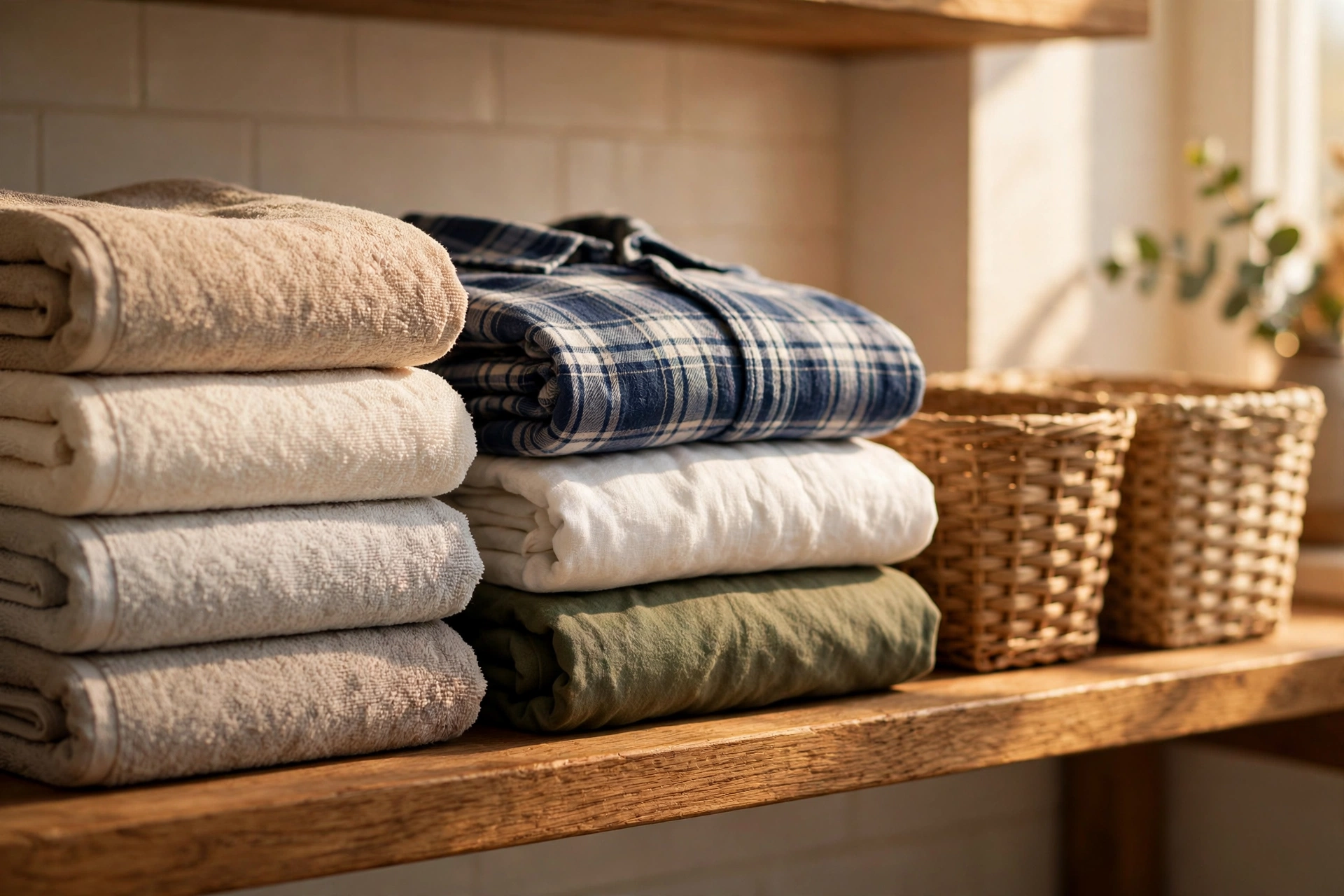
A clear folding surface, even just the top of the washer with a board over it, or a small wall mounted shelf, is the difference between folded clothes and a chair pile. Fold each load the minute it comes out, while it is still warm and wrinkle free, and it takes five minutes instead of twenty later.
16. Roll, Do Not Stack, for Drawers and Baskets
Rolled shirts and towels take less space, stay visible in a drawer, and do not topple when you pull one out. Roll kids clothes and gym clothes especially, and you will fit a whole load in a basket that used to hold half of one.
17. Use One Basket Per Person for the Trip Back
Folded clothes go straight into that person’s basket, and the basket goes to their room. No sorting pile on the bed, no clean clothes living on the sofa. When the basket is empty, it comes back to the laundry room, ready for the next load.
18. Put a Small Shelf by the Door for Things That Leave the House
A shelf or hook by the laundry room door holds the gym bag, the dry cleaning bag, and the reusable grocery bags that need washing. When those things have a home, they stop living on the washer and the floor.
Storage That Works in a Closet, Corner, or Tiny Room
19. Go Vertical With Shelves All the Way Up
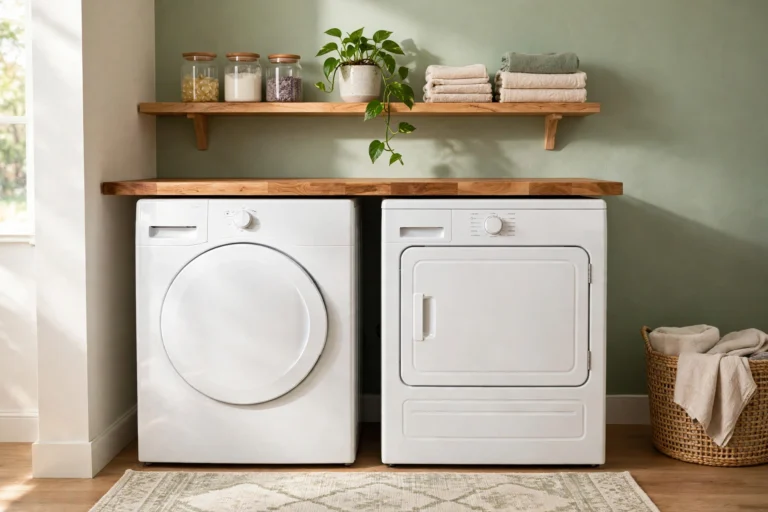
In a small laundry room, the wall above the washer and dryer is your best storage. Two or three shelves, with everyday items at arm height and refills above, hold more than a whole extra cabinet and cost far less. Anchor them properly, and keep heavy jugs low.
20. Use the Back of the Door for Flat Tools
An over the door rack or hooks hold the ironing board, a small iron, lint rollers, and cleaning cloths without taking a single inch of floor or shelf space. It is the easiest win in a rental, because nothing gets drilled into the wall.
21. Label Bins by Job, Not by Size
Labels like “Cleaning Cloths,” “Pet Towels,” and “Ironing” beat labels like “Bin 1” every time. When a bin says its job, anyone in the house puts the right thing in it, and you stop opening three bins to find one cloth.
22. Keep a Donation Bag in the Laundry Room
Clothes with holes, stained towels past saving, and single socks that never found a partner go straight into a donation or rag bag hung on a hook. When the bag is full, it leaves the house. It never becomes a second pile.
Budget Systems and Small Space Tricks
23. Build the Whole System for Under Fifty Dollars
Three baskets from a discount store, a shower caddy for supplies, a pack of labels, and two hooks can organize a whole laundry room for under fifty dollars. Start there, live with it for a month, and only then buy the prettier bins. You will buy fewer of them, and you will buy the right ones.
24. Use Tension Rods and Hooks Instead of Drilling
A tension rod across a laundry closet holds spray bottles by their triggers and keeps them visible and reachable. Adhesive hooks hold bags, brushes, and small baskets. Renters can build a full system with zero holes and take it all when they move.
25. Turn a Rolling Cart Into a Laundry Station
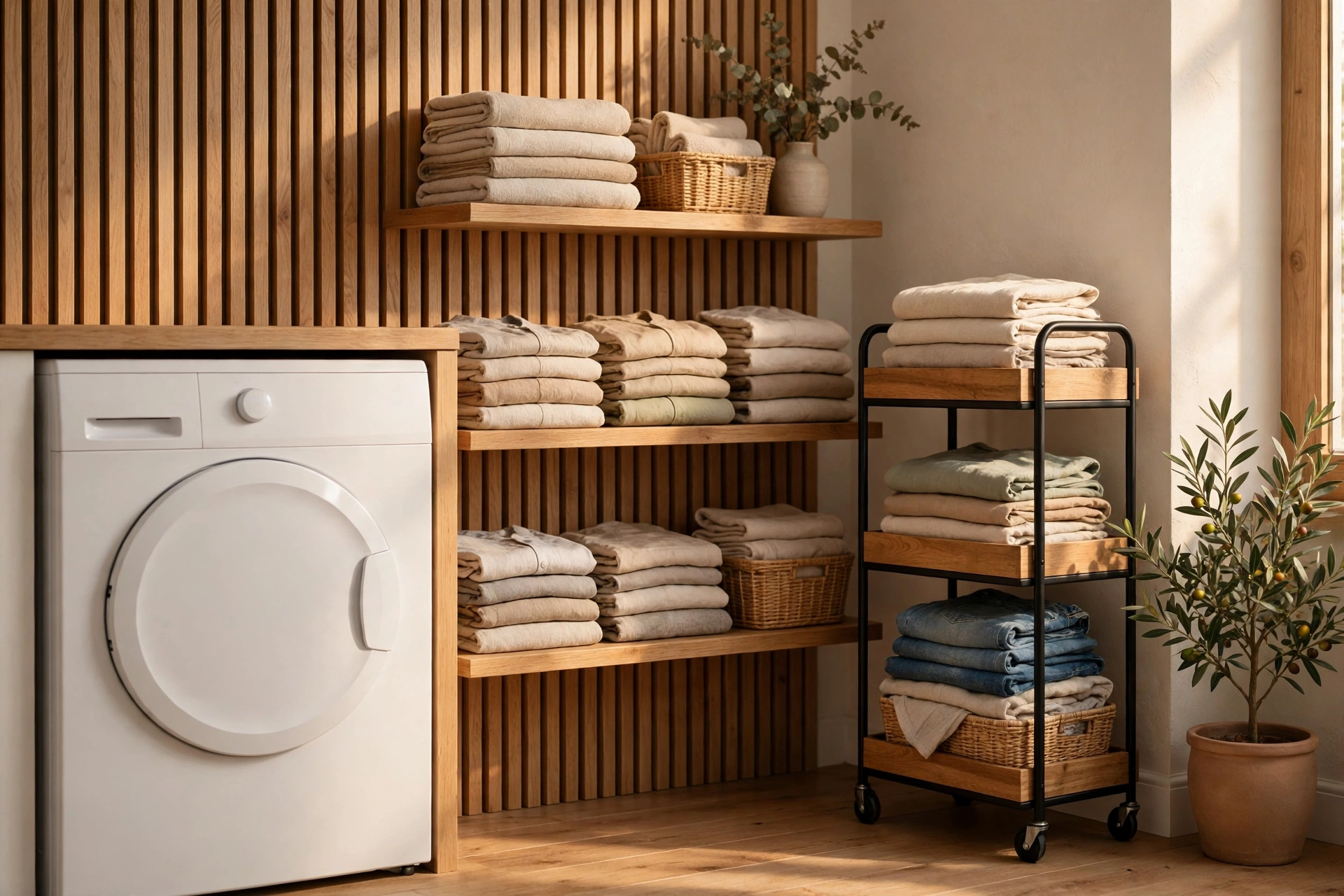
A narrow rolling cart fits between the washer and the wall and holds detergent, stain spray, and folding supplies in tiers. Pull it out when you work, push it back when you finish. It is the closest thing to extra counter space in a room that has none.
26. Keep Pets and Kids in Mind With Closed Bins
If pets chew or kids explore, use bins with lids for detergent pods and cleaning products, and keep them out of reach. Safety beats pretty open baskets here, every time. A locked or high cabinet for pods is worth the extra step.
27. Do a Five Minute Reset After Every Load
After the last item is folded, spend five minutes putting supplies back, wiping the washer top, and emptying the lint trap. That tiny reset is what keeps an organized laundry room organized. Without it, even the best system slides back to a pile in about two weeks. I learned that the hard way, twice.
Lint, Steam, and Humidity Check
Laundry rooms get damp, and damp rooms grow musty smells and mildew on baskets and cloth. Leave the washer door open after a load so the drum dries, wipe the rubber seal once a week, and keep a small vent or fan running if the room has no window. Avoid storing clean towels in a closed bin in a humid room, and wash the bins themselves every few months. If your room smells musty even when it looks clean, check behind the washer and under the sink first. That is where the hidden damp usually lives.
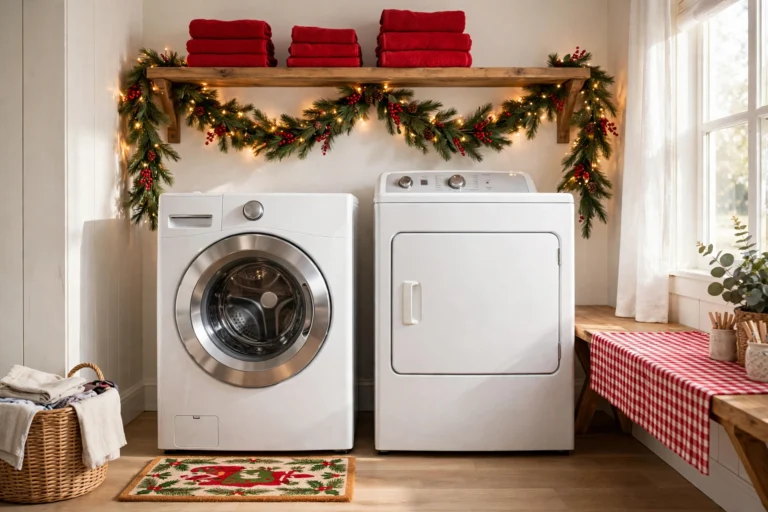
For more room by room ideas, see our small laundry room decor ideas for tiny spaces, our farmhouse laundry room decor for a warmer style, and our Christmas laundry room decor for a festive wash day. If you like systems that work across the house, our kitchen counter decor ideas use the same clear surface rule as the folding counter above.
Buy Once vs Refresh Each Year: Where the Money Should Go
Buy once: sturdy baskets, a good drying rack, a rolling cart, and clear jars. These get used every week and cheap versions break fast. Refresh each year: labels, small bins, cloths, and scent products. Those wear out, get stained, or simply stop smelling fresh, and replacing them keeps the system feeling new without a full redo. Spend the money where your hands go every day, and save it where your eyes only glance.
Small Spaces and Rentals: The Same Ideas, Shrunk Down
In a laundry closet or a corner with a stacked washer and dryer, pick five ideas and skip the rest: one sorting basket, one supply caddy, one wall rack or retractable line, one folding surface (even a board over the washer), and one basket per person for the trip back. That is a complete system in about three square feet. Everything else is a bonus, not a requirement.
Troubleshooting: Six Fixes for the Most Common Laundry Room Problems
Clothes pile up on the washer. You need a folding surface and a per person basket. Without a place for folded clothes to go, they will always land on the washer.
Supplies keep disappearing. One caddy, one spot, and labels with doses. If supplies live in three places, they will always be in the wrong one.
The room smells musty. Leave the washer door open after loads, wipe the seal weekly, and check behind the machine for damp. Wash the bins too.
Small items vanish in the wash. Mesh bags for delicates and socks, clipped to the washer, catch them before they join the wrong load.
Kids mix everything together. One hamper per person, labeled with their name, turns sorting into their job instead of yours.
The system lasted two weeks, then collapsed. Add the five minute reset after every load. Systems do not fail from bad bins. They fail from no reset.
The One Basket Test: The Finishing Check That Costs Nothing
When you think the room is done, grab one empty basket and walk the room. Everything that does not have a home goes in the basket. If the basket is empty, the system works. If it holds more than five things, those five things are your next fix, not a shopping trip. Run the test once a month, and the room stays calm without a big seasonal overhaul.
Frequently Asked Questions About Laundry Room Organization
How do I organize a very small laundry room? Go vertical with shelves, use the back of the door, and keep only five core pieces: one sorting basket, one supply caddy, one drying rack, one folding surface, and one basket per person.
What is the best way to sort laundry? Three baskets for whites, darks, and towels and bedding work for most homes, plus a mesh bag for delicates. Sort by your real wash days, not by a perfect system nobody follows.
How much does it cost to organize a laundry room? A full basic system costs under fifty dollars with discount baskets, a caddy, labels, and hooks. Spend more only on sturdy baskets and a good drying rack that you use every week.
How do I keep a laundry room from smelling musty? Leave the washer door open after each load, wipe the seal weekly, run a fan or open a vent, and wash bins regularly. Check behind the washer if the smell persists.
Can renters organize a laundry room without drilling? Yes. Tension rods, adhesive hooks, rolling carts, and over the door racks build a complete system with no holes, and everything moves with you.