25 Art Deco Bathroom Decor Ideas That Feel Glamorous
The first time I saw a real art deco bathroom, I was not in a fancy hotel. I was in my aunt’s old house, standing in a bathroom that had not been touched since the 1930s, and I could not stop looking at it. Black and white checkerboard floor, a round mirror with a sunburst frame, a brass faucet that still shone after ninety years, and an arch painted over the door that made the whole room feel taller. Our own bathroom, by comparison, was a plain white box with a builder-grade mirror and a faucet I had never once noticed. That day I learned the difference between a bathroom that works and a bathroom that makes you smile every morning, and art deco bathroom decor is the fastest way I know to get from one to the other.
So this guide is built around twenty-five art deco bathroom decor ideas that bring that old glamour into a modern bathroom without a renovation. Most of them cost very little, a few cost under fifty dollars, and none of them ask you to rip out a single tile. The trick is that art deco is a style of shapes, not a style of spending. Arches, fans, sunbursts, and straight lines do the work, and you can paint, stick, swap, or hang almost all of them in a weekend. IMO, the bathroom is the best room in the house for a bold style, because it is small, you use it every day, and a little glamour goes a long way when you see it first thing in the morning. If you love the warm, earthy side of bathroom style too, our terracotta bathroom decor guide is the cozy opposite of this one, and the two styles share the same brass and wood warmth.
Two ideas run through everything below. The first is the Arch, the Fan, the Line: every art deco bathroom needs an arch somewhere, a fan or sunburst somewhere, and clean straight lines everywhere else. Three shapes, that is the whole formula, and it works in a tiny powder room and a big master bath alike. The second is the Mirror Test: once you think you are done, stand in the doorway and look at the room the way a guest sees it. If one side feels heavier than the other, move one thing until the room feels balanced. FYI, art deco is a style built on symmetry, so the Mirror Test catches more mistakes in this style than in any other I have styled.
Arches That Set the Deco Tone
1. Paint one arch behind the vanity
One painted arch behind the vanity is the single fastest art deco move you can make, because it changes the whole wall for the price of a sample pot of paint. Paint an arch in a deep color, emerald, black, or dusty rose, starting at the counter and rising to just above the mirror, and the flat wall suddenly has architecture. Use painter’s tape and a piece of string to draw the curve, and keep the arch wide enough to frame the mirror with a few inches to spare on each side. This is the idea I would do first if I could only do one thing in the whole guide.
2. An arched mirror over the sink
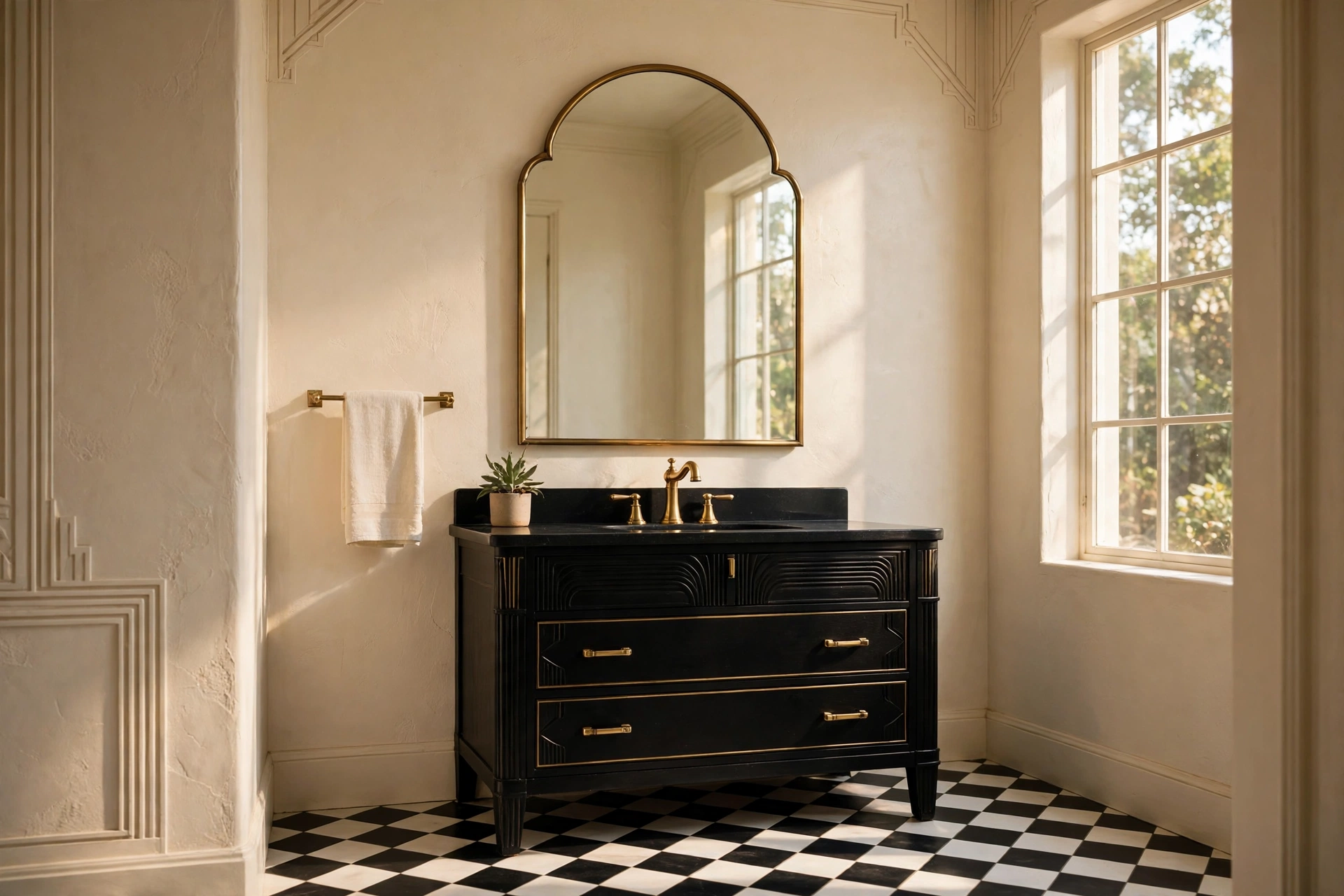
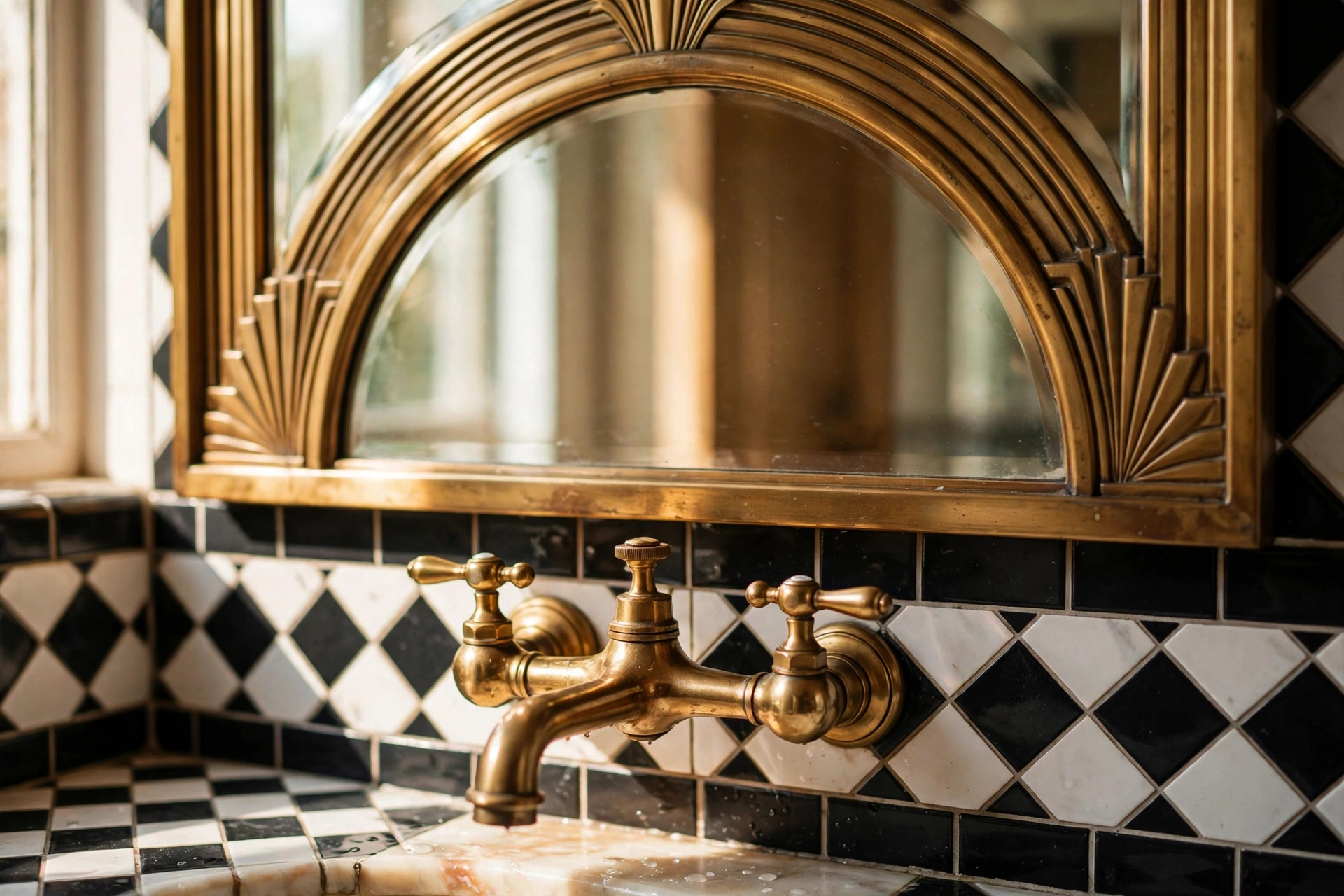
An arched mirror is the art deco classic for a reason, because the shape echoes the arches of the 1920s and softens a boxy bathroom in one move. Choose a mirror with a thin brass or black frame, tall enough to show your face and shoulders, and hang it so its center sits at eye level. A pair of small arched mirrors over a double vanity looks even better, because the repetition is pure deco. If your mirror is already rectangular, a peel-and-stick arch frame in brass does the same job for about twenty dollars.
3. An arched shower niche
If you are already planning a small tile job, an arched shower niche is the detail guests will ask about. The arch shape turns a plain shampoo shelf into a piece of architecture, and it costs nothing extra in tile if the niche is already being built. Line the back of the niche with a contrasting tile, a fan shape or a deep green, and keep the bottles to three so the arch stays visible. Even a rented bathroom can fake this with a small arched shelf hung in the shower, as long as it drains and dries between uses.
4. Arch-shaped tiles on the backsplash
Fish scale tiles, which are really just rows of little arches, are the art deco backsplash that never looks dated. Run them behind the vanity in a glossy white or a deep emerald, and the wall catches the light in a way flat tiles never do. You only need one small area, about two feet wide, so a single box of tile covers it. If real tile feels like too much, peel-and-stick fish scale tiles exist now, and they hold up fine behind a vanity as long as they stay out of direct shower spray.
Black, White, and Bold Geometry
5. Checkerboard floor tiles
Nothing says art deco faster than a black and white checkerboard floor. If your floor is already white tile, you can fake the look with peel-and-stick black squares on every other tile, and the result reads as intentional from the doorway. If you are replacing the floor, large checkerboard squares, twelve inches or bigger, look more expensive than small ones, because fewer grout lines make the pattern feel calmer. Keep the rest of the room simple, because a checkerboard floor is the loudest voice in the room and it does not need competition.
6. A sunburst pattern on one wall
A sunburst is the most joyful shape in art deco, and one wall is all it takes. Paint thin rays fanning out from behind the mirror, or hang a sunburst wallpaper panel on the wall opposite the door so it is the first thing you see. Gold rays on a deep green wall is the classic combination, and it looks far more expensive than it is, because the rays are just straight lines from one point. If painting rays feels fiddly, a sunburst mirror does the same job with zero paint and no commitment.
7. Fan-shaped tiles in the shower
Fan tiles, also called scallop tiles, are the shower wall that makes people stop and look. Run them in a soft cream or a dusty pink, and the shower becomes the prettiest corner of the bathroom. You only need the shower wall, not the whole room, and a single feature wall of fan tiles costs about the same as a new faucet. Pair them with a plain white tile everywhere else, because the fan shape needs a quiet background to shine. Our black and white bathroom decor guide uses the same contrast trick with a simpler palette.
8. Bold black grout lines
Black grout is the cheapest way to make plain white tiles look like a design choice. If your tiles are already white, regrouting the vanity backsplash or the shower wall in black turns a boring grid into a bold geometric pattern overnight. The trick is to keep the tiles large and the grout lines straight, because black grout shows every wobble. Seal it well, because dark grout in a wet room needs the same care as any grout, and wipe it down once a week so soap never dulls the lines.
Brass, Chrome, and the Metals Mix
9. A brass faucet as the jewelry
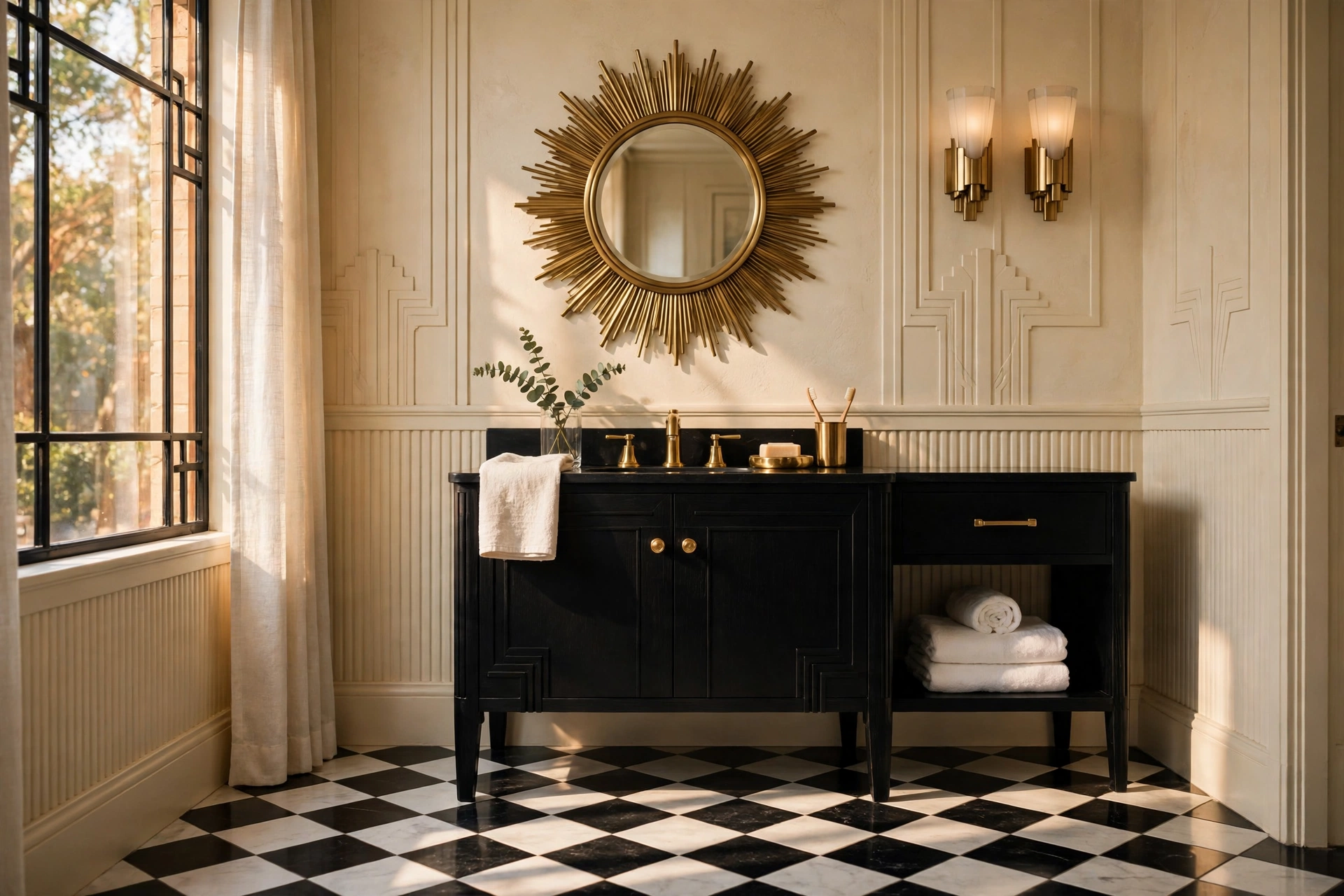
Think of the faucet as the jewelry of the bathroom, because it is the one metal piece your eye lands on every single time. A brass faucet against white tile and a black vanity is the art deco combination that never fails. Choose a faucet with a stepped or angular shape rather than a round one, because deco loves corners. If a new faucet is not in the budget, swap just the handles for brass ones, or add a brass soap dispenser and a brass tray, and the room starts to read brass even before the faucet changes.
10. Chrome and brass together, on purpose
Old decorating rules said never mix metals, and art deco broke that rule on purpose. A chrome shower head with a brass faucet looks deliberate when both metals appear at least twice in the room, so add a chrome towel ring to match the shower and a brass tray to match the faucet. The trick is repetition: one lonely metal looks like a mistake, but two of each looks like a choice. Keep the finishes in the same family, warm brass with polished chrome, not brushed nickel with oil-rubbed bronze, or the mix turns muddy.
11. A brass-framed mirror with stepped edges
A stepped mirror frame, where the corners drop down in little stair steps, is the most deco shape a mirror can have. It catches the light on every edge and makes a plain bathroom feel designed. Hang it over the vanity with a pair of sconces on either side, and the whole wall becomes a composition. If a stepped frame is hard to find, a plain brass frame with two thin brass sconces gives you the same glow for less money, and the symmetry does the deco work for you.
12. Black fixtures for contrast
Matte black fixtures are the modern way to get the deco contrast without the shine. A black faucet, black towel bars, and a black-framed mirror against cream tile and a brass tray give you three metals in balance, and the black keeps the brass from feeling too sweet. The rule is the same as with brass: repeat the black at least three times, faucet, mirror frame, and one small thing like a soap dish, so it reads as a scheme rather than an accident. Black fixtures also hide water spots better than chrome, which is a small daily mercy.
Mirrors and Light That Make It Glow
13. A round sunburst mirror
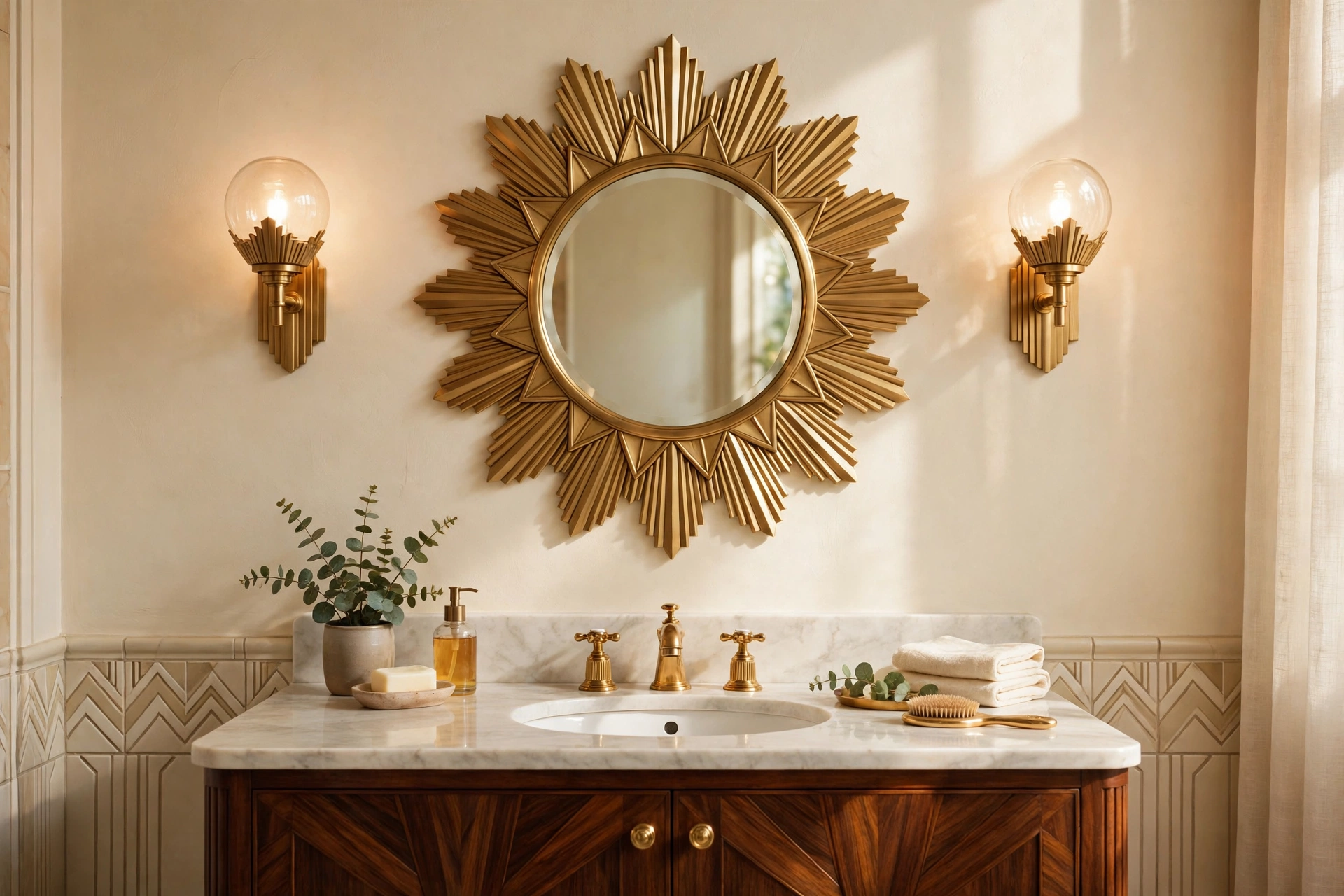
A round mirror with rays fanning out from the frame is the one art deco piece that works in every bathroom, no matter the size. Hang it over the vanity or on the wall opposite the window, where it catches the daylight and throws it around the room. Choose rays in brass for warmth or black for contrast, and keep the mirror itself big enough to be useful, at least twenty-four inches across. This is the piece I would buy first if I were starting from a blank bathroom, because it does the work of a mirror, a light, and a piece of art all at once.
14. Sconces on both sides of the mirror
Two sconces, one on each side of the mirror, are the art deco lighting move that also happens to be the best light for your face. Overhead light casts shadows, but side light is soft and even, and it makes the mirror wall look like a hotel. Choose globe sconces with brass arms, or stepped sconces that echo the mirror frame, and put them on a dimmer so the evening bath feels like a spa. If you cannot wire sconces, a pair of battery globe lights on either side of the mirror gives you the look with no electrician.
15. A globe pendant light
One globe pendant hanging from the ceiling is the art deco chandelier for a small bathroom. A milk glass globe with a brass fitting throws a soft, even light and looks like it belongs in a 1920s hotel lobby. Hang it low enough to see, about seven feet from the floor, and keep the rest of the ceiling plain so the globe is the star. If your bathroom has no ceiling light at all, a plug-in pendant with a long cord and a hook does the same job, and you can take it with you when you move.
16. A backlit mirror for evening glow
A backlit mirror, where the light hides behind the glass and glows around the edges, is the modern deco trick that makes a bathroom feel expensive at night. It gives you perfect light for the mirror and a soft halo for the room, and it costs about the same as a good framed mirror. Choose a round or arched backlit mirror to keep the deco shape, and put it on a separate switch from the ceiling light so you can use just the glow in the evening. Our modern bathroom decor guide uses the same backlit idea in a plainer room, and it works just as well here.
The Vanity, the Tub, and the Details
17. A black vanity with gold handles
A black vanity with gold handles is the anchor piece of an art deco bathroom, because it gives the room its dark contrast and its warm metal in one object. Choose a vanity with straight lines and stepped details rather than curves, and keep the countertop white or marble so the black does not swallow the room. If a new vanity is not in the budget, paint your existing vanity black and swap the handles for gold ones, and the change is just as dramatic for about thirty dollars. This is the swap that makes guests think you renovated.
18. Fluted glass on the shower door
Fluted glass, with its vertical ribs, is the art deco shower door that gives you privacy and glamour at the same time. The ribs blur the shower without blocking the light, and they catch the sun in thin bright lines that look wonderful in the morning. If a new door is too much, a fluted glass film on the existing door gives you the same ribs for about fifteen dollars, and it peels off cleanly when you move. Pair it with a brass shower head and the whole shower reads as deco, even if the tiles are plain white.
19. A freestanding tub with brass feet
If you have the space, a freestanding tub with brass feet is the art deco centerpiece that needs nothing else around it. The tub is the sculpture, the brass feet are the jewelry, and a simple white wall behind it is all the backdrop it needs. Keep the floor under it plain, a checkerboard floor fights with a freestanding tub, so choose one bold floor or one bold tub, not both. If a freestanding tub is not possible, a clawfoot tub with brass feet gives you the same silhouette for far less money, and a black and white bath mat ties it to the floor.
20. Deco details: soap dish, tray, and towels
The small details are where art deco actually lives day to day, because they are the things your hands touch. A brass tray on the vanity holding the soap dispenser and a small vase, a black soap dish, a stepped ceramic tumbler for toothbrushes, and towels in black and white with one gold stripe. Three small things, all in the same palette, and the vanity looks styled instead of cluttered. This is also the cheapest entry point in the whole guide: a tray, a soap dish, and two towels cost about twenty dollars and change the room tomorrow morning.
Small Bathrooms and Budget Finishes
21. One bold wall, not four
In a small bathroom, one bold wall is the whole look, because four bold walls close the room in. Pick the wall behind the vanity or the wall you see first from the door, and give it the pattern, the dark paint, or the wallpaper, then keep the other three walls white or cream. The bold wall becomes the backdrop for the mirror and the faucet, and the white walls bounce the light around so the room still feels big. This is the single best rule for a small deco bathroom, and it is the one I break most often when I get excited, so I am writing it down for both of us.
22. Peel-and-stick deco tiles for renters
Peel-and-stick tiles are the renter’s art deco secret, because they give you a checkerboard floor or a fish scale backsplash with no grout and no landlord drama. Choose thick vinyl tiles that look like real tile from standing height, and press them down firmly on a clean, dry floor. They hold up to daily bathroom use as long as they stay out of standing water, and they peel off cleanly when you move. One box covers a small bathroom floor, and the whole job takes an afternoon. Our retro bathroom decor guide uses the same peel-and-stick trick for a softer, vintage look.
23. A thrifted brass tray as the vanity anchor
Brass trays are the most common item in every thrift store, and one of them on the vanity anchors the whole art deco look for about five dollars. Polish it with a little lemon and salt, or leave the patina, because aged brass looks better with black and white tile than shiny brass does. Set the soap dispenser, a small plant, and a folded hand towel on it, and the vanity stops looking like a shelf and starts looking like a composition. I have bought the same brass tray twice, once for the bathroom and once for the bedroom, and I would buy it a third time.
24. Black and white towels, nothing else
Towels are the fastest color change in a bathroom, because they are the biggest soft surface in the room. In an art deco bathroom, keep the towels strictly black and white, with one gold stripe if you can find it, and nothing else. No pastels, no patterns, no bright colors, because every extra color dilutes the deco contrast. Fold them in thirds and stack them with the fold facing out, and the towel stack becomes part of the design instead of a pile of laundry. Two black hand towels and two white bath towels are all you need to start.
25. Take a photo before you call it done
The last idea is not a decoration, it is a check. Take a photo of the bathroom from the doorway, then look at the photo instead of the room. A photo shows clutter your eyes forgive in person, a mirror that is too high, a corner that is too empty, a color that does not belong. Fix whatever the photo shows, take one more, and when the photo looks calm and balanced, you are done. I do this with every bathroom I style now, including the Christmas bathroom decor and the terracotta bathroom from our other guides, and it has never steered me wrong.
The Durability and Water Check: Steam, Splashes, and Brass
A bathroom is the wettest room in the house, so check three things before you style it. First, steam: art deco loves brass, but unsealed brass spots in steam, so choose lacquered brass for fixtures and wipe the tray and mirror frame once a week. Second, splashes: keep paper, fabric, and unsealed wood away from the sink edge, because one splash a day ruins them in a month. Third, grout: black grout and checkerboard floors look best when they are sealed, so seal the grout after any tile job and re-seal once a year. This three-minute check saves the whole look, because glamour that cannot survive a shower is not glamour, it is a chore.
Buy Once vs Buy Every Year
Buy once, and buy well: the faucet, the mirror, a good brass tray, and the light fixture. These four pieces carry the look year after year, and spending a little more on them pays off every single morning. Buy every year, and buy cheap: the towels, the soap, the small plant on the vanity, and the scented candle you will burn down by spring. The fresh pieces are what make the bathroom smell good and feel cared for, and they are also the pieces you will happily replace. My rule is simple: if it touches water or holds a toothbrush, buy it once and buy it well; if it wilts, dries out, or gets used up, buy it fresh and cheap every year.
Small-Space Variations
A tiny bathroom can still do art deco, it just needs a smaller version of the formula. Use one arch instead of three, one sunburst mirror instead of a sunburst wall, and keep the bold pattern to the floor or one wall, never both. If your bathroom is a powder room with no shower, you have even more freedom, because nothing gets wet, so wallpaper, unsealed brass, and a fabric lampshade are all fair game. In a rental, lean on the peel-and-stick tiles, the brass tray, and the towels, because those three change the room without touching a single wall. And if your bathroom has no window, lean harder on the mirrors and the globe lights, because reflected light is the only daylight a windowless bathroom gets.
Troubleshooting Fixes
If the room feels cold, add one warm thing, a wood tray, a cream towel, or a small plant, because black and white alone can feel like a hotel lobby. If the brass looks too yellow against your tiles, switch to a darker antique brass or mix in chrome, because the finish matters more than the metal. If the checkerboard floor feels too busy, add a plain cream bath mat in the middle, which breaks the pattern and gives your feet a soft landing. If the mirror wall feels lopsided, run the Mirror Test from the doorway and move one sconce or one small object until both sides balance. If the room still feels flat, add one curved thing, an arched mirror or a round tray, because deco needs curves to soften all those straight lines.
Frequently Asked Questions
What is art deco bathroom decor?
Art deco bathroom decor is the 1920s and 1930s style of bold geometry, arches, sunbursts, and fan shapes in black, white, gold, and deep green. It uses symmetry, stepped shapes, and mixed metals like brass and chrome to make a bathroom feel glamorous and timeless.
What colors work best in an art deco bathroom?
Black and white is the classic base, with brass or gold for warmth and one deep color like emerald green or dusty rose for contrast. Keep the palette to three colors at most, because deco works through contrast, and too many colors dilute the pattern.
Can I do art deco in a small bathroom?
Yes, and small bathrooms are actually ideal for it. Use one bold wall or one bold floor, one arched mirror, and one brass accent, and keep the rest white so the room still feels big. One strong pattern beats four weak ones in a small space.
What is the cheapest way to get the art deco look?
Start with a brass tray, black and white towels, and a painted arch behind the vanity. Those three cost about thirty dollars total and change the room tomorrow. Peel-and-stick checkerboard floor tiles are the next step, and they cost about the same as one dinner out.
How do I keep an art deco bathroom from feeling cold?
Add one warm material, like a wood tray, a cream towel, or a small green plant, and use warm white bulbs in the sconces and pendant. Brass warms a black and white room faster than any other metal, so keep at least one brass piece visible from the doorway.