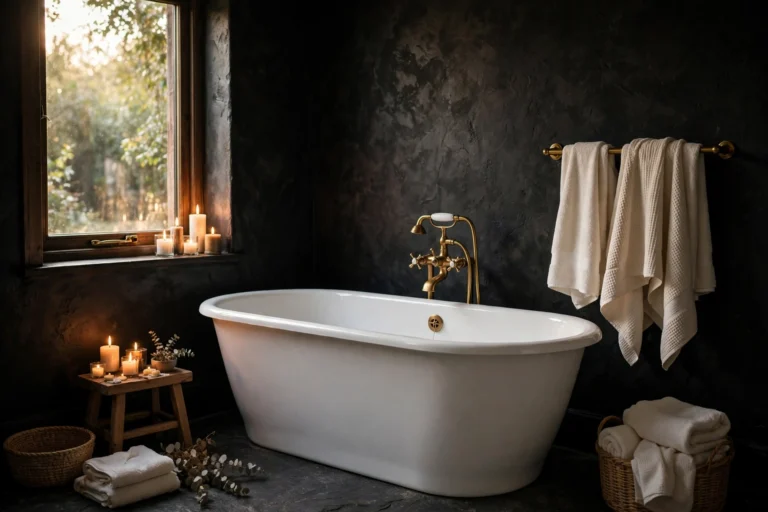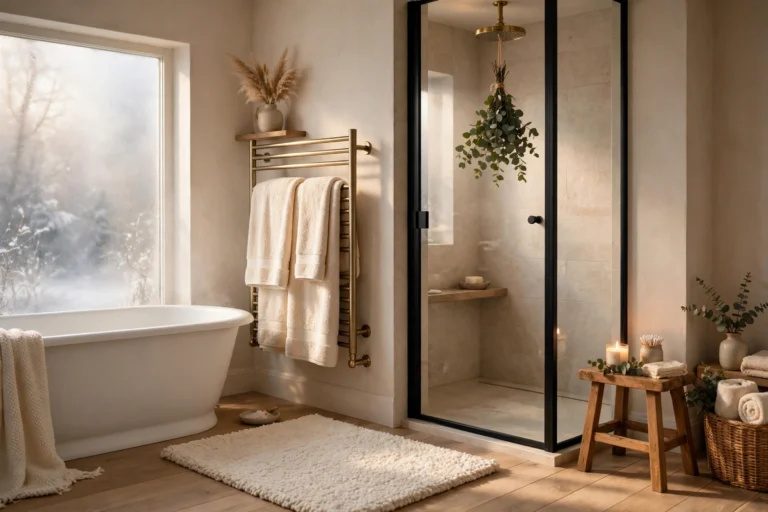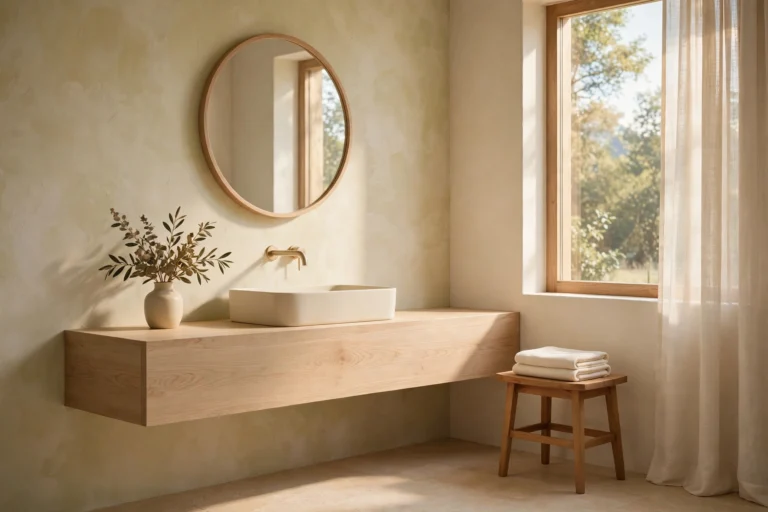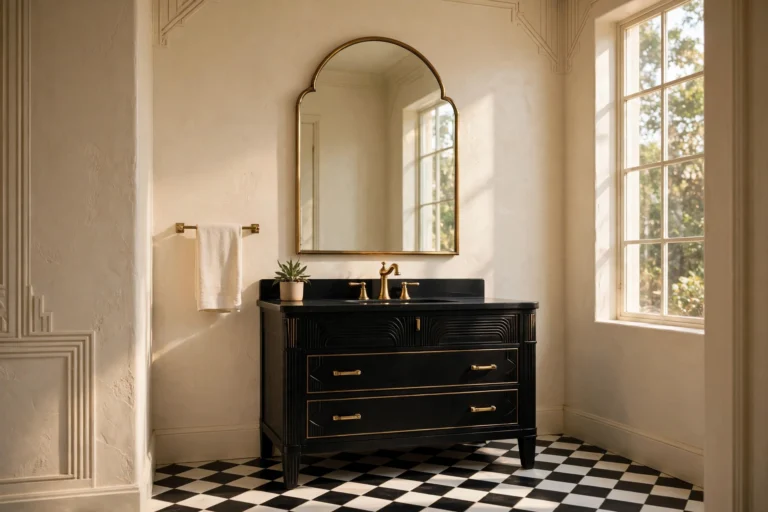
15 Mid-Century Modern Bathroom Decor Ideas to Love
My first apartment had a bathroom straight out of 1962. Pink tile halfway up the walls, a tub with little feet, a mirror cabinet that squeaked every time I opened it, and a vanity with legs so skinny I was sure it would collapse under the weight of my hair dryer. I hated it for about a month. Then one Saturday I wiped the dust off that vanity, set a little brass tray on it, hung a round mirror I found at a flea market, and stood back. The room looked intentional. It looked like someone had chosen it on purpose, not inherited it by accident. That was the day I stopped fighting the 1960s bathroom and started styling it.
Here is the thing nobody tells you about mid-century modern bathroom decor. It is not about turning your bathroom into a museum of the 1960s. It is about borrowing the best parts of that decade, the warm wood, the clean lines, the honest materials, the colors that feel like sunshine even on a gray morning, and letting the rest go. No avocado toilet required. No orange shag carpet on the floor. Just a room that feels warm, a little bit playful, and completely grown up.
These 15 mid-century modern bathroom decor ideas work in a full remodel, a rental refresh, or a one-weekend update with a paintbrush and a few smart swaps. I use them in my own bathroom, and I have tested every single one against real life: steam, splashes, toothpaste, and a teenager who leaves wet towels on the floor.
Before the ideas, the two little systems I use every time I style a mid-century bathroom. They keep the room from sliding into theme-park territory, which is the one real risk with this style.
Taper, Texture, Tone. Every mid-century bathroom needs three things working together. Taper means at least one piece with those skinny angled legs, a vanity, a stool, a little side table. Texture means something you can feel, warm wood grain, nubby towels, a woven basket, terrazzo. Tone means one warm color doing the talking, amber, avocado, sage, or terracotta, repeated in two or three small spots. Get all three and the room reads mid-century. Miss one and it reads like a regular bathroom with a vintage mirror.
The Warm Wood Test. When I think a mid-century bathroom is done, I stand in the doorway and ask three questions. Is there one warm wood piece I can see from here? Is there one clean straight line and one soft curve? Is there one thing in the room that makes me smile? If the answer to all three is yes, I stop. If the answer is no, I know exactly what is missing. FYI, the smile test matters more than the other two. A bathroom should make you happy at 7 in the morning.
If you love the broader retro look, my retro bathroom decor ideas go deeper on the 1950s and 1970s side of the same story, and they pair well with everything below.
The Vanity Sets the Tone: Mid-Century Modern Bathroom Decor Ideas 1-3
The vanity is the biggest piece of furniture in most bathrooms, so it decides the style before anything else does. Get the vanity right and everything else falls into place. Get it wrong and no amount of cute accessories will save the room.
1. Float a walnut vanity with tapered legs
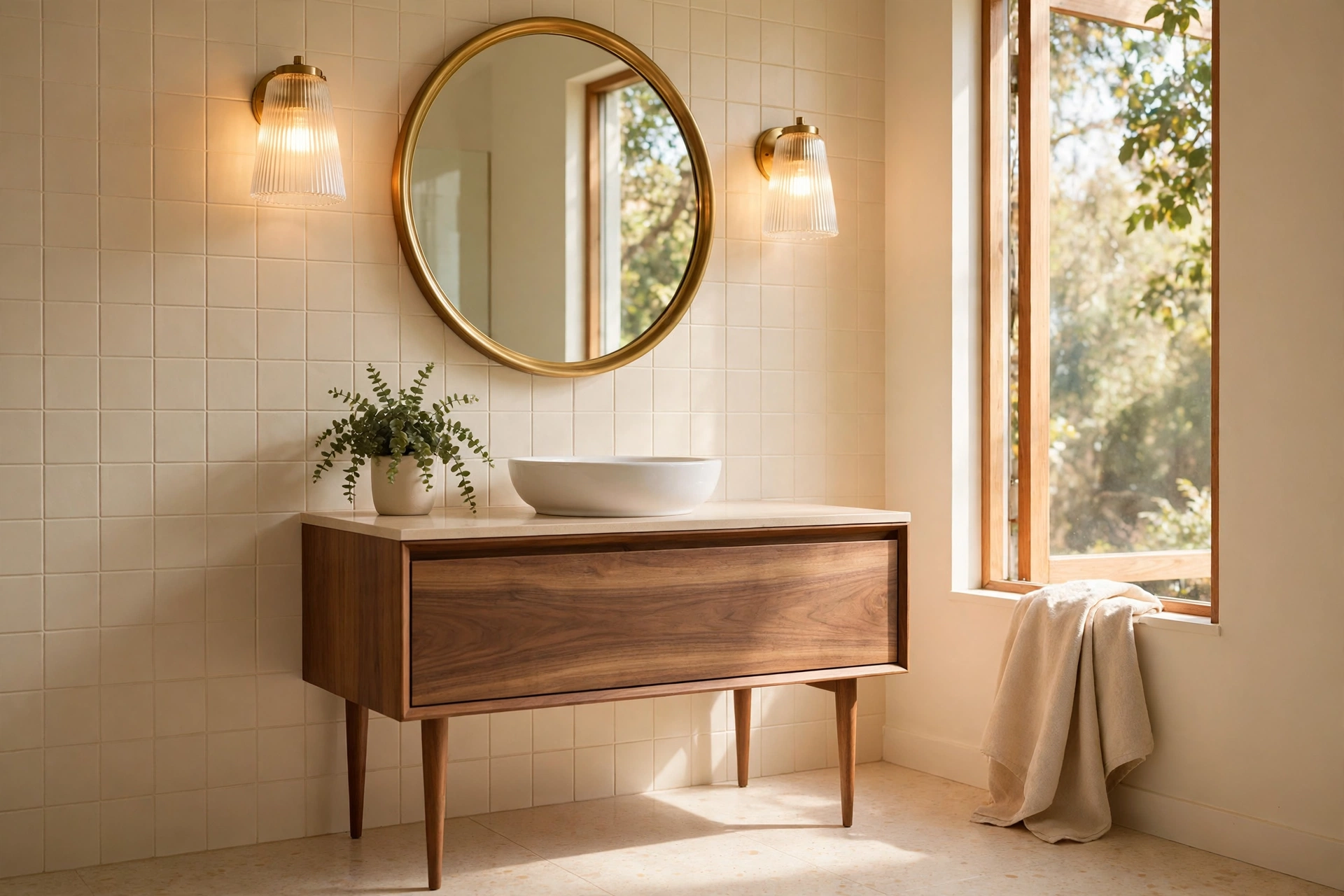
This is the single highest-impact move in the whole list. A walnut vanity with slim tapered legs, either wall mounted so it floats or standing on four angled legs, instantly says mid-century. The warm brown of walnut does half the styling work on its own, and the open space underneath makes a small bathroom feel bigger because you can see the floor continue to the wall.
If a new vanity is not in the budget, cheat it. Paint your existing vanity a warm walnut brown, or wrap the front in a wood-look adhesive, and swap the base for tapered furniture legs from the hardware store. I did this in a rental once for about sixty dollars and the landlord asked where I bought the new vanity. IMO the legs are the whole trick. Straight chunky legs read farmhouse. Skinny angled legs read 1962.
2. Top it with a vessel sink in warm white
A vessel sink sitting on top of the vanity, like a bowl on a table, is the classic mid-century pairing. Warm white ceramic is my pick, because it softens the wood and keeps the room from going too dark. A clear glass vessel looks stunning in photos and shows every water spot in real life, so skip it unless you love wiping.
Keep the faucet low and simple. A single matte black or brushed brass faucet with a clean spout beats a tall fussy one every time, and it leaves the sink as the star. If your budget only stretches to one splurge in this room, spend it here, on the sink and faucet together.
3. Hang a round mirror, not a rectangle
Mid-century design loves a circle. A round mirror above the vanity breaks up all the straight lines of the tile and the cabinet, and it makes the room feel softer the second you walk in. Go big, at least 24 inches across if the wall allows it, because a tiny round mirror over a wide vanity looks like a lost button.
A thin brass frame is the classic choice. A plain walnut frame is the quieter one. Either way, hang it so the center sits at eye level, not up near the ceiling. And if you want the full effect, flank it with two small sconces instead of one bar light above it. The glow on both sides of your face is far more flattering, and it is the look every 1960s bathroom was going for.
Warm Wood Is the Whole Mood: Mid-Century Modern Bathroom Decor Ideas 4-6
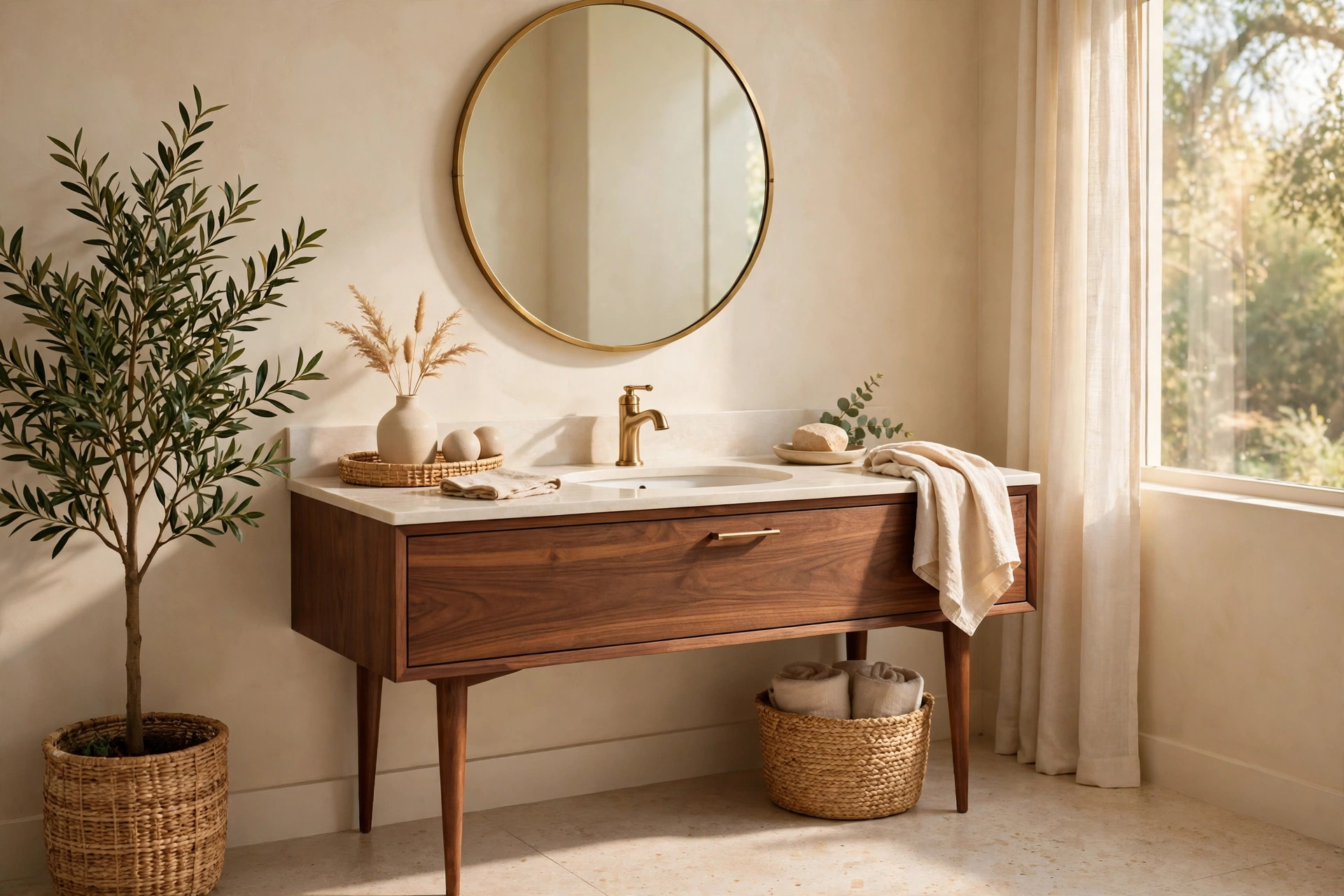
Mid-century style runs on warm wood. Walnut, teak, warm oak. If the room has no wood in it, it will never feel mid-century, no matter how many vintage posters you hang. The good news is that a little wood goes a long way in a bathroom, and most of it can be added without a single tool.
4. Bring in a teak stool or bench
A small teak stool next to the tub or under the window is the most useful piece of furniture in my bathroom. It holds a folded towel, a book, a plant, a glass of water while I soak. It also adds that warm wood tone at a low level, which balances the vanity up high. Look for one with a slatted top or a curved seat, both very mid-century shapes.
In a tiny bathroom, use a stool that tucks under the vanity when you are not using it. In a bigger one, a low teak bench along the wall gives you a place to sit while you dry your hair, and guests will think you hired a designer.
5. Frame the mirror in warm wood
If a round mirror is not your thing, or your mirror is already a rectangle you cannot replace, frame it in wood. A slim walnut or teak frame around a plain mirror changes the whole feeling of the wall for about twenty dollars of trim and an afternoon. It is the same trick as the vanity legs: the wood does the talking.
Match the frame wood to your vanity wood if you can, or at least keep them in the same warm family. Walnut and teak play nicely together. Walnut and gray driftwood do not, and the mismatch will bug you every morning.
6. Add a wood bath mat or a wood caddy
A slatted teak bath mat is one of those things that looks like a luxury hotel and costs less than a dinner out. Water drains through it, it dries fast, and it puts warm wood right under your feet first thing in the morning. I keep one by the shower and one by the tub, and they are the first thing guests comment on.
A wood bath caddy across the tub does the same job at eye level. A book, a candle in a glass hurricane, a small plant. It turns a bath from a chore into a ritual, and it photographs beautifully if you ever want to show off the room. For more vanity and storage styling that works with these pieces, my bathroom vanity decor ideas cover trays, mirrors, and sconce pairings in detail.
Glass and Light Do the Heavy Lifting: Mid-Century Modern Bathroom Decor Ideas 7-9
Bathrooms are small and often windowless, so light is the real decor. Mid-century bathrooms understood this, which is why they leaned so hard on glass, globes, and warm bulbs. Get the light right and the room feels twice as big.
7. Hang fluted glass sconces beside the mirror
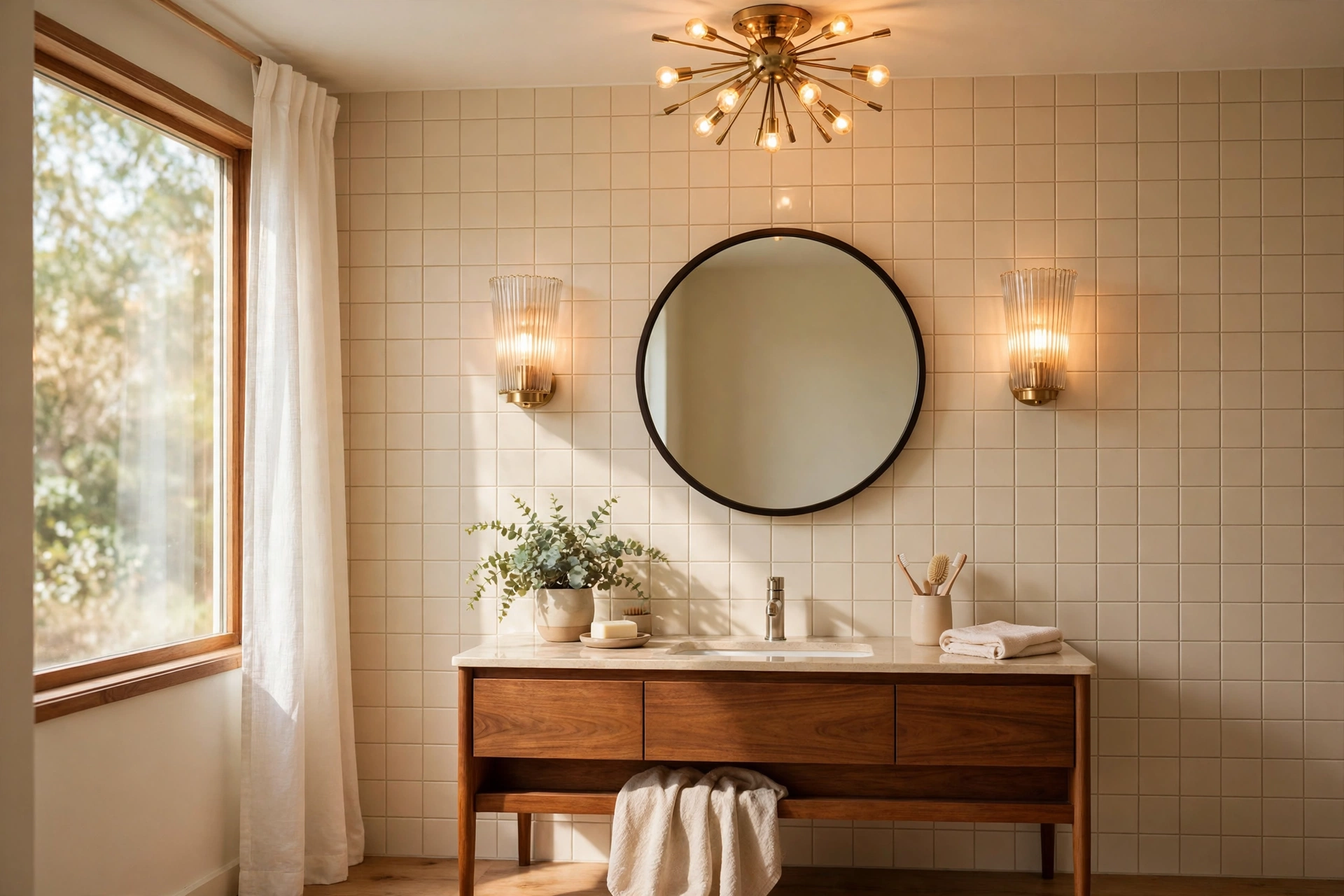
Fluted glass, that ribbed texture that bends the light into soft lines, is the most mid-century material after walnut. A pair of fluted glass sconces flanking the mirror gives you that warm even glow, and the texture itself is decoration even when the lights are off. Brass or matte black bases both work. I prefer brass, because it picks up the warmth of the wood.
If your bathroom only has one light fixture above the mirror, this is the upgrade that changes your mornings. Side light is kinder than top light, full stop. Your face will thank you, and your selfies will too.
8. Swap in a starburst or sputnik light
Nothing says mid-century faster than a starburst ceiling light, those brass arms reaching out in every direction with a little globe on each end. In a bathroom, one sputnik fixture over the center of the room is a statement piece and a conversation starter. Guests will look up and smile, which is exactly the reaction you want.
Keep the rest of the ceiling plain so the fixture can carry the room. And use warm white bulbs, around 2700K, not daylight bulbs. Daylight bulbs in a sputnik fixture make a bathroom feel like an office. Warm bulbs make it feel like a cocktail lounge, in the best way.
9. Use a frameless glass shower panel
A frameless glass panel instead of a shower curtain or a heavy framed door keeps the sightline open across the whole room, which makes a small bathroom feel much larger. It also shows off the tile inside the shower, which is where a lot of the mid-century color lives. If you have a tiled accent wall in the shower, you want to see it from the doorway, not hide it behind a curtain.
If a glass panel is out of reach right now, a simple white waffle-weave shower curtain in a warm off-white is the next best thing. Skip the busy pattern. In a mid-century bathroom the curtain should disappear, so the fixtures and tile can do the talking.
Color the 1960s Way, Gently: Mid-Century Modern Bathroom Decor Ideas 10-11
The 1960s loved color, but the bathrooms that still look good today used it with restraint. One bold color, repeated in a few places, against a calm neutral background. That is the whole secret. Go all in on one color and the room looks designed. Go all in on five colors and it looks like a costume.
10. Pick one retro color and commit to it
Choose one color from the 1960s palette and let it be the star. Amber and mustard yellow feel sunny and warm. Avocado and sage green feel calm and a little bit cheeky. Terracotta feels earthy and current. Powder blue feels fresh and retro at the same time. Pick the one that makes you smile, then repeat it in three places: towels, a small accessory, and one bigger moment like a painted cabinet or a shower curtain.
Three is the magic number here. One spot looks like an accident. Two spots look like a coincidence. Three spots look like a plan. And keep the rest of the room neutral, warm white walls, wood tones, brass, so the color has room to breathe.
11. Lay a bold tile accent wall or floor
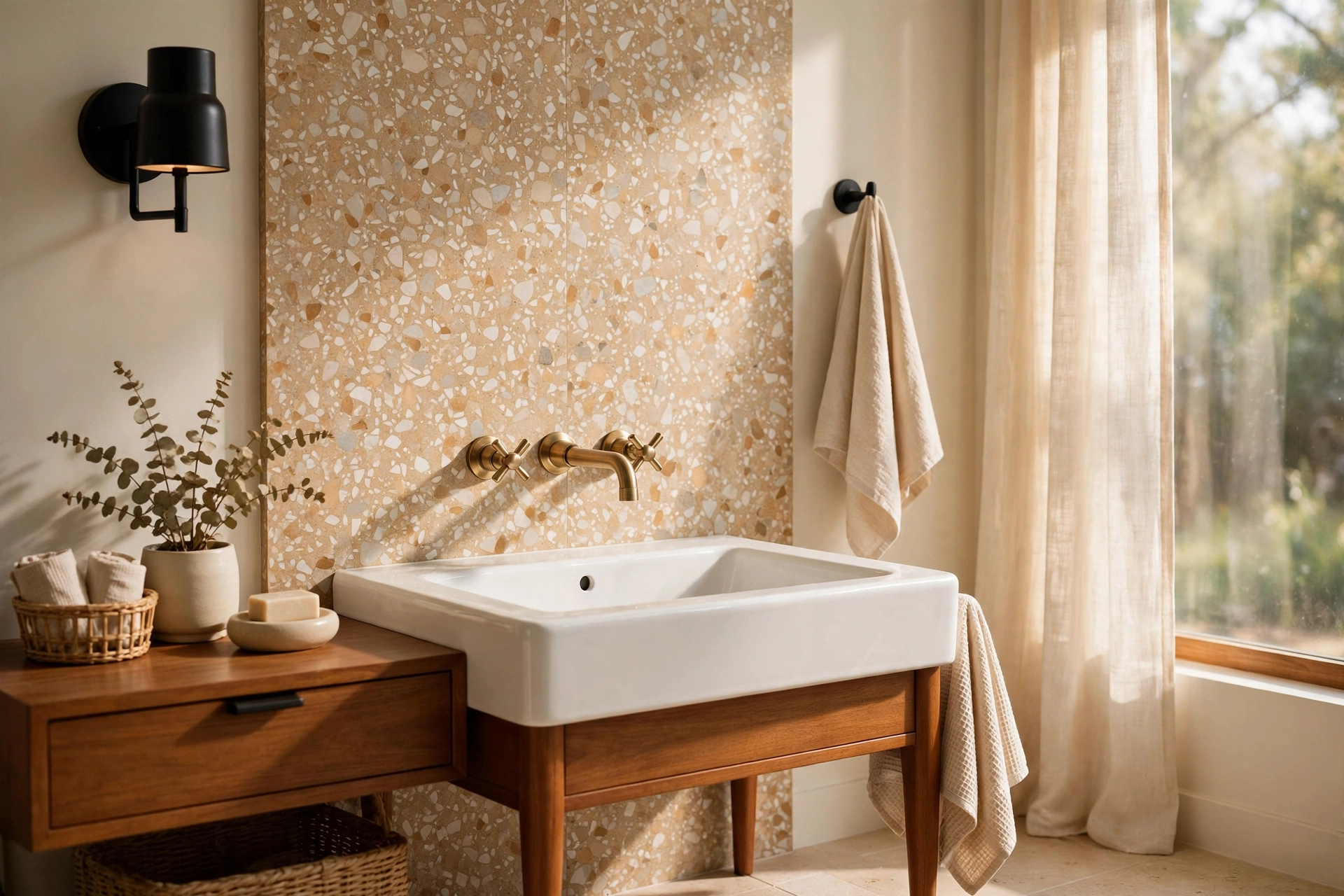
If you are ready for one bigger commitment, tile is where mid-century bathrooms shine. A single accent wall in small square tiles, a terrazzo-look floor, or a band of colorful penny tile around the tub gives the room its personality in one move. My favorite version is a terrazzo floor with warm white walls, because the floor does all the work and the walls stay calm.
Renters, you are not left out. Peel-and-stick tile in a small square or penny pattern works surprisingly well on one accent wall, and it comes off cleanly when you move. Just keep it away from direct shower spray, and seal the edges. For the bolder side of this style, my art deco bathroom decor ideas show how geometric tile and arches can live in the same room without fighting the mid-century pieces.
Fixtures and Hardware With Character: Mid-Century Modern Bathroom Decor Ideas 12-13
Fixtures are the jewelry of the bathroom. They are small, they are touched every day, and swapping them is the fastest way to change the style of the room without touching the walls. Mid-century fixtures are simple, a little bit sculptural, and built to be seen.
12. Choose matte black or brushed brass fixtures
Pick one metal and commit to it across the faucet, the shower head, the towel bars, and the cabinet pulls. Matte black reads modern and graphic against warm wood. Brushed brass reads warm and vintage, and it ages beautifully. Mixing the two in one room is the most common mistake I see, and it is an easy one to fix: choose one, then swap the odd pieces out one at a time.
Brass is my pick for a mid-century bathroom, because it matches the era and it warms up white tile. If your budget is tight, start with the faucet and the cabinet pulls, which are the pieces your eye lands on first. The shower head and towel bars can wait a month. For a cleaner, more current take on the same idea, my modern bathroom decor ideas show how matte black fixtures work when you want the room to lean a little more 2026 than 1962.
13. Hunt a vintage-style faucet with cross handles
Cross-handle faucets, those little X-shaped knobs, are the most mid-century faucet shape there is, and they are wonderfully practical too, because you can operate them with wet or soapy hands. Pair them with a simple curved spout and you have a fixture that looks like it belongs in a design magazine and costs less than a fancy dinner.
Check salvage shops and online marketplaces before buying new. A solid brass vintage faucet, cleaned up and fitted with new washers, often outlasts a brand-new budget one, and it has a patina no factory can fake. Just make sure the spacing matches your sink before you fall in love with it.
The Small Stuff That Sells the Style: Mid-Century Modern Bathroom Decor Ideas 14-15
Here is the truth about styling: the big pieces set the style, but the small stuff is what makes people believe it. A bathroom with a walnut vanity and bare counters looks unfinished. The same bathroom with the right towels, a plant, and one good accessory looks like a photograph.
14. Layer atomic-pattern towels and a shower curtain
Atomic patterns, those little starbursts, boomerangs, and geometric dots from 1960s fabric, are the fastest way to add mid-century personality without committing to anything permanent. A set of hand towels in an atomic print, a shower curtain with a simple geometric pattern, a bath mat in a warm solid color. The pattern does the work, and you can swap it all out in ten minutes when you want a change.
Keep the pattern to one or two pieces, not every textile in the room. Patterned towels plus a patterned shower curtain plus a patterned bath mat is too much of a good thing. One patterned piece, the rest solid, and the room stays calm. IMO the towels are the best place for the pattern, because they are cheap, they are visible, and you replace them anyway.
15. Finish with plants and terrazzo accessories
Every mid-century bathroom needs something alive. A small pothos trailing from a shelf, a snake plant in a terracotta pot on the floor, a sprig of eucalyptus in a bud vase on the vanity. Plants soften all the hard surfaces, and they love bathroom humidity, so this is the one room where they practically take care of themselves.
Then add one terrazzo accessory: a soap dish, a tray, a little dish for rings by the sink. Terrazzo, that speckled stone look, is the perfect mid-century texture, and one small piece ties the whole room together, especially if your floor or your accent wall has terrazzo in it too. If you want the calm, spa-like side of this look, my spa bathroom decor ideas show how plants, candles, and rolled towels turn the same room into a retreat.
The Moisture and Durability Check
Bathrooms are wet, steamy, and hard on materials, which is the one thing the 1960s did not always plan for. Run this check before you buy anything. Real wood near the shower needs a sealant, or it will warp. Use teak or sealed walnut, never raw pine, within splash distance of the tub. Paper art and unframed prints do not belong in a steamy bathroom, so frame everything behind glass or keep it on the wall farthest from the shower.
Test your paint too. A satin or semi-gloss finish on the walls wipes clean and resists moisture, while flat paint in a bathroom is a regret waiting to happen. And if you are hanging a wood-framed mirror, check the back of the frame once a month for the first few months. If it feels damp, move it to the drier wall or swap it for brass.
Buy Once vs Buy Each Year: The Mid-Century Bathroom Budget
You do not need to buy everything at once, and you should not. Here is how I split it. Buy once and keep for years: the vanity, the mirror, the light fixtures, the faucet, and one good wood piece like a teak stool. These are the bones of the room, and they are worth the money. Buy fresh each year or two: towels, the shower curtain, the bath mat, the plant, and the small accessories. These are the pieces that wear out and the pieces that let you change the color story without a remodel.
A realistic budget for a full refresh, vanity update included, runs a few hundred dollars if you paint and swap hardware, or a few thousand if you replace the vanity and fixtures. Either way, start with the vanity and the mirror. Those two pieces carry about eighty percent of the style, and you can add the rest over time.
Small-Space Variations
Mid-century style actually suits small bathrooms better than most styles, because it was designed for compact post-war homes. A floating vanity shows more floor and makes the room feel bigger. A round mirror softens the tight corners. One warm wood accent, like a teak stool that tucks under the vanity, adds the style without taking any floor space at all.
In a really tiny bathroom, skip the starburst ceiling light and put the drama on the wall instead: one bold tile accent behind the sink, or one atomic-pattern towel. And keep the counter clear. In a small room, three styled objects look intentional. Ten look like clutter, no matter how pretty they are.
Troubleshooting: Five Fixes for a Mid-Century Bathroom That Feels Off
It feels like a costume, not a bathroom. You have gone too literal. Remove one vintage piece, usually the kitschiest one, and add one plain modern piece, like a simple white towel or a frameless soap dish. The mix is what makes it feel real.
It feels too dark. Walnut and brass can go moody fast. Add a white or cream shower curtain, lighter towels, and one more light source, even a small battery candle on the vanity, and the room will lift.
It feels cold and gray. The wood is missing or the wrong tone. Add one warm wood piece at eye level, a framed mirror or a wood tray, and swap one gray accessory for amber or terracotta.
The fixtures fight each other. You have two metals going. Pick one, brass or matte black, and change the smallest pieces first, the cabinet pulls and the towel ring, which cost the least to swap.
It looks great in photos and flat in person. You are missing texture. Add one thing you can feel, a nubby towel, a woven basket, a terrazzo dish, and one living thing, a plant. Texture and life are what the camera cannot show and the room cannot live without.
Frequently Asked Questions
What colors work best in a mid-century modern bathroom?
Warm white walls with one retro accent color work best. Amber, avocado, sage green, terracotta, or powder blue, repeated in three small spots, give you the 1960s feeling without overwhelming the room.
Can I do mid-century modern bathroom decor in a rental?
Yes. Swap the mirror, the towels, the shower curtain, and the light bulbs, add a teak stool and a wood bath mat, and use peel-and-stick tile on one accent wall. All of it comes out cleanly when you move.
Is mid-century modern bathroom decor expensive?
It does not have to be. Paint and new hardware transform an existing vanity for under a hundred dollars, and thrifted brass and teak pieces are common at salvage shops. Spend the most on the vanity and faucet, and save on towels and accessories.
What is the difference between mid-century modern and retro bathroom decor?
Mid-century modern is the clean-lined, warm-wood, 1945 to 1969 look with tapered legs and atomic patterns. Retro is the broader umbrella that also covers the bolder 1970s colors and the 1950s pastels, so a mid-century bathroom is one specific flavor of retro.
How do I keep wood looking good in a humid bathroom?
Choose teak or sealed walnut, keep wood out of direct shower spray, wipe it dry when it gets splashed, and reapply a clear sealant once a year. A small exhaust fan that runs during showers matters more than any product.