15 Japandi Bathroom Decor Ideas for a Calm Retreat
The first time I understood Japandi, I was standing in a friend's bathroom in socks, holding a toothbrush, and wondering why I felt calmer than I had all week. Nothing in that room was expensive. The vanity was plain oak, the walls were a warm off-white, there was one round mirror, one small plant, and a folded towel that looked like it had been placed there by someone who cared. I had spent a month researching bathroom trends, and in that one quiet room I finally got it. Japandi bathroom decor is not about buying Japanese things or Scandinavian things. It is about removing everything that shouts and keeping only the things that feel good to touch, to look at, and to live with every morning.
My own bathroom used to be the opposite. I had a chrome towel rail, a plastic soap dish in a color I cannot even name, three half-empty bottles crowded around the tap, and a bath mat that slid around like it was trying to escape. It worked, technically, but it never felt restful. The change did not start with a remodel. It started with one decision: every single thing in that room had to earn its place. If it did not calm me down or help me get ready faster, it left. Six weeks later, the same small bathroom felt like a different room, and guests started asking what I had changed. The answer was that I had taken things away, then added back only warm, natural, honest materials.
This guide has 15 japandi bathroom decor ideas that work in real bathrooms, from a full warm-wood vanity swap to a single wooden tray on the sink. Most of them cost far less than a remodel, and the budget section at the end shows you where to spend and where to save. Japandi is the meeting point of Japanese wabi-sabi, which finds beauty in imperfection and age, and Scandinavian hygge, which is all about warmth and comfort. Put them together and you get a bathroom that feels like a deep breath. IMO, it is the most liveable bathroom style there is, because it was designed for daily life, not for a photo shoot. If you love the look of natural stone in a calm room, my marble bathroom decor guide shows the same idea with veined stone instead of wood.
My Two Frameworks
The Three-Layer Calm
Every calm Japandi bathroom I have ever loved follows the same three layers, and I call it the Three-Layer Calm. Layer one is warm wood, one or two pieces, like an oak vanity or a teak stool. Layer two is soft stone, a travertine tray, a stone sink, or even stone-look tiles that feel cool under bare feet. Layer three is one soft textile, a linen curtain, a thick cotton towel, or a woven bath mat. If your bathroom feels cold or unfinished, it is almost always missing one of these three layers. Add the missing one before you buy anything else. FYI, the layers should touch each other in the room, wood next to stone next to cloth, so your eye travels across them instead of landing on one loud thing.
The One-Touch Rule
Here is the second test I use, and I call it the One-Touch Rule. Everything you touch every day in your bathroom should feel good in your hand. The tap handle, the towel, the soap dish, the light switch plate, the stool you sit on to put your shoes on. If something feels plasticky, sharp, or cheap, swap it for wood, stone, ceramic, or brushed metal. You touch these things twice a day, every day, and your hands notice quality long before your eyes do. A bathroom that passes the One-Touch Rule feels expensive even when the budget was small, because comfort is something you feel, not something you photograph.
Zone 1: The Warm Wood Foundation (Ideas 1 to 3)
1. A Low-Profile Floating Oak Vanity
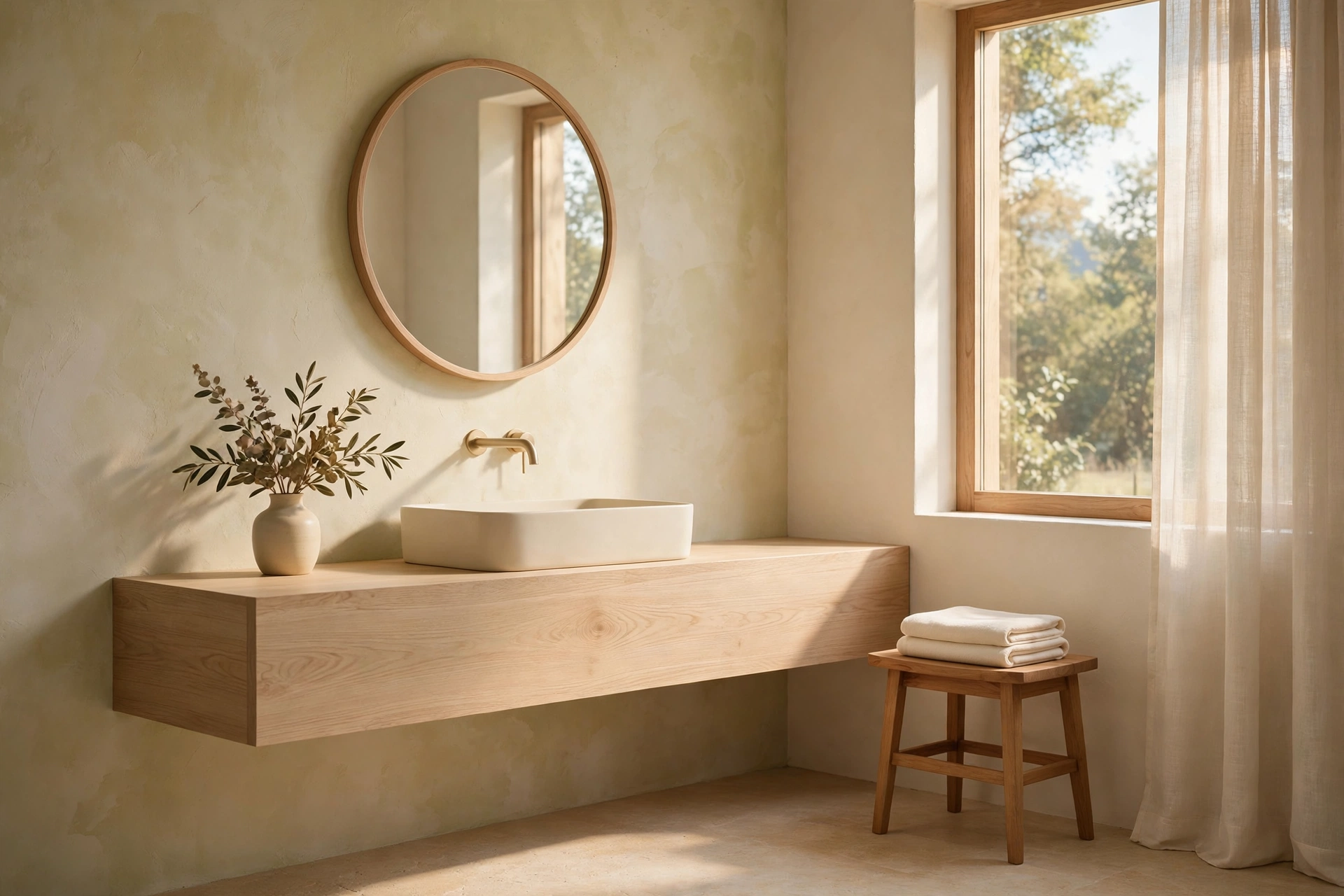
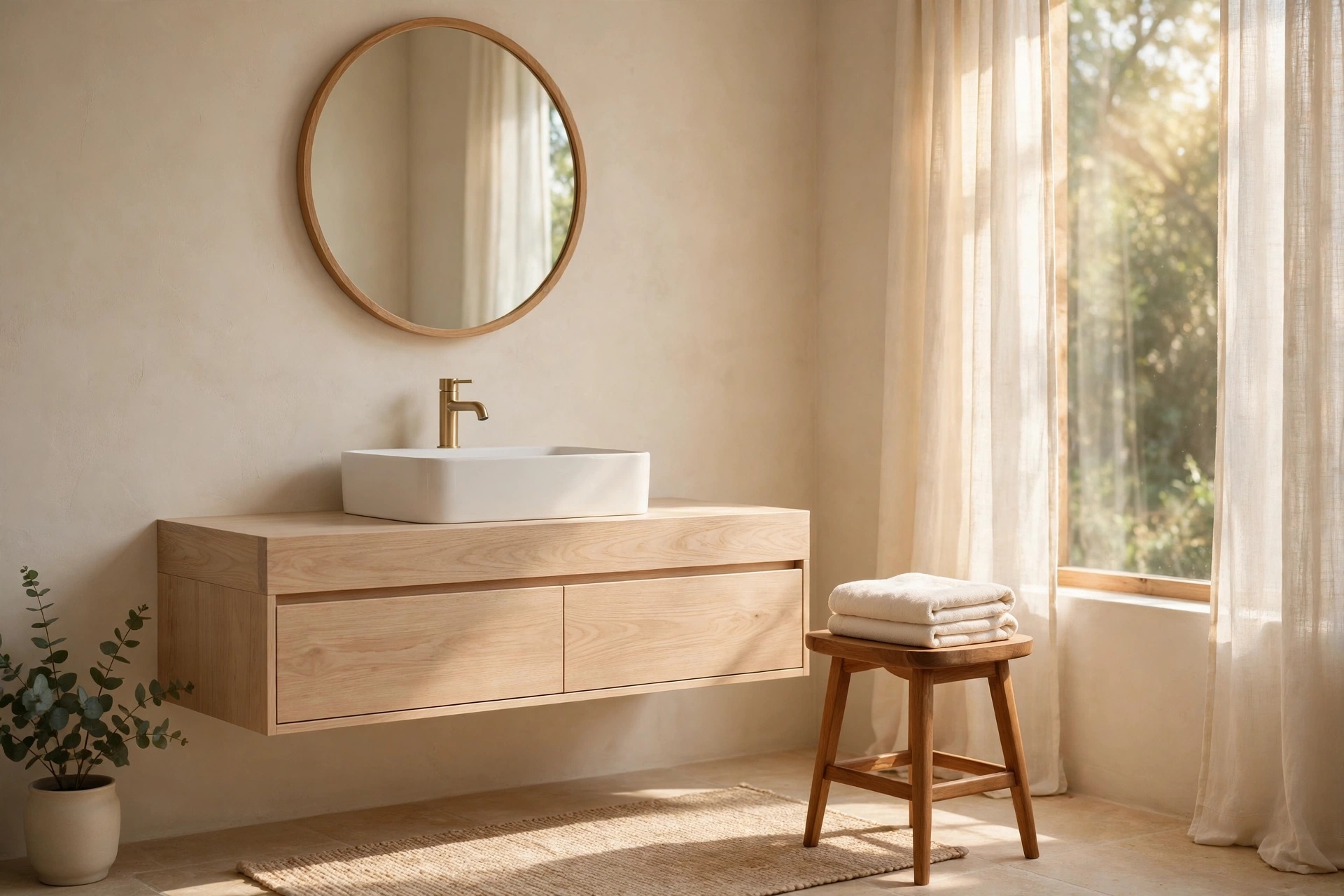
Start with the biggest piece in the room, because it sets the tone for everything else. A low-profile floating vanity in white oak or light walnut is the single most Japandi thing you can put in a bathroom. The floating design shows the floor underneath, which makes a small bathroom feel bigger, and the visible wood grain adds warmth that a painted cabinet never will. Keep the front flat and handle-free, with a push-to-open drawer, so the lines stay clean. Pair it with a simple rectangular ceramic sink that sits on top, and you have the whole look in one piece. If a new vanity is not in the budget this year, wrap your existing cabinet in a light wood contact paper or swap just the doors for oak-veneer fronts, and you get most of the effect for a tenth of the price.
2. A Teak Stool That Does Three Jobs
A small teak stool is my favorite Japandi bathroom buy, because it does three jobs at once. It holds your folded towel and your book while you soak, it gives you a seat for putting on shoes or painting your toenails, and it adds a warm wood note at floor level where the room needs it most. Choose one with a simple round or square top and straight legs, no carving, no shine. Teak handles steam and splashes better than most woods, and it ages to a soft silver-grey if you let it, which only adds to the wabi-sabi charm. In a tiny bathroom, use it as the only piece of furniture and let it carry the whole wood layer of the Three-Layer Calm.
3. A Wood-Framed Round Mirror
A round mirror in a thin wood frame softens all the hard rectangles in a bathroom, and the circle is a classic Japandi shape, calm and complete. Hang it so the center sits at eye level, not above the tap where most people put it, and keep the frame slim, about an inch wide, in the same wood tone as your vanity. The reflection doubles your light and makes the room feel twice as deep. For a little extra warmth, mount a small warm-white light above it instead of harsh side sconces. The mirror is the first thing you see in the morning, so make it something beautiful. A plain wood circle beats a backlit LED panel every time in this style.
Zone 2: Stone and Texture (Ideas 4 to 6)
4. A Travertine Tray on the Vanity
If you do one small thing from this whole guide, make it this one. A travertine tray on the vanity corrals your daily bottles into one calm rectangle, and the stone itself does half the decorating. Travertine has soft holes and cloudy veining that look completely natural, which is exactly what Japandi wants. Put your soap dispenser, a small hand cream, and one tiny vase on the tray, and nothing else. The tray turns clutter into a display, and it protects the wood vanity underneath from water rings. A stone tray costs less than a dinner out, and guests will think you hired a designer.
5. Microcement Walls for a Seamless Calm
Painted drywall shows every splash and steam mark, and tile grout lines chop a small bathroom into a grid. Microcement, a thin hand-troweled coating, gives you seamless walls in warm greige or soft stone grey with a subtle mottled texture that looks like aged plaster. It is waterproof, it has no grout to scrub, and the soft matte finish is the definition of Japandi calm. If you prefer a softer spa feeling, my spa bathroom decor ideas use the same seamless approach with eucalyptus and rolled towels. You can apply it over existing tiles in many cases, which keeps the cost down. If microcement is too big a project, a limewash paint in the same warm tone gives you a similar soft, cloudy finish for the price of a tin of paint and a weekend.
6. A Pebble Shower Floor or Stone Bath Mat
Your feet notice the floor before your eyes do, and a pebble floor or a stone bath mat is the One-Touch Rule applied to your soles. Small smooth river pebbles set into the shower floor feel like a gentle massage every morning, and they drain well because water runs between them. If a new shower floor is too much, a single slab of honed stone by the tub works as a bath mat that never goes soggy, never needs washing, and looks like sculpture. In a rental, a woven seagrass mat gives you the same natural texture for a few dollars and rolls up when you move.
Zone 3: Soft Neutrals and Light (Ideas 7 to 9)
7. A Warm White and Greige Palette
Japandi color is not white, it is warm white, the color of cream, oat milk, and morning light. Paint the walls a warm white with a hint of beige, then add one deeper tone, greige or soft mushroom, on a single wall or the vanity. Keep every color in the room inside the same warm family, so the wood, the stone, and the towels all feel related. The test is simple: hold a paint chip next to your oak vanity. If the chip looks blue or pink next to the wood, it is the wrong white. Warm neutrals make a small bathroom feel bigger because there are no hard color edges for your eye to stop on.
8. A Linen Shower Curtain Instead of Glass
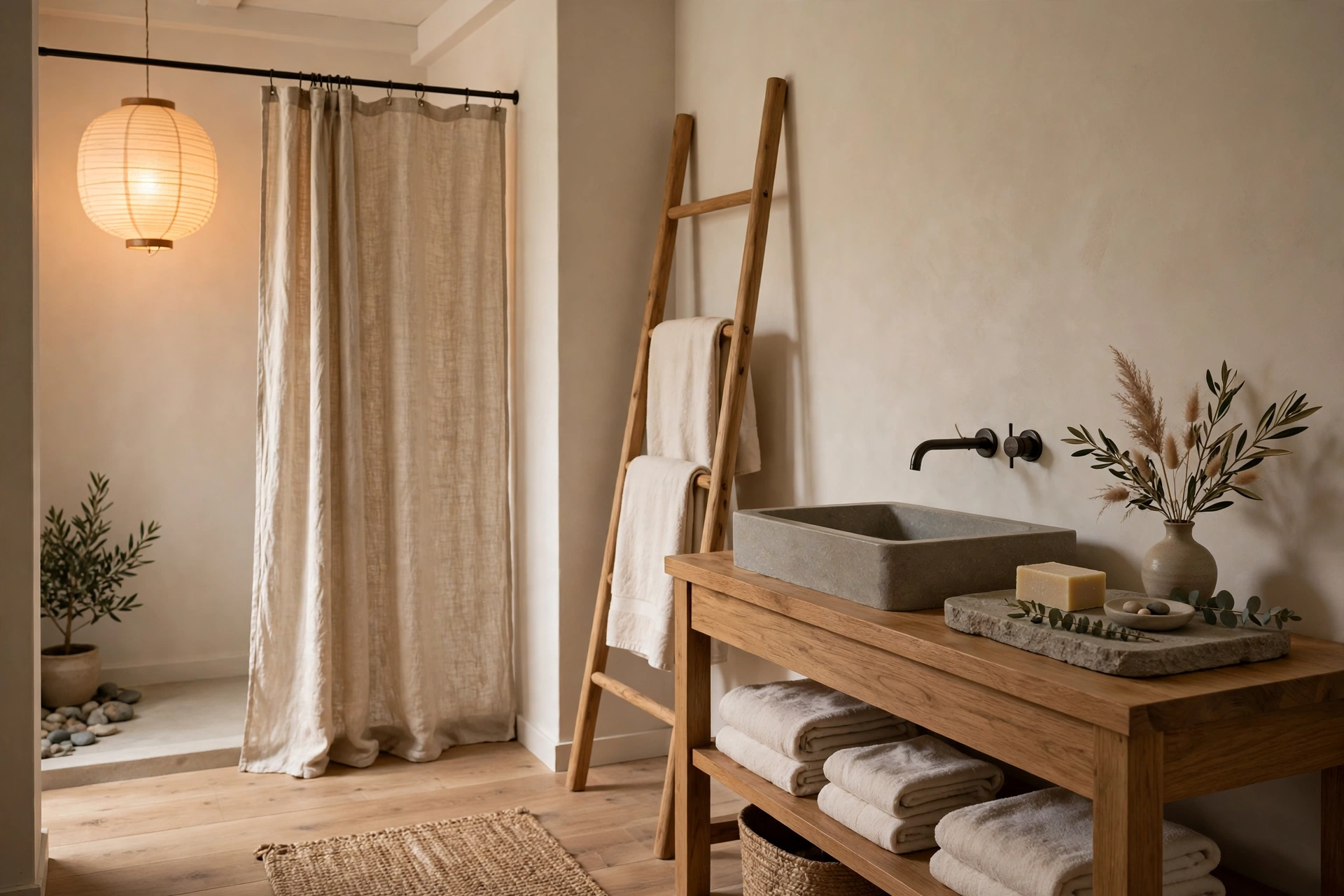
A heavy glass shower screen looks modern, but it also shows every water spot and makes a small bathroom feel like a display case. A linen-look shower curtain in natural flax or warm white softens the whole room the moment you hang it. The fabric moves, it filters light, and it adds the soft textile layer of the Three-Layer Calm at exactly the place where the room needs softness. Choose a curtain with a simple weighted hem so it hangs straight, and wash it monthly so it stays fresh. In a bathroom with a glass screen you love, a linen hand towel draped over a wooden ladder rail gives you the same soft note without changing the shower.
9. A Paper Lantern for Warm Evening Light
Bathroom lighting is usually the worst light in the house, a bare bulb that makes everyone look tired. A paper lantern pendant, or a simple linen drum shade, turns that same bulb into a warm glow that flatters skin and calms the room. Hang it at a height where it lights the mirror without shining in your eyes, and put it on a dimmer if you can, because a Japandi bathroom at half light in the evening is the closest thing to a spa you can get at home. A modern bathroom decor approach uses the same warm-light trick with simpler fixtures, if you want a slightly cleaner look. Warm white bulbs only, never daylight bulbs, which turn warm wood grey and make stone look cold. Light is a material in this style, so choose it like you choose the wood.
Zone 4: The Calm Details (Ideas 10 to 12)
10. One Sculptural Tap, Nothing Else on the Sink
A Japandi sink has one beautiful thing on it, and that thing is the tap. Choose a single sculptural tap in brushed brass or matte black with a simple curved spout, and keep the sink deck empty around it. No toothbrush holder, no soap pump forest, no sponge. Move the daily items onto the travertine tray or into the vanity drawer, and let the tap be the jewelry of the room. Brushed finishes are better than polished here, because they do not show water spots and they age gracefully. The tap is the most touched object in the bathroom, so it is also the best place to spend a little more under the One-Touch Rule.
11. A Single Eucalyptus Stem in a Ceramic Vase
One plant is enough in a Japandi bathroom, and eucalyptus is the right one. A single stem in a small handmade ceramic vase adds the only green the room needs, it smells wonderful in the steam, and it dries gracefully instead of dying dramatically like a fussy houseplant. Put the vase on the vanity tray or on the windowsill, never on the floor, and let the stem lean a little, because perfect symmetry is not the goal. If you have no natural light, a dried stem works just as well and lasts for months. Green is the one color that looks good against every warm neutral, and a bathroom with no plant at all feels unfinished in this style.
12. Rolled Towels and a Wooden Tray on Open Shelving
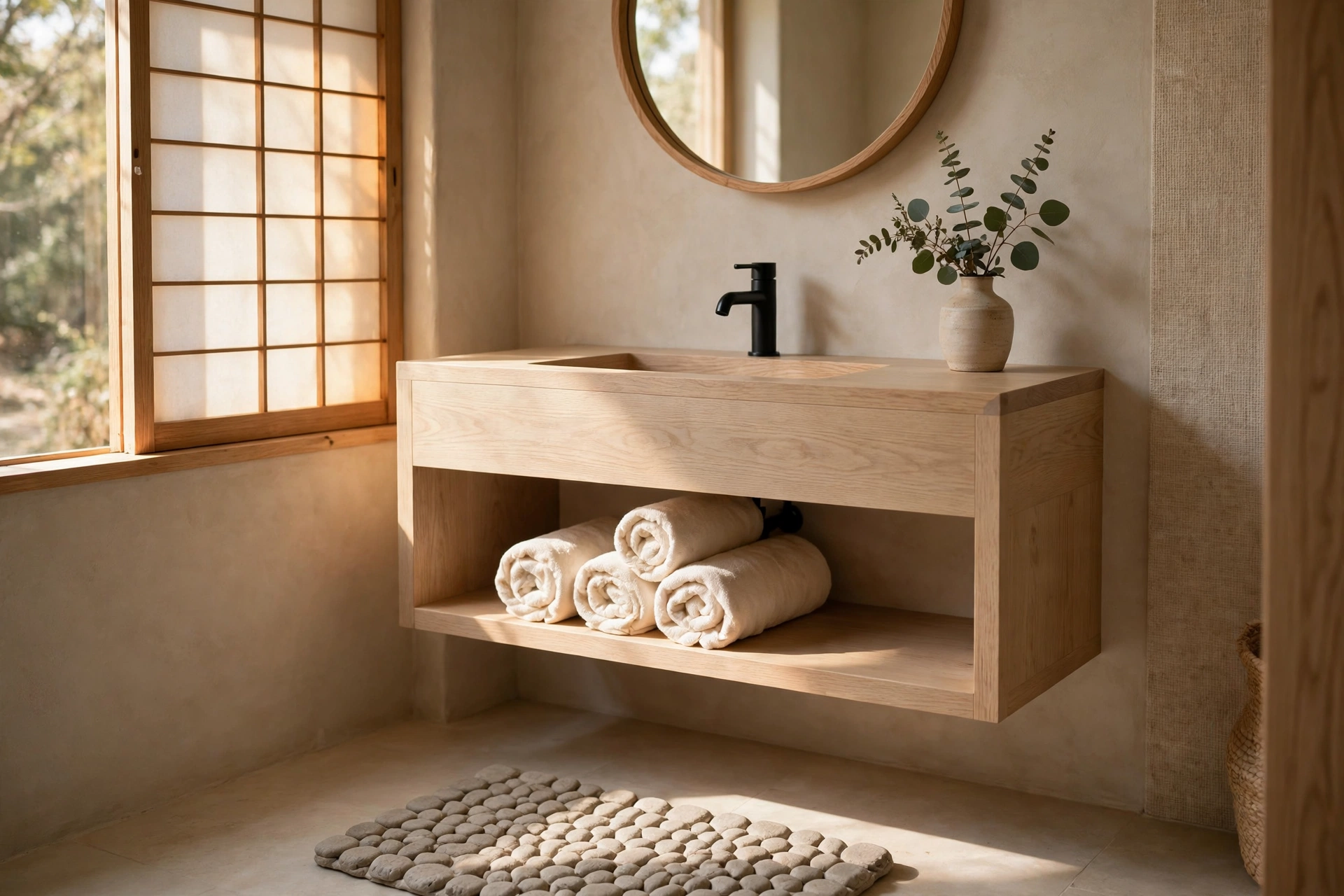
Open shelving scares people, because it shows everything, but in a Japandi bathroom it is the point. One open shelf with three rolled cream towels, a small wooden tray, and a jar of bath salts is a display, not storage. Roll the towels instead of folding them, because the round shape echoes the mirror and the stool, and keep every towel the same warm white so the shelf reads as one calm block. The rule is three items per shelf, no more, and nothing plastic. If the shelf starts collecting random bottles, it has stopped being Japandi and become a cupboard, so edit it back to three things every Sunday.
Zone 5: Small Bathrooms and Daily Rituals (Ideas 13 to 15)
13. Wall-Hung Everything in a Tiny Bathroom
Small bathrooms are where Japandi works hardest, because the style was made for tight spaces. Hang the vanity, the toilet, and the storage on the wall so the floor runs clear underneath, and the room instantly feels bigger. A wall-hung vanity with one deep drawer holds everything a pedestal sink cannot, and a slim wall cabinet with a mirrored front hides the clutter without adding bulk. Keep the floor to two materials at most, wood-look tile and one stone mat, so the eye is not busy. In my own small bathroom, wall-hanging the vanity was the single change that made the room feel twice as large, and it cost less than the fancy tap I almost bought instead. My winter bathroom decor guide has more small-space tricks for the cold months, when a cozy bathroom matters most.
14. One Open Shelf With Three Things Only
If open shelving feels risky, start with just one shelf, and follow the three-thing rule from idea 12. A folded towel, a ceramic jar, and a small plant is a complete display, and it teaches you the Japandi habit of editing. The shelf should sit at a height where you can reach it without stretching, usually just above the vanity, and it should be wood, not glass or metal, so it adds the warm layer at eye level. When friends ask why your bathroom looks so calm, the answer is usually this shelf, because it is the proof that you chose three beautiful things instead of keeping thirty random ones.
15. An Evening Ritual Corner With a Candle and a Soak
The last idea is not furniture, it is a habit. Set up one small corner for the evening: a candle in a ceramic holder, a folded towel, and a jar of bath salts on the teak stool or the edge of the tub. When you light that candle at night, the bathroom stops being a utility room and becomes a ritual, and the whole day slows down for ten minutes. Japandi is not really a decorating style, it is a way of living slowly and noticing small pleasures, and a bathroom is the easiest room in the house to practice it in. Start tonight, with a candle you already own, and the room will teach you the rest. For a festive version of this same calm look, my christmas bathroom decor ideas keep the warm wood and add tiny seasonal touches that take minutes.
The Moisture Check: Keeping Wood and Linen Happy in a Steamy Room
Wood and linen in a bathroom scare people, and the worry is fair, because steam is the enemy of both. The fix is not to avoid natural materials, it is to manage the moisture. First, run the extractor fan for twenty minutes after every shower, not two, because the walls need that long to dry. Second, seal any wood that sits near water: a teak stool needs one coat of teak oil a year, and an oak vanity top needs a waterproof hardwax oil, both of which take an afternoon to apply. Third, choose linen and cotton that can be washed hot, and give them air, because a towel that never dries is a towel that smells. Fourth, keep the stone tray and the soap dish dry underneath, because standing water stains travertine faster than anything else. A Japandi bathroom that is looked after lasts for years. A neglected one, like any bathroom, will show it fast, so build the twenty-minute fan habit on day one.
Budget: Buy Once vs Refresh Each Year
Japandi rewards spending on the things you touch and saving on the things you look at. Buy once, and buy well: the tap, the vanity, the mirror, and the stool, because these are the pieces you touch every day and the pieces that set the room's quality. A brushed brass tap and a solid oak vanity will outlast three cheaper versions and feel better the whole time. Refresh each year, cheaply: the towels, the shower curtain, the eucalyptus stem, and the candle, because these are the soft layers that wear out and the easiest way to make the room feel new again. The stone tray, the ceramic vase, and the paper lantern sit in the middle, so buy the best version you can afford once and keep them for years. My own bathroom cost less than a weekend away to transform, because the vanity and tap were the only big buys and everything else was a tray, a stool, and a stack of cream towels. IMO, that is the whole secret: spend where your hands go, save where your eyes go.
Small-Space Variations
A Japandi bathroom works in a powder room barely bigger than a closet, because the style is about less, not more. In a tiny room, pick one wood piece, the vanity or the stool, not both, and let the mirror do the work of doubling the space. Skip the open shelf and use the vanity drawer instead, and keep the floor completely clear except for the stone mat. In a shared family bathroom, give each person one small wooden box or one shelf basket for their daily items, so the counters stay clear and the calm survives the morning rush. In a rental, nothing here needs a drill except the mirror: use a leaning ladder rail for towels, a freestanding teak stool, and a stone tray, and take it all with you when you move.
Troubleshooting: Five Fixes for a Japandi Bathroom That Feels Off
If your bathroom looks Japandi on paper but still feels wrong, one of these five fixes is usually the answer. First, if the room feels cold, check your bulb: a daylight bulb turns warm wood grey, so swap it for warm white and the whole room warms up in a minute. Second, if the room feels cluttered, count the items on the vanity: anything over five goes into a drawer, and the calm returns instantly. Third, if the wood looks orange, the finish is too glossy, so sand it lightly and apply a matte hardwax oil, which turns orange oak into honey oak. Fourth, if the room feels empty instead of calm, you removed too much: add the third layer, a textile, because a room with wood and stone but no cloth feels like a showroom. Fifth, if the towels keep sliding off the rail, the rail is too high or too smooth, so switch to a wooden ladder rail, which grips fabric and adds the warm layer at the same time. Every one of these fixes costs less than twenty dollars and takes less than an hour, so try the cheapest one first.
Frequently Asked Questions
What is Japandi bathroom decor?
Japandi bathroom decor blends Japanese wabi-sabi and Scandinavian hygge into a calm, minimal style built on warm wood, natural stone, soft neutrals, and only the essentials. It values imperfection, natural materials, and empty space over decoration, so the room feels peaceful instead of busy.
Is Japandi good for a small bathroom?
Yes, Japandi is one of the best styles for a small bathroom, because it uses wall-hung furniture, a limited palette, and very few objects, which all make a tight room feel bigger. A floating vanity, a round mirror, and a clear floor do more for a small bathroom than any storage unit.
What colors work in a Japandi bathroom?
Warm white, greige, soft mushroom, light oak, and natural stone tones work best, with one green accent from a plant. Avoid bright white, cool grey, and strong colors, because they fight the warm wood and make the room feel cold instead of calm.
Can you use real wood in a bathroom?
Yes, if you choose the right wood and seal it properly. Teak and white oak handle steam well, and a coat of hardwax oil or teak oil once a year protects them from water. Keep wood away from direct shower spray, run the extractor fan after every shower, and wipe up standing water.
How do I make my bathroom look Japandi on a budget?
Start with the cheapest layers first: a stone tray on the vanity, rolled cream towels, one eucalyptus stem, and a warm white bulb. Then add one wood piece, like a teak stool, and edit the counters down to five items. Those five changes cost very little and deliver most of the look.